About Jill
It is my passion to encourage homeschool families so that you can find joy in being a family that learns together.
I have been married to the husband of my youth since 1975 and have homeschooled my five children for 17 years-most of the time with Sonlight Curriculum. Our youngest son graduated from our homeschool in 2007. I love the outdoors, baking, reading and, of course, chocolate-but mostly I love getting all my kids together in one place. Ahh, heaven on earth!
I am currently enjoying my two toddling granddaughters.
16 post(s):
05/02/2012
I don't know how many times, when I am talking to homeschool parents, we get on the subject of what are THE most important things to teach our children. Besides transferring your core beliefs--such as your faith, and character traits like honesty and kindness--which are paramount, what are the three main academic things you should teach your children?
This is my very own personal list done with absolutely no scientific studies or animal testing. No children or pets were hurt while I formulated my answer to this all important question.
- Read
- Think
- Communicate
That's it!
If you can teach your child to read and think and communicate, they have it made. Once the key to reading unlocks the secret to knowledge in various disciplines, you have accomplished step #1.
Then, they need to be able to think--really think--about what they have read, what they have heard, what they have experienced and to analyze, compare and apply that information to find out what the truth or reality is. This is not easy and takes many years.
Children do not learn to think by answering the questions [or assessments if you want to use the fancier terminology] at the end of the chapter. They don't learn to think by someone telling them what to think. They learn to think by thinking, by comparing, by reading and applying what they have learned. They learn to think by answering questions about how what they read or heard can be applied to real life, or how it compares with what they know, or how it compares with something else they have read or researched. They learn to think by talking to you and others. That is step #2.
And that is where step #3 comes in. In order to succeed children need to learn how to communicate what they think. They need to be able to look someone in the eye and have a conversation. They need to be taught to have good written communication skills. They need to be able to express themselves to others in a concise and clear manner, both verbally and in in writing.
I am convinced, that if they can do these three things they will do well in higher education, in the workplace and in interpersonal relationships. In order to succeed in this culture reading, thinking and communicating are the most important skills you can teach your child.
I believe reading to your children from a young age, discussing with them what you have read and then asking them to tell back or narrate...
- what the story was about
- or why it was important
- or how it relates to them or to your core beliefs
is a great way to begin to teach the THREE MOST IMPORTANT THINGS.
I believe that a low student to teacher ratio such as you get in homeschooling is the very best way to achieve this and I believe that Sonlight Curriculum is the best homeschool curricula available. It helps you teach your child these three things while they are learning history, geography, science, cultural literacy and much more. As your child grows you can continue discussing what they are reading and include them in discussions regarding politics, religion and many other subjects to sharpen their minds--to help them critically think about things and not to simply accept and repeat what someone else has concluded.
What would you include in the most important things to teach? What things are critical? What things do you wish you would have been taught? What things have you learned the hard way or by homeschooling your own kids?
Take care,
Jill
[Disclaimer: I include in reading and thinking the discipline of mathematics--reading the lesson and thinking about and doing the problems. Other things are vital too, such as physical education/activity, music education and so on and I think every family has to make their own priorities in these areas; but in this writing, I wanted to speak to equipping children with foundational tools needed to learn anything, anywhere, anytime.]
04/04/2012
I grew up loving history. My dad was a high school American History and Shop teacher and he sparked a love for history in me that has lasted a lifetime. We traveled from Alaska to Acapulco, from California to Maine in a Suburban pulling an Airstream trailer! We stopped at all the historical monuments, climbed pyramids in Mexico, put our hands in the ruts made in solid rock by all the pioneer wagons heading west and more! Yes, history was a big part of my childhood; but it always seemed to be a a bit irrelevant and part of the distant past.
But, as an adult, I think I understand history a little bit better. People make history--real people with real flaws make history. Sometimes it is an individual making history, like Thomas Edison inventing the light bulb and the phonograph.
Sometimes it is a small group of people, like the the delegates to the Second Continental Congress who adopted the US Declaration of Independence, and sometimes it is a large group of people or a movement, such as the people involved in the Civil Rights Movement.
And that is where you come in. You are part of a movement right now, the homeschooling movement, and you are making history. As you sit around your kitchen table helping your children with math and spelling, as you sit on your couch reading great literature, as you pass on your core beliefs while discussing what you have read--you are making history.
But it can be lonely and hard to make history. We can become discouraged and isolated and tired of the day-to-day work of history making. I know. I have been there. History makers are not usually in the majority and they walk a hard path.
And that is why I love homeschool conventions. Some people go to hear the speakers. Some go to talk to the vendors. Some go to buy materials. But me? I go to see the others who are making history with me.
My favorite part of a homeschool convention is to talk with other parents who want to give their best to their kids, who like their kids, who want a better future for their kids. It is inspiring, encouraging and down right fun to see hundreds and thousands of people who are making history along with me. As a Sonlight Consultant who has attended scores of conventions over the past 14 years, I have to say, I love homeschoolers. I love talking with them. I love seeing them roam the convention hall with their children. I just plain love them.
I just returned from a weekend in Greenwood, Indiana where I met many committed homeschooling parents. [Here I am on Thursday morning just before the doors to the convention hall opened]. It is a privilege and a joy to be able to encourage them and to be encouraged by them. I was humbled by the stories these parents shared with me. Stories of victories in their families because of homeschooling.
If you would like to see and talk with others who are making history with you, I encourage you to attend a homeschool convention or book fair this year. You can go here to see a list of all the conventions Sonlight will be attending.
And, so you can come prepared, two other consultants and I put together "My Homeschool Convention Survivor's Guide" to help you get the most out of whatever convention you attend. I think you will find this free guide very helpful.
Come by the Sonlight booth to get any questions answered, speak to one of our incredible history-making consultants and pick up your coupon, good for $15 off an order of $50 or more [expires August 31, 2012].
Take care and please, let me know what you like best about homeschool conventions.
Jill
03/07/2012
Homeschool? Me? I don't know everything...
And some mornings I wonder if I know anything at all.
I hear this question a lot: "How can I homeschool, I don't know everything? I am not a teacher."
I want to ask you, “Does anyone know everything?” I mean, I probably know a lot that you don’t know, and you probably know a lot that I don’t know, and yet we are both capable and functioning adults.
We do not need to know everything in order to teach our children. We can learn right along with them. And, we really do not need to teach them everything they need to know by the time they are 18. Haven’t you learned a LOT since you were 18? I bet you thought you knew a lot when you were that age and now you realize how little you knew then. More frightening yet, is how little you know now. It seems like the more we learn, the more we realize we don't know. But, maybe that is a discussion for another day.
Take heart! Teachers don’t know everything either. Doctors, lawyers, rocket scientists—they don’t know everything either. In fact, and this is the honest truth, I talked to a rocket scientist a few years ago. She and her rocket scientist husband were going to homeschool their five year old so she called me for advice.
I was mentioning how she could teach using literature and how effective that can be. She didn’t know she should be reading aloud to her child! I mean can you believe that? Here is a rocket scientist, someone who we think should know it all, or at least know a LOT, and I was giving her advice about reading aloud to her daughter in order to develop language skills, family closeness and to transfer core beliefs. She didn't know that. She learned something new that day and so did I.
No one knows everything.
Also, if you really get stumped, help is pretty close. I have found that there are people in my community that can help if chemistry or calculus is more than I can teach. There are community college classes that students as young as 14-15 can take. There are co-ops and other opportunities—tutors if you need them-- and the amount of help you can get on line or with DVD's is staggering.
Maybe one of the best lessons your children will learn is that "we are not quitters" and "you're never too old to learn something new." If our kids see that someone as ancient as mom or dad can tackle Algebra 2 for the first time, surely they can do anything they set their minds to.
You don’t need to know everything. What you need is a strong desire to enable your child to learn as much as he can in the time you have him home. You can help him pursue his desires and encourage him as he struggles though something that does not come easy. You can learn Calculus along with him if you need to, or have him take it away from home.
Homeschooling does not mean that you know everything or that you have to teach everything. I loved it when my kids would say, “You didn’t know that, did you Mom?” And I didn’t. We learned it together.
What a blessing, to learn along side of your children.
Sometimes you teach, sometimes you learn, sometimes you tutor or mentor and sometimes you bring in outside help.
You can do it. You can homeschool. Take the first step now and don’t worry about chemistry labs and foreign language. You can worry about that when the time comes. And when the time comes you will be surprised how many different ways there are to accomplish an incredible high school education without going to a traditional school. You can do it-I know you can.
Take care,
Jill
02/01/2012
A good friend of mine, Gale, sent me a link to a New York Times article from last year. It about broke my heart, and actually I had a few tears in my eyes as I read it. The article?
Picture Books No Longer a Staple for Children.
I quote:
"Parents have begun pressing their kindergartners and first graders to leave the picture book behind and move on to more text-heavy chapter books. Publishers cite pressures from parents who are mindful of increasingly rigorous standardized testing in schools.
“Parents are saying, ‘My kid doesn’t need books with pictures anymore,’ ” said Justin Chanda, the publisher of Simon & Schuster Books for Young Readers. “There’s a real push with parents and schools to have kids start reading big-kid books earlier. We’ve accelerated the graduation rate out of picture books.”
I have met these parents and thousands like them. Thousands you say? Yes. I have talked to tens of thousands of parents, homeschooling and traditional schooling parents, and have heard this same thing. It is heartbreaking. What about the great picture books that I shared with my kids when they were little? What about the common family
culture and enjoyment you get when you share picture books like...
- Bill Peet books
- Dr. Seuss
- Make Way for Ducklings
- Classic Fairy Tales
- Berenstain Bears
- Harold and the Purple Crayon
- Peter Rabbit Stories
- Anything illustrated by Eloise Wilkin
- Go Dog, Go!
- Mike Mulligan and His Steam Shovel [Mary Anne]
I could go on. These are the very essence of childhood, the foundation for appreciating the arts, cultural literacy and making sense of the world we live in. Children and adults who will never go on a safari can experience one through picture books. And how about historical picture books such as the D'Aulaire books? These are wonderful for children of all ages. I still love these books and my son Scotty just about wore out his D'Aulaire's Book of Greek Myths when he was in late elementary/early middle school.
Picture Books! Most of you know I am a grandma now, and oh how lovely it is to pull out the picture books again. Though my two granddaughters are still at the board books stage, they are starting to be interested in my beloved picture books. Old friends come out to meet us as we share these books. Curious George is still curious; The Dogs still have the Big Dog Party in the tree that charmed me as a child; Mary Anne is still Mike Mulligan's best friend; the Pokey Little Puppy is still rolling "pell-mell," and on and on.
What a rich heritage to share with our children, our grandchildren, our nieces and nephews. The article went on to say--and this is the part that really wrenched my heart because I know it is true...
"Dara La Porte, the manager of the children’s department at the Politics and Prose bookstore in Washington. “I see children pick up picture books, and then the parents say, ‘You can do better than this, you can do more than this.’ It’s a terrible pressure parents are feeling — that somehow, I shouldn’t let my child have this picture book because she won’t get into Harvard.”
And this makes me cry.
Let us rob our children of the joy of picture books--let us rob ourselves of the joy of sharing picture books with our children, because of what? College???
Please!
We don't need more kids who can read at 5th grade level when they are 4 years old, we need more kids with imaginations who get to cuddle up with mom or dad on the couch to share great picture books. It makes me weep to think that we are so busy trying to get our kids ready for college that we miss the joy of childhood and family and relationships along the way. I am not saying that the death of the picture book is going to destroy families as we know them, but this trend of pushing and pushing and pushing our kids through childhood is not good.
And this next quote, should come as no surprise:
"... Laurence is 6 ½, and while he regularly tackles 80-page chapter books, he is still a “reluctant reader,” Ms. Gignac said. Sometimes, she said, he tries to go back to picture books.“He would still read picture books now if we let him, because he doesn’t want to work to read,” she said, adding that she and her husband have kept him reading chapter books"
Oh, how I long to take Laurence into my office and let him read the myriad of picture books I have on the lowest shelves, just waiting for young friends. I would love for him to be able to read the "Barely There" books by Steven Cosgrove which enchanted my son Chad all those years ago, with their flowery language and intricate artwork. How I wish I could make his parents understand how they are depriving their 6 year old son of the magic of books and the wonder of reading, by forcing him to always WORK to read.
I can read hard-technical books, just like Laurence can read chapter books, but I also love to read juvenile fiction and to re-read the Little House on the Prairie Books and I read The Great and Terrible Quest every single year--sometimes twice a year. Does that make me a slacker? I guess you don't have to worry about me getting into Harvard, though, since I am already a college graduate.
It is just not my Grandma/Momma heart saying this. The article goes on to say,
"Literacy experts are quick to say that picture books are not for dummies. Publishers praise the picture book for the particular way it can develop a child’s critical thinking skills.
"To some degree, picture books force an analog way of thinking,” said Karen Lotz, the publisher of Candlewick Press in Somerville, Mass. “From picture to picture, as the reader interacts with the book, their imagination is filling in the missing themes.”
"Many parents overlook the fact that chapter books, even though they have more text, full paragraphs and fewer pictures, are not necessarily more complex.
“Some of the vocabulary in a picture book is much more challenging than in a chapter book,” said Kris Vreeland, ...“The words themselves, and the concepts, can be very sophisticated in a picture book.”
I believe this. I believe in picture books and the ability to educate, enchant and engage children in a way that a chapter book cannot.
Here's to the picture book. May it never die.
Take care,
Jill
For some great ideas of picture books to read to your children, or for older children to read to themselves, I have to recommend Sonlight's Preschool Collections
I helped develop this curriculum. Amy and I worked together to create a program for young children that incorporates lots of great picture books, some activities and a few games. This is a great program for 3-4 year olds.
I was privileged to be able to write hands on and developmental activities for this program. Sonlight trusted me with the awesome task of adding these types of activities. I consulted state standards for 4-6 year olds, interviewed a few early childhood teachers, read lots of books and articles in order to come up with meaningful activities with a purpose.
.
01/04/2012
As I was packing my Christmas decorations away yesterday, that old annual homeschool question came back, "Now what?" This is probably the one thing I can count on as an annual occurrence, the post Christmas let down and the winter slump. I know I am not alone in this as I have talked to hundreds of moms over the years who say the same thing. And, in fact, I noticed a conversation about this in the Sonlighter Club Forums just this week.
If you are already dreading the upcoming season and just can’t get excited about homeschooling, you might find some helpful tips in this forum topic thread. And if you have other challenges, such as adding a new baby to the mix, it may be even harder to get back into the swing of things.
First off, I would like to encourage you that you are not alone. This is very normal. I think just knowing that others walk in the same shoes I do makes it a bit easier to go through. And, it may just be that recognizing the feeling is the first step to facing it.
In our case, when
we started school again in January, I liked to ask my children what they wanted to do in the new year. I would write down their suggestions and then try to do some things on that list. Many times what they had in mind was something I had never thought of, but was quite doable. Maybe it was a picnic in the living room, or a certain recipe they wanted to try or maybe just a shake up to the schedule, like doing math after lunch instead of after breakfast. Maybe they wanted game time once a week, or to watch an educational video on Fridays. It is surprising how doing a few things that are atypical gave everyone a boost.
One of my favorite ways to face the long stretch of school before another holiday is to get everyone outside every day-especially me. Even on cold, snowy days, just getting out of the house does wonders for my frame of mind. One winter day we made a tin can stove [also called a buddy burner] and they took it outside and used it to heat up stew for lunch.
Another lifesaver if you have more than one child at home, is to do Buddy Time. When I was homeschooling a houseful, every day, around the same time, I paired an older child with a younger so that I could either help someone who needed individual help, make a necessary phone call, do paperwork or maybe just put my feet up with a cup of tea. Buddy Time was great for the kids and great for me.
Another idea that helps beat the winter blahs is to send for a few seed/garden catalogs. Even if you have minimal space and can only have a window ledge herb garden, there is something about a seed catalog that can lift spirits and help chase the winter blues away. And, it is a great opportunity to talk to your kids about spring, gardens, different seeds and how long they take to come up and what seeds they might be interested in planting in the spring. When you are done with the catalog you may want to let your children cut it up to make spring collages.
Some of the advice for getting motivated from the forums includes:
- Daily Bible reading
- Plan some field trips
- Start a new subject in January [perhaps start a new Core then]
- Have theme days, like Pajama Day
- Celebrate the various holidays: Martin Luther King Day, President's Day, The 100th Day of School, etc.
- Get outside daily
- Eat well and get to bed early
- Put tents in the living room and do school there
I would also like to point out that Sonlight has a wonderful Podcast Library that you can take advantage of. My favorite recording in the library is the recorded teleseminar Has Your Homeschool Dream Turned into a Nightmare? You may want to get yourself a cup of tea or coffee and sit down and listen to it when the kids are in bed. I think you will be encouraged.
I pray that as you begin this new year doing the incredibly important and also difficult job of educating your children that you will remember to take time for yourself and to cherish this season of your life.
Take care,
Jill
P.S. Please, let me know what you do to beat the winter blues. I am sure others would love to hear your suggestions.
12/19/2011
My husband and I have been married 36 years and as you would suspect we have lots in common; kids, faith, reading, love for the outdoors and Homer Price . Yep, we have Homer Price in common. It was one of my husband's favorite books as a boy and one I enjoyed when I was younger too. When my kids were younger I read them Homer Price stories and our favorite was called, simply, The Doughnuts. Sonlight includes it in Core B because it is classic children's literature.
In The Doughnuts, they make---what else? Doughnuts. And, when I was reading this story to my children I noticed that the characters mentioned a few of the doughnut ingredients ...baking powder, flour, eggs and nutmeg...and a light went off. I had a doughnut recipe with those same ingredients!
Actually it is an "old family receipt"--just like in the story. My husband's great-grandfather owned a bakery in Detroit around 1900. His "fried cake" recipe was handed down generation by generation and eventually it was handed to me. It called for baking powder, flour, eggs and nutmeg--along with some other ingredients. My recipe was the same recipe as the one in the story! Or at least close to it.
After reading the story the kids and I made the fried cakes by hand and that really made us appreciate how wonderful the doughnut machine was. Then, another day, we went to a bakery and watched how a modern doughnut machine works and it was pretty much the same as the one illustrated in the book which was first published more than 60 years ago. We talked about the industrial revolution and how much faster the machine worked at making doughnuts that we did, and how uniform they were.
This old family receipt is included in the Sonlight Cooks cookbook on page 97.
And speaking of Sonlight Cooks, we loved many of the recipes found there. We made Genuine US Army Hardtack when we studied American History and though we all thought it was gross, we ate every bit in a couple of days. We made the Sweet Potatoes and Apples while we studied Westward Expansion, Ganja Buchim [Potato Pancakes] while studying Korea and Russian Tea while studying Russia. All these recipes are in Sonlight Cooks and are organized by country or historical era. These tried and true recipes make it easy to add some flavor to any study without having to do a lot of research. And, I know with my children, when they actually taste what characters in a book eat, the book becomes real.
Because I think that food and family go together like biscuits and jam I would love to hear any of your food related family traditions. I would also love to try your family recipes and hear the stories behind them.
For those of you who love doughnuts, here is our over 100 year old family Fried Cake Recipe, also found in Sonlight Cooks.
Merry Christmas from our family to yours,
Jill
Fried Cakes
2 cups flour
1/2 cup sugar
1/8 teaspoon baking soda
2 teaspoons baking powder
1/2 teaspoon salt
1/2 teaspoon nutmeg
1 egg
1/8 cup [2 Tablespoons] vegetable oil
1/2 cup sour milk [If you don't have any, you can make your own by combining 1 tablespoon vinegar or lemon juice with enough milk to make 1/2 cup and let it set for at least 5 minutes before using.]
1 teaspoon lemon extract [optional--I don't use it]
Method:
Heat oil in a fryer to 400 degrees. The oil should be a couple of inches deep.
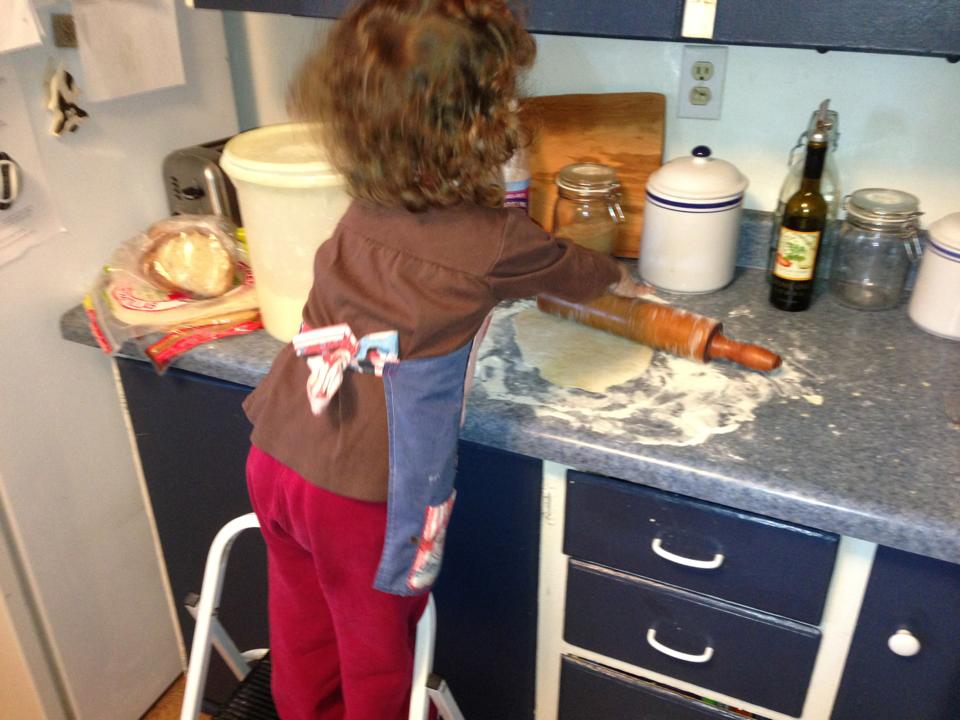
Make 1/2 cup of sour milk if you don't have any, see directions above. Sift together the first six dry ingredients and place in a 2 qt bowl; mix in wet ingredients [egg, oil, milk and extract if using] with fork. Put some flour on the counter and roll out the dough about 1/4 of an inch thick or a bit thicker. If it is sticky, add a bit more flour so you can roll it easily.
Cut into doughnuts [If you don't have a doughnut cutter, just cut out circles with the top of a jar or glass, then cut a smaller circle inside with a lid from a smaller bottle, like a salad dressing bottle.] Fry the doughnuts and the holes at 400 degrees F, a few at a time, until brown, turning over when first side is brown.
When both sides are brown, remove from oil and lay on paper towels to drain. You may want to put some sugar or cinnamon sugar in a paper bag and shake the hot doughnuts, one a time, in the bag to coat them. Serve hot with cold milk or apple cider. Yield: 1 dozen. [I always double this recipe.]
12/07/2011
With Christmas looming and many people already thinking about gifts and New Year's Resolutions regarding organization, I thought I would talk a bit about limiting toys. In response to my post "Tools not Toys" , I had a mom ask me this question:
"This is fantastic advice. I'd like to move more in this direction with my kids, but I wonder if you have any advice for how to handle/decrease the junk toys that the extended family tends to lavish upon us? "
I think the first thing to do is to talk to your husband about the idea of tools vs toys to be sure you are on the same page and he is behind your decision to move in that direction. Also, if you kids are old enough, talk to them about reducing toys and blessing those less fortunate.
Next, find a good charity that can use toys. Perhaps Good Will or a children's charity. If they were cleaned up and donated they would probably bless many families.
Now have your children help you pick their favorite toys. Maybe you can give them each a box and everything they love has to fit inside the box. Or maybe you can just ask them to choose 6 things that would bless a less fortunate child and put those in a box. Either way, you can start to reduce the amount of things they have. If your child has a TON of stuffed animals you could tell them to gather all their stuffed friends together because you want to take a picture of them with the toys. After the picture, tell them they need to put 1/2 of the toys [or all but 3] in a big garbage bag and you will store them. Then in 6 months if they miss them, they can switch them out for the ones they didn't store. If not, after a period of time, you could donate them.
When my kids were little we used to rotate their toys. I would put 1/2 the toys [or maybe just put away the toys I found most annoying] away and rotate them every few months. If some toys were not missed, they took a trip to the Good Will store.
So, no matter how you do it, reduce what you have.
Now comes the hard part. Limiting what come in. I guess there is no easy answer but I have a few suggestions.
- Print off a copy of the Tools Not Toys post and give to each person who gifts you, and say this really resonated with you and your family and you would love to move in this direction; and ask them to help you.
- Keep a running list of tools and clothes your kids could use and give copies to grandparents and others in your life [if it won't offend them] that give gifts to your children. If you have a nice varied list, and keep it current, they will have a better idea of appropriate gifts.
- Other gift ideas would be to have grandparents help with cost of being on a team. If you child regularly is on a little league team or is in cub scouts, perhaps grandparents could buy the uniform or pay the registration. And let you kids know who paid for it. Take a picture of them in their uniform and have them write a paragraph about the activity and send the photo, the paragraph and a thank you note to Grandma and Grandpa.
- Perhaps you could suggest that your family would like tickets or a pass to a museum or aquarium. I know when my kids were younger we lived in Florida and we had grandparents pitch in to buy us seasonal tickets to Disney World. We had unlimited access to Disney for 4 months a year and since we lived close, we really got our money's worth. Every time we went I would remind the kids how both Grandmas and Grandpas paid for our passes.
- If you have a big ticket item you would love, perhaps a play house or kid sized picnic table, a swing set or a bike or bunk beds, ask the people who gift you to go in on it with you, This way you could get some good quality tools for your family.
- Along the same line as the above idea--maybe you could suggest some curricula or school equipment. Something like an art program, a microscope or gift certificates for curricula would be a great gift and most kids would LOVE something like this.
- If worse comes to worse, and you can't get extended family on board, have your child play with the thing, take a picture, then quietly donate it.
- If you have enough nerve, you could take the item back, even asking for the receipt, and put the money towards camping equipment or something else that the kids would love, something that won't break in a month.
- I think if you ask grandparents help you get your children outside more that will give them good ideas for tools. Some great tools are a pogo stick [yes they are still made], a good long jump rope [nylon-you can buy heavy duty and cool-looking rope at Tractor Supply or a hardware store], gardening items, bubbles, a basket ball hoop and ball, sports equipment, bikes, sandbox, a big dump truck full of sand, orange cones to be used for goals, making obstacle courses, etc.. Basically anything to get kids moving, playing and building muscles. Outdoor play with others can also increase interpersonal skills that come from interacting with others in a positive way.
- Another idea, my mom used to take Kari shopping once a year for her birthday, starting when she was about 7 or 8. They would go to the mall [which I rarely did], have lunch out and then buy Kari an outfit and maybe something at the Disney Store. When Kari and I were shopping on her 23rd birthday we happened upon the Disney Store. She started to reminisce about the great times she and Grandma had and about the Beauty and the Beast tea set Grandma bought for her. What great memories she has! And, you know, my mom and dad always sent a limit--they did not fling money around. So when they went shopping, Mom had a budget and she let Kari pick out something, but it had to be within the set limit. Those trips were so precious.
- Here is another idea for grandparents or aunts and uncles. My dad used to send Scotty $5 every year to buy a present for our dog. I mean, that was a big deal. Scotty would ride his bike up to the IGA store and really take his time picking out the best dog treats for Lucky. It was like a present for Scotty. It taught him to shop carefully and really made a bond between he and his grandpa.
- You might want to suggest the idea of a money bag to your parents. My dad had a cloth bag that he would keep change in . In fact, he would sometimes have to buy change at the bank. At any rate, a couple of times a year the kids could put their hands in the money bag and get as much change as they could! He would do this with nieces and nephews too! What memories were made through such a simple act. He would also, at family reunions, put money in a sand box or in the sand if there was a small beach. Starting with the youngest kids, they could search for the coins. Even in the evening, you could see the parents of the kids sifting though the sand absently as they chatted with each other.
- I guess in summary, Tools are better than Toys, and memories trump them both.
I don't know if this his helpful or not, but I suspect most grandparents, aunts and uncles would love to get on board with this idea. They want what is best for your kids and they want to be part of it. If you can lead them in this direction I think they will feel more fulfilled in their gift-giving and everyone will benefit.
Take Care,
Jill
11/02/2011
As I contemplated what I would write for today's blog, I decided that being the beginning of November it would be a great time for introducing the subject of "Christmas School." I couldn't believe it when I read Judy's post, Holiday School. At first I thought I would have to come up with something else, but after reading her wonderful ideas I realized that my ideas compliment Judy's and between the two posts maybe we can help you alleviate some Christmas and holiday stress.
To let you know where I am coming from, I started homeschooling my 7th grade son at Thanksgiving after pulling him out of an unsafe public middle school. With a toddler and preschooler at home, and two other boys in the local elementary school, homeschooling seemed almost overwhelming.
And then came Christmas.
I was overwhelmed and I will admit it now...a bit cranky. Between schooling, cleaning, church activities, baking, cards, presents...well you know what I mean. It was too much!
At any rate, the next year I got smart and planned for Christmas by making the necessary preparations part of school: not in addition to school.
Our Christmas school worked this way: we did no formal school for the two weeks before our Christmas break [for late middle/high school kids I did have them keep up with their math]. I had the kids help with cleaning, baking and addressing the Christmas cards. I had them help with wrapping presents, delivering goodies to neighbors and everything else there was to do. It was part of the school day.
For years our children each did some sort of art work or wrote a poem and then I put it all togethe
r, got it printed and sent it out as our Christmas card. During Christmas School they did the creative part and then they helped fold, stuff and put labels on the envelopes. There are lots of skills involved in this and it made getting ready for Christmas a fun, family event.
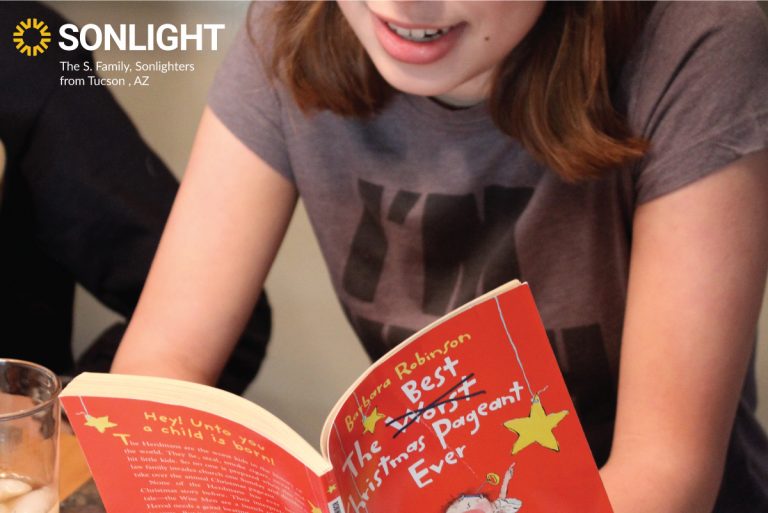
In addition, I read great Christmas Classics aloud to the whole family. A couple of my favorite read-alouds are The Best Christmas Pageant Ever, which I read aloud annually for 20 straight years and the original A Christmas Carol by Dickens. Even my young children loved this story, though the language is a bit hard. Many times we would watch the Mickey's Christmas Carol cartoon after reading the original story.
Christmas was fun and not stressful.
The difference--I planned for Christm
as, made it part of school and included the children as much as possible. The work got done, we were not stressed out at all and the children looked forward to it every year. I counted it as school and if you want to quantify it into subjects you might use these: home economics, art, life skills and cultural studies.
So, my advice to alleviate stress? Plan for the times you will be stressed and incorporate your children as much as possible. It will be educational, family building and a way to make great memories with your children.
Take care,
Jill
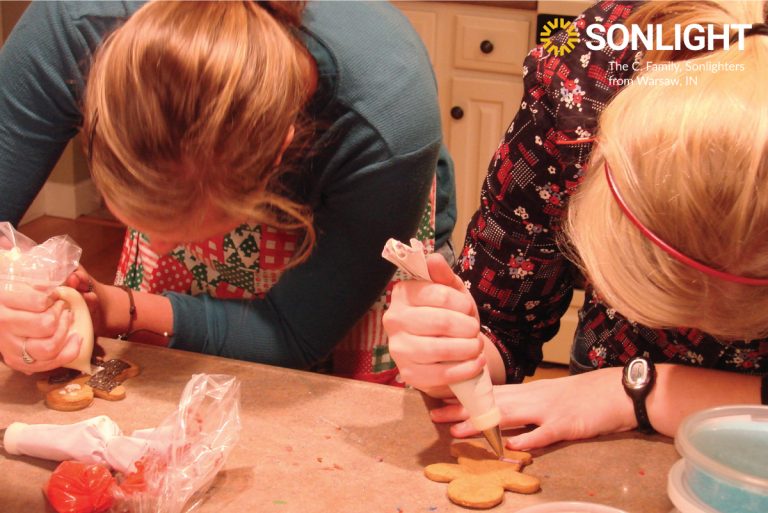
Because I love to bake, I wanted to include a recipe for making the best gingerbread men I have ever tasted. These are a holiday tradition at our house. We don't decorate them, but you could. I always make a double batch for a total of about 100. They don’t last long and make terrific gifts The last couple of years I put holes in the top of the dough with a plastic straw, then after baking we run yarn through the holes and hang them up on our Christmas tree as ornaments. [I just need to be sure to put them higher than our dog can reach!]
JOLLY GINGERBREAD MEN
Thoroughly cream together:
1/2 C butter
1/2 C shortening
1 C white sugar
1/2 C brown sugar
1 egg
1/4 C light molasses
Mix the following together and then stir into the butter mixture:
31/2 C flour
2 t baking soda
2 t cinnamon
1 t ginger
1/2 t ground cloves
Mix till all is blended and chill. Roll out cookies to desired thickness , cut with a cookie cutter and bake at 375° for 7-9 minutes.
Note: After you get the dough mixed up it may still look pretty dry, but just take it in your hands and work it into a ball. I use a 3” gingerbread (tin) cookie cutter and this make about 50 cookies.
As a tip, it is easier if you dampen your counter and lay a plain cotton (not terry cloth) dish towel on the dampened counter. Sprinkle the towel with a couple of tablespoons of flour and then put 1/3 of the dough (rolled in a ball) on the towel. Flatten it slightly with your hand, sprinkle it with flour and roll out like a thick pie crust on the towel. If it gets sticky, sprinkle with a bit more flour. After rolling and cutting out all the cookies, shake the towel off outside and wash as normal.
10/24/2011
Previously I talked about the problems that I had trying to teach my children important character traits by reading books written specifically for that purpose. I believe the stories did not translate into real life because they didn't make any sort of positive impact on my children. They might know to never tease a weasel, but brothers were fair game!
I believe character traits are caught not taught! But, I think we can do something to make catching them a bit easier. It is somewhat of a secret, but I will share it with you....read real books! Not books designed to teach character--kids are too smart for that. But when you share real, living books with your children you will have many opportunities to talk about the characters in the books--what they did right, what they did wrong, what they should have done.
I remember when I read Little Britches to Kari and Scotty. That book is full to the brim of character lessons-most of them learned by the author, Ralph Moody when he was growing up near Littleton, Colorado around 1910. This autobiography is a wonderful account of growing up on a ranch; about responsibility and honesty and about the relationship between a father and son.
Ralph is an amazing storyteller who weaves his story like a fine tapestry. It is amazing how he remembers so well what it was like to be a child. And the lessons Ralph learns in the book are as applicable today as they were 100 years ago. Whether you homeschool or not, this is a delightful book to read aloud to your children. It will make a lasting impression on the whole family.
And who can forget about the elephant who is "Faithful, 100%"? Horton Hatches the Egg is another story where you can talk about doing what is right, about responsibility and friendship, about love, adoption and what makes a good parent. This is a great read-aloud book that brings up many character issues for you to discuss with your young children.
There are so many wonderful stories with great story lines and characters worthy of emulation or of scorn. One of our favorite biographies was Eric Liddell --the athlete the story "Chariots of Fire" was based on. He was dedicated to running and to God, yet he had to make a choice between the two. His story is inspiring and humbling; a great book to read-aloud to older elementary and middle school children.
And then there is great historical fiction like Daughter of the Mountains, which teaches faithfulness and sticking with a job. There are antagonists you can talk about as well as characters who are good and kind. This book, like many others, gives you, the parent, an opportunity to talk about those core beliefs that you want to pass on to your children.
Another incredible
book to read to younger children is The Bee Tree. It not only teaches natural science, but also the value of reading and the wisdom of older people.
I could go on and on because for every book I mentioned, there are scores that I didn't-- but basically I found that reading Sonlight’s read-alouds to my children was a natural way to talk about situations and characters. We could discuss their decisions and what they could have or should have done differently and what we would do if we were in their shoes. I believe this is character training at its best.
So read a book to children,
That’s my best advice...
Talking about building character
During family time is nice!
And, I would love to hear of books you have used to help teach your children the value of having a good character.
Take care,
Jill
10/19/2011
Over the years, I have had many people ask me questions about how to teach positive character traits to their children. And, raising children with good character was high on our family’s list of educational goals.
Years ago, when I was a young mother, I thought you could teach it through books specifically designed for this purpose. We checked out books with titles like "Let's Talk about Whining" and "Let's talk about Lying" from the church library. We still own a book called "Never Tease a Weasel." It has been well over a decade since I have looked at this book but I can still recite:
Never tease a weasel,
Now there's some good advice.
A weasel will not like it,
And teasing isn't nice.
But, you know what? While many of these books were fun to read, they did not help teach my kids not to whine, lie or tease. It was like the books were one thing, life another.
My husband went to a seminar once and brought home some beautiful books with animal lessons. Each animal was supposed to teach a Biblical truth, a character trait for the children to emulate. They were beautiful books with matching coloring books. The kids enjoyed the stories and learning about the various animals. One year I had Chad [then late middle school age] teach a lesson every week to Kari and Scotty for science/character training. The books were that good!
There were ducks and wolves and all sorts of interesting facts woven into the fiber of the underlying theme of teaching character. They loved those books! But, just because they learned that a baby wood duck has to obey his mother at the first call or he will be left in the nest of the hollow tree, it didn’t mean that my children obeyed when I first called.
But, if you follow the logic of the book, the mother duck had some serious character issues of her own if she would leave her own baby behind just because he didn't obey her the first time she called.
Then I understood! Character is caught not taught!
The way to teach children how to be honest is to be honest. I will admit, this is much harder than reading a book called "Let's Talk About Honesty," but I believe this is THE only way to teach character.
The way to teach children compassion is to be compassionate. The way to teach them not to gossip is not to gossip. The way…well you get my drift.
Scary--isn’t it?
You know it's true. Kids watch us like hawks and they don't miss a trick. They see if we give back the extra quarter the clerk gave us in our change. They see if we help a neighbor or look the other way so we can avoid them. They know if we pick up the phone when we know it’s our mother-in-law on the other end. They hear us gossip. But, don't get discouraged! Granted, we are not perfect and we make mistakes; but I think realizing that we are teaching character when we think our kids are not looking, will make us better parents-- better people- and better ambassadors for Christ [One of Sonlight’s Top 10 Goals] ! And, we don't have to be perfect to do a good job.
This is what I believe with all my heart: Character is caught, not taught. [Next Monday, I will let you in on a secret of how to making “catching” good character a little bit easier.]
Take care,
Jill
10/05/2011
I was a science major in college. As a young college student I chose to earn a science degree and to get a teaching degree with it. My major interest was natural and earth science and I loved to get my hands dirty with dissections, soil studies and so much more.
So, years later when I began homeschooling my own children I thought of all the great subjects we would study and the wonderful experiments we would perform. The problem was most of the science I looked at-and some I tried-was boring or difficult to teach. Sometimes there would be an interesting experiment and I would say, “Well, if we had a cork [or a copper screw, or whatever] it would work like this.” But we didn’t. And that is no way to teach science. It needs to be experienced.
One year I got a hands-on program that looked great but it took a LOT of prep time from the parent. But, because I love science, I gathered the myriad of supplies and decided to use it with my three oldest children. I should mention that I knew the guy at the local electronics store on a first name basis after this because I had to make so many trips there for switches, wire, battery holders, various light bulbs and more.
Once we got started all my prep work did not really pay off. Most the experiments did not work and when some did we didn’t know why [unless I researched it somewhere else]. Frustrating! So we were back to boring, text book science.
A few years later I found Sonlight and ordered the whole program sight unseen. I was awed by the history books and the Instructor’s Guides but the thing that blew me away was the science.

Non-Consumable Science Supply Kit
I could not believe it! There were good directions and experiments that not only worked but that had explanations telling why. And, best of all— the science kits contained nearly every item I needed to do them. No more looking for corks, wire, bean seeds and mirrors. It was all there so I could enjoy hands-on science with my children.
It was like a miracle!
Here was real, honest-to-goodness, hands-on, fun, educational science. And, many of the science books have become family favorites that my children read again and again.

Ultra Microscope
I started Sonlight Science by combining my two youngest children in Science D when they were in 3rd and 6th grades. I kept them together in science until my oldest started Sonlight’s Biology course in 9th grade. A word here about the high school level science programs that Sonlight offers…they are complete and excellent programs, and the Sonlight Ultra Microscope is better than we had in the science lab at Michigan State University when I went to college!
If you want to give your children a great science education and have them learn how to implement the scientific method while seeing God as The Creator, then try Sonlight Science. It is what you are looking for.
Take care,
Jill
09/07/2011
If you have more than one child, you know that each one is very different. If you have any siblings, you will notice the same thing-each one is very much their own person. My older sister and I have been close our whole lives. I can’t remember any fights or quarrels or hard feelings along the way—but we are very different.
One thing that stands out to me is how my sister loves to take classes. She has taken knitting, computer, small business, painting, gardening, various sewing and stained glass classes in the past few years. She loves the interaction, the instruction and the fellowship.
On the other hand, I NEVER take classes. I read books, research on line, talk to people, lay in bed at night trying to figure things out—but I never take classes. It’s not that I am anti-social, on the contrary, I love people, but I just learn better when I am not confined to a class. I can remember when I was about eight years old and I received a crochet-a-hat kit for Christmas. I read it and worked through the pictures and crocheted a very lopsided hat. When people asked where I learned to crochet, I would spout, “I taught myself.”
And that pretty much sums up how I learn things. My sister, on the other hand, takes classes and that is how she learns. Sometimes she takes what she learned in class and teaches me—like how to crochet rag rugs—but mostly we just share ideas.
I was thinking about this the other day when I was contemplating a new project—how I just “teach myself” and it got me thinking about my own children. When I started homeschooling, back in 1990 there wasn’t a lot of choice when it came to homeschooling and not a lot of information available. I started out with traditional text books and began to teach my family.
A couple of years later I heard about unit studies and one year put together a full year of various unit studies so that my five children, then ages 3-14, could learn together. [This was before I heard about Sonlight.] But, what I found was that while four of my children excelled, one son just did OK. I should re-word that. One son, got distracted, did not really enjoy learning together with the family and sometimes was disruptive. He was bright and loved to learn, but he seemed to get restless and impatient.
The following year, we were back to text books and I taught that son and his older brother together. He wasn’t too happy about that either. And then it hit me… "I am slowing him down and he is getting frustrated at the pace. He wants to teach himself." It was like a light bulb went on.
It took me long enough to figure it out, but the next year I had a new plan. Taking into consideration his learning style, I gave him an assignment pad that had a week’s worth of assignments on it. He had to keep a reading log and a writing journal about what he was learning. Additionally, he had to create a project related to his history reading and had to meet with me a couple of times a week to be sure he was on track. He was in 7th grade and I gave him independence in learning within the boundaries I set.
He flourished.
Through independent study and research, he grew by leaps and bounds. Weekly he set aside some time to teach his younger siblings science—which they all enjoyed. He didn’t want to sit in time-wasting lessons when he could learn so much better if he could teach himself.
It wasn’t until I was talking with another mom a few weeks ago that it occurred to me what his problem was---he was too much like me! I never even saw that. I never connected the dots till now—and it is nearly 2 decades later.
All this to say—if you have a child that is not doing well, or learning like you think they should, maybe it is the method you are using. Maybe they need more choices or to have some degree of flexibility and independence. If I had it to do over again and understood how this child learns, I think I would have done family reading together and then dismissed him with an assignment pad to teach himself the other subjects. I know many mothers do something similar using workboxes. It would have made it more pleasant for him, for me, and for my other children who liked a more teacher-led approach.
Which brings me back to my sister and I. We both love to learn—but I like to teach myself.
Take care,
Jill
08/15/2011
As I read Judy’s post about another milestone in their family I couldn’t help thinking of an upcoming milestone in ours. In December, our youngest son will graduate from college and my husband and I are already patting ourselves on the back. We have five children and come December, all five will have college educations. I get a goofy grin whenever I think about it.
Like Judy, I can remember when the thought of homeschooling through high school left me shaking in my boots. I got an introduction to making limited transcripts for our older boys years ago when they went to public school in 10th grade after being homeschooled for several years. But as I homeschooled my two Sonlight educated kids I realized that they would graduate from our homeschool and I had to make full transcripts, issue diplomas and help with college admissions.
It was scary thinking about transcripts, credits, diplomas and college applications. I had friends who were going to weekend training seminars so they could learn how to do these things but I kept thinking,
“Could it really be that hard to do high school?”
I remembered what a wise woman once told me, “You don’t have to worry about everything, just make a plan and then do a year at a time.” Hmm…that sounded easier.
So, I got online and looked up what colleges and universities in our area wanted to see in their incoming freshmen. Then I made a grid that had 4 columns across the top, one for each year of high school. I put all the subjects along the left side, and then drew lines to make a grid.

Planning for High School
I PENCILED in the year we would do those subjects the colleges said we needed to have. Leaving room for electives and things I was unsure of, it looked kind of like the sample I have here.
This gave us a basic plan. As opportunities came up, such as swim team, etc., I added those to the grid under the category I thought it fit into. At the end of each year I updated the grid showing what we did and added the completed courses to the “in progress” transcript.
A transcript is just record or resume of what your child has done. If this scares you, remember this—THERE IS NO SINGLE RIGHT WAY to make a transcript. EVERY school and district has their own design, format and set up, so an admissions officer sees literally hundreds, perhaps thousands of various transcripts a year. [Tip do an internet search for high school transcript and you will get lots of ideas.] Yours will not look any different to the admissions officer than any of the others.
There are a few things you must have such as your grading scale, the total credits given for a course, the student’s name, your signature…but the set up is up to you. Like Judy, I highly recommend Cafi Cohen's book, Homeschooler's College Admissions Handbook. It is an amazing wealth of information and will show you sample transcripts and how to plan a high school education.
I have gone to many homeschool conventions in the past years and colleges and universities are recruiting our kids. They are looking for a reason to admit them. They know they get top quality students who know how to think, study and learn when they admit home school students. Don’t let the fear of transcripts rob you of the joy of homeschooling your high school student. Your child will learn to think and digest material and discuss it with you at a whole new level. You will deepen your relationship with them while giving them the tools they need to enter society as an adult.
I am convinced that there is no better high school education anywhere than through Sonlight. Our kids can read, think and communicate at a level not often seen in incoming freshmen. You can do it. You can homeschool through high school; just take it one year at a time keeping your eye on your four year plan. And, for lots of great ideas and support, visit Sonlight’s “Parents of High Schoolers Forum.” The wealth of information and years of accumulated experience on this forum will amaze you.
Yes, Scott’s December college graduation will be quite a milestone in our family. We gave him the best we had to give and now it is up to him—and the way I see it, the opportunities awaiting him stretch out to the horizon and beyond.
Take Care,
Jill
08/03/2011
My dad had a lot of great advice and wisdom. One of the many things I learned from him was the art of giving gifts to children. I remember it clearly. At that time I had three little boys and Dad and I were standing in his workshop. He was making something and I was holding some tools for him. I commented that he and Mom always gave such great gifts to the kids. At that time I was in a women’s Bible Study and that same week some of the moms were discussing how their kids got so much "toy junk" as gifts and they were lamenting it and wondering how they could curb the toys and limit the junk.
Dad said, "You have to give kids tools, not toys."
That was the advice. He didn't really elaborate--which if you knew my dad, you would be smiling because he generally elaborated on everything.
Tools not Toys.
Actually, he didn't have time to elaborate because one of my boys [they were in the house with Mom, started crying and I left Dad in his workshop to see what the trouble was. Then I was off to other things and the conversation never really finished. But, when I was driving home that afternoon those words came back… "Tools not Toys."
I think it goes back to the thought that we are raising kids to be well adjusted, functioning adults that will one day hold jobs, have families and be responsible citizens. We just have our children for a little while and during that time we are to prepare them to take their place in society. So they need to learn a lot along the way. They need to be molded and shaped and directed. They need the tools-- we need the tools--to get them there.
My Dad was a history and shop teacher when I was growing up and one thing he instilled in us from a young age is, "You have to have the right tool for the job." He would sometimes shake his head when he looked at my husband's tools in our early married life. Many times he would give us the correct tool for the job, or let us use his. I mean, you cannot fix plumbing without a pipe wrench, or work with electricity without a volt tester.
The same is true with kids. What kids need are tools not toys. If folks could just get a handle on that, much of the junk found in the typical kid's section of most stores could be reduced by half or maybe even 90%. But, what is a tool?
I have thought about this a lot through the years and actually a thread in the Sonlighter Club Forums asking for The Ten best Manipulatives for Preschoolers, brought it to mind again.
Now that I have two toddling granddaughters I have put together a list of sorts so that my husband I don’t become grandparents that give our sweet grandgirls junk, and their parents the stress that comes along with it.
Tools in no particular order: Balls, mitts/bats, orange cones to mark off goals, blocks, dolls, small animal figures such as a little farm, flashlights, sand box, wagon, bike, swings, picnic table, paper and markers/crayons, construction blocks, scissors, games, backpack, fishing pole, compass, knife [older child], mess kit, camping supplies, books, actual tools like a screwdriver and hammer, wood-burning set [older child], knitting or crochet or any kind of handwork, magnifying glass, leather craft, jump-rope, pogo-stick [I loved mine as a kid] kid sized baking or cooking set, puzzles, kitchen set [play food and so on], a cash register and play money, paddle ball, a big empty box, capes and costumes, gardening items like a pail, shovel and so on...really most traditional toys. I consider small cars and most action figures tools too.
Toys, in no particular order: Anything that has batteries or makes noise that drives a mom crazy, if it is meant for the child to watch it rather than interact with it, many video and computer games--even educational games--can be toys if you are not careful, anything that is cheap plastic and will break easily, stuffed things that talk and entertain--really anything that is meant as an entertainment. I am sure if you and I went together to a big box store, we could find tons of toys that would fall in this category.
Now, I am NOT saying "No Toys Ever!" What I am saying is: Tools should be a child's main diet and toys should be like a dessert. Dessert is nice, but you only have it occasionally, not at every meal.
Tools will encourage imagination, develop large and small muscles, and should get the child outside daily. Tools will stand the test of time, can usually be passed down from child to child in a family, and have a lot of play value. This is one reason I helped to develop Sonlight’s P3/4 Preschool Program with Amy Lykosh. It is a collection of great tools for preschoolers—and I think Dad would agree that the package it is one of the right tools for the job of raising our little ones.
I am sure you can think of more great tools and I would love to hear from you so I can add to my list.
So, the next time you need to give a gift to a child, remember my dad's words, "Tools not Toys."
Thanks for advice Dad.
Take Care,
Jill
07/06/2011
Last week I talked about ways to beat boredom in the summer and it reminded me of how we made the most of summer when my children were young. I found if I didn't have some sort of plan the days got away from me, the work piled up and we still hadn't made any memories. But, when I had a plan, or at least a rough schedule, the chores got done, we had fun outings and the whole household was calmer and happier.
I was reading a thread in the Sonlighter Club Forums about summer schedules and it made me think about the basic schedule we followed for years. You may want to have some sort of summer schedule. It can be loose, but something like:
- Monday-Laundry, everyone takes their laundry to the laundry room, straighten their own room, room chores [such as vacuuming the living room, unloading the dishwasher, dusting, etc.] then everyone can have free time. You may have a child or two that works on the laundry or at least helps fold and put away the clothes. If you go to the library weekly, this is a good day to have the children collect all their library books and put in a designated place or tote bag.
- Tuesday-Lunch at the park, or a nature walk day, then to the library [make sure to put last weeks book in the car!]--maybe invite a friend.
- Wednesday-Laundry again, and cooking day. Have kids join you and teach them basic cooking, or maybe just make something fun like ice cream. We loved making cookie ice cream sandwiches, wrapping them individually and pulling them out a few at a time for a treat.
- Thursday- Shopping day, maybe take in a movie or [one my personal favorites] play in the play place at a McDonalds while you drink some iced tea!
- Friday-Tidy the house and do laundry so the weekend can be relaxing. You may want to do craft, or maybe this could be science day. Lots of folks like to do some science in the summer to lessen the school work in the fall and it keeps the mess of the experiments outside. You may want Fridays to be an at home family movie or game night. You can pop some popcorn and enjoy each other.
You also might want to let all the kids sleep out in the living room or in a tent in the back yard one night a week.
I hope this helps make your summer fun and productive. Also, I was talking to my Sonlighting cousin a while ago and she mentioned that is hard to read all the Sonlight read-alouds during the school year so they save many for summer. She said it is so much fun and takes some of the reading pressure off during the school year.
Whether you homeschool or not--read your kids great books this summer, a chapter or so a day. I highly recommend the Ralph Moody books as a place to start. The first one, "Little Britches" is one of our family favorites and has lots of great character lessons as well.
Please, let me know if you have suggestions to add. I would love to be able to share more ideas in the future.
Take care,
Jill
06/29/2011
The most dreaded words in the summer vocabulary.
And I wonder, how could a kid be bored in the summer? I can't ever remember saying those words in my whole life-and certainly not in the summer. Maybe because if I said them out loud as a child I would be given chores?
I think some basic play equipment is very helpful to beat boredom. Depending on your living situation, some of these may be practical and some may not:
- swing set
- sand box-the bigger the better, you can't have too big of a sandbox
- various balls
- bean-bag toss game
- basket ball net
- soccer goal
- tether ball
- play house or designated play area in the shed or garage, if practical
- hammer, wood, nails
- perhaps a small wading pool
- a pet
- wagon
- old stroller
- bikes
- chalk
- paintbrushes and water [to paint on the sidewalk]
- bubbles
- sticks
- own garden area
- rope [jump rope]
- pogo stick
- mini [or full size] trampoline
- camp in the backyard
For indoor boredom busters--my first and best advice-limit TV/Computer time. Maybe they have to read an hour a day and then they can play video games or watch the TV for a a half an hour . Be careful with this, though.
If you have multiple children they may play the computer for 30 minutes, then watch their brother play for 30 minutes, then watch their other brother play for 30 minutes and now they have used up 1 1/2 hours with the computer. [Ask me how I know about this loop hole in the computer time rule!]
My best friend in the summer was a timer. We used it to limit the time to something reasonable. For TV, we had a rule-- no TV during the day. Then at night we would watch some show or DVD for about an hour as a family. I have a friend who lets her children watch 60 minutes of cartoons in the morning, then the TV is off all day unless they watch something together as a family.
My best advice is to try something that seems reasonable for your family and stick with it for a month or so and see how it goes. You can always modify it if you need to. But, in my experience, the more computer/TV time children have, the more easily they are bored when the TV/Computer is not in use.
Now, for indoor boredom busters:
- board games
- card games
- making forts under tables or on couches
- puppet shows done behind the couch, any type of puppets, socks work great
- making movies if your kids are old enough to use a video recorder. We have some awesome ones that the kids made years ago that make us laugh every time we watch them
- blocks
- action figures/dolls
- child kitchen
- child workbench
- match-box cars
- Legos
- play mobile
- reading [you might want to require so many pages/minutes a day]
- cooking/baking
- science experiments
- dusting
- vacuuming
- doing laundry
- straighten room
- sweep floor
- empty dishwasher or wash dishes
- camp in the family room-my dad actually pitched a real tent in the living room once--he nailed the stakes right through the carpeting into the sub-floor!
- water plants
- draw, paint, color, stickers
- play an instrument
- sing
- dance to music
- have a tea party
- dress up--keep a box with dress up clothes
- etc.
Perhaps make a set of index cards with one thing do on each one and train your children to pull a card if they can't think of anything to do. {This could be a great creative writing project as well. During the school year have your children fill out a card anytime they think of something they would like to do but don't have time to do. They could get as descriptive as they want to on the card and then they put the card in with the others and wait till they have some "I'm bored" time.}
I suggest banning the words "I'm bored" or "There's nothing to do" and instead teach your children to say, "I am looking for a job to do." My guess is this will eliminate the need whine around and will encourage them to entertain themselves.
Part two next week...how to have a loose summer schedule that you can live with.
Take care,
Jill