
Homeschool Science Curriculum
Sonlight offers complete and easy-to-use hands-on science programs from kindergarten to college-level lab sciences.
Sonlight Science covers the full spectrum of science studies—from earth, space, life, health, physical, electrical, and technological science, to college-level lab sciences (chemistry, physics, biology and more). Your children will learn these subjects in greater depth as they circle back through each topic over the years.
Sonlight Science will inspire you and your children to love science!
Sonlight's homeschool science curriculum lays a firm foundation of scientific understanding as it builds on, and fosters, your children's natural curiosity about how the world works. Delight your children with the wonders of Science, Technology, Engineering, and Math (STEM).
SCIENCE
Shop Programs
Sonlight offers complete, hands-on science programs from Kindergarten through High School.
SCIENCE
Shop Materials
Add to your science program with a variety of materials, including Homeschool Science Supplies Kits, Microscopes, Discover & Do, and more.
Sonlight Science Programs
Sonlight marries the joy of reading with the excitement of hands-on experiments to bring you complete, high-interest science programs.
Each Sonlight Science program includes an Instructor's Guide, a collection of great books, and hands-on experiments. We offer a complete homeschool science curriculum for all grade levels.
Updated for 2026
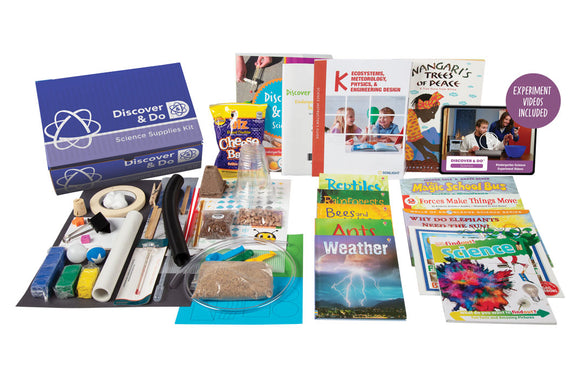
Science K
Ecosystems, Meteorology, Physics, and Engineering Design
Animals, plants, weather, climate, forces and motion with STEM hands-on experiments.
Age Range: 5-7
Grade Range: K-2
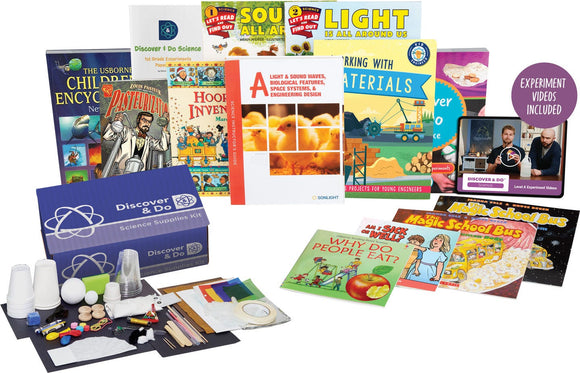
Science A
Light and Sound Waves, Biological Features, Space Systems, and Engineering Design
The natural Earth, human body, outer space, and animals. The scientific process with STEM hands-on experiments.
Age Range: 6-8
Grade Range: 1-3
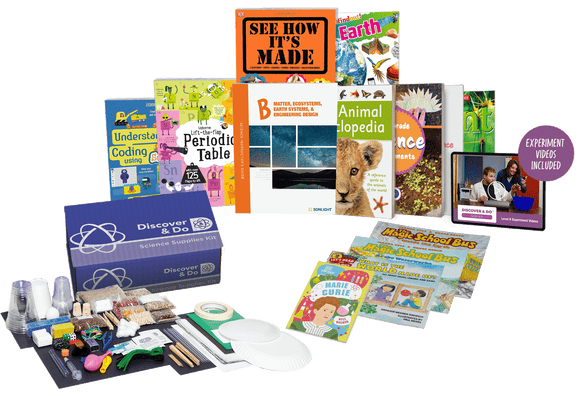
Science B
Matter, Ecosystems, Earth Systems, and Engineering Design
States of matter and elements, animals, plants, and the Earth. The scientific process with STEM hands-on experiments.
Age Range: 7-9
Grade Range: 2-4

Science C
Forces and Interactions, Life Systems and Cycles, Weather & Climate, and Engineering Design
Electricity, weather patterns, robots, and ecosystems. The scientific process with STEM hands-on experiments.
Age Range: 8-10
Grade Range: 3-5
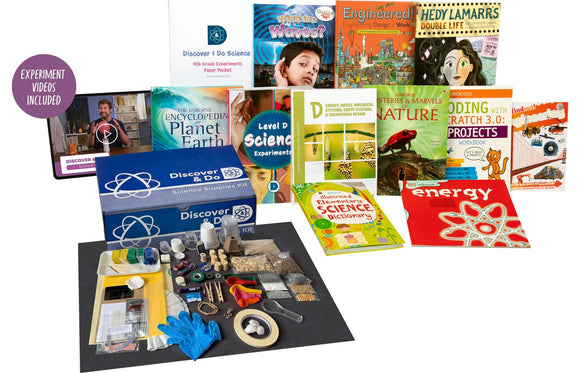
Science D
Energy, Waves, Biological Systems, Earth Systems, and Engineering Design
Energy transfer, waves & communication, biological structures & geology. The scientific process with STEM hands-on experiments.
Age Range: 9-12
Grade Range: 4-7
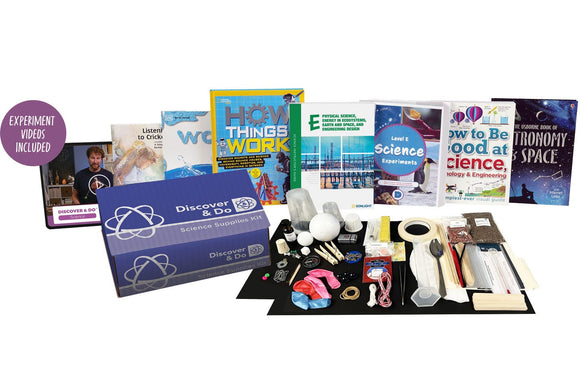
Science E
Physical Science, Energy in Ecosystems, Earth and Space, and Engineering Design
Chemistry, Ecology, Earth Systems and Astronomy. The scientific process with STEM hands-on experiments.
Age Range: 10-13
Grade Range: 5-8

Health and Human Anatomy
This program offers a well-rounded and engaging exploration of human biology, health and medicine with a Christian perspective.
Age Range: 10-13
Grade Range: 5-8
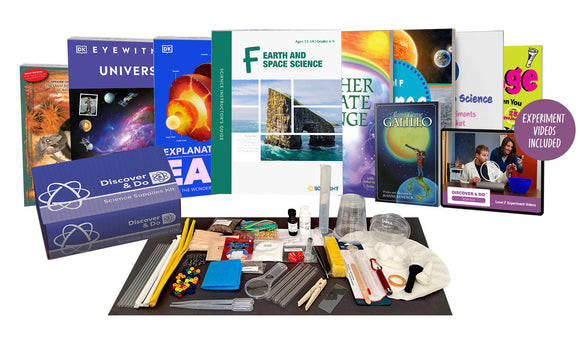
Science F
Earth and Space Science
With hands-on STEM experiments, you can learn about climate, our complex universe, evolution and God's design, and the scientific process.
Age Range: 11-14
Grade Range: 6-9
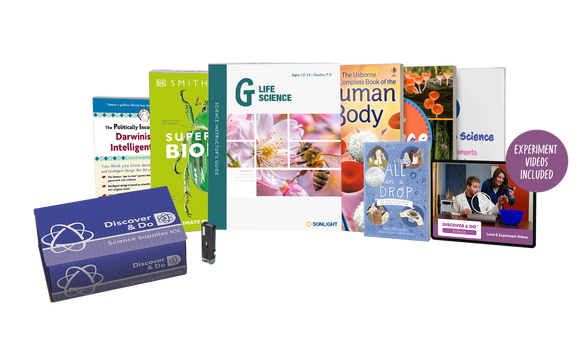
Science G
Life Science
Learn about body systems, reproduction, ecosystems, nutrition, and the scientific process with hands-on STEM experiments.
Age Range: 12-14
Grade Range: 7-9
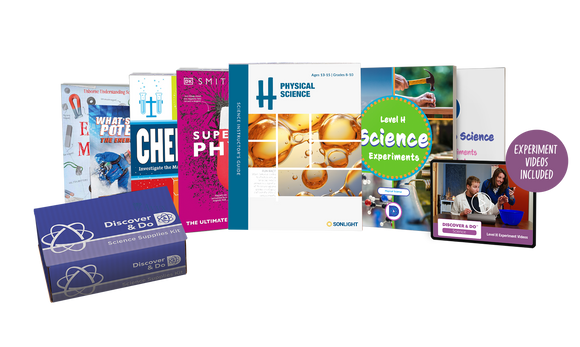
Science H
Physical Science
A well-rounded introduction to physics, energy, electrical concepts and the scientific process with hands-on STEM experiments.
Age Range: 13-15
Grade Range: 8-10
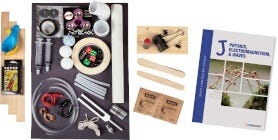
Science J
Physics, Electromagnetism, and Waves
Bring the astonishing History of Science concepts into your home with the Science J Lab.
This is not a stand-alone product. It is designed to be used in conjunction with HBL J.
Age Range: 13-15
Grade Range: 8-10
Upper-Level Science Programs
Sonlight's upper-level homeschool science curriculum is founded on the creation-based homeschool science books from Apologia Educational Ministries and Berean Builders.
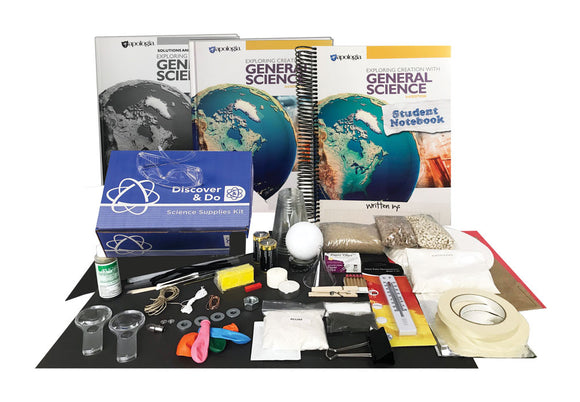
Science H
General Science
Learn to think scientifically. Includes experiments and materials.
Age Range: 12-14
Grade Range: 7-9
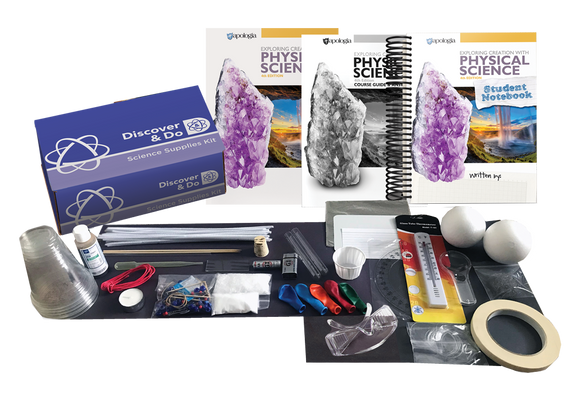
Science 150
Physical Science
Earth science and basic physics. Includes experiments and a unique Sonlight schedule.
Age Range: 13-15
Grade Range: 8-10
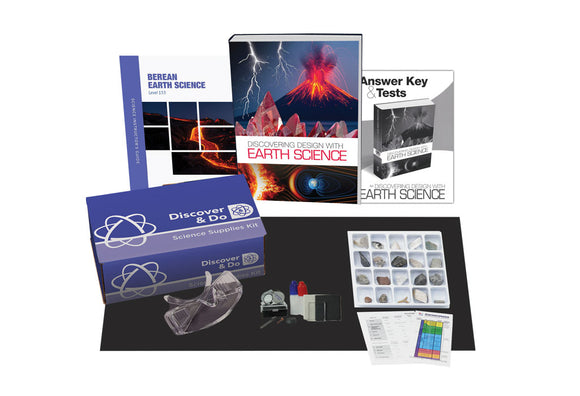
Science 155
Berean Earth Science
Includes a textbook, solutions and tests, a Sonlight Earth Science Schedule Plus, Earth Science Supplies Kit, Geology Basics Kit, and Geology Testing Kit.
Age Range: 13-15
Grade Range: 8-10
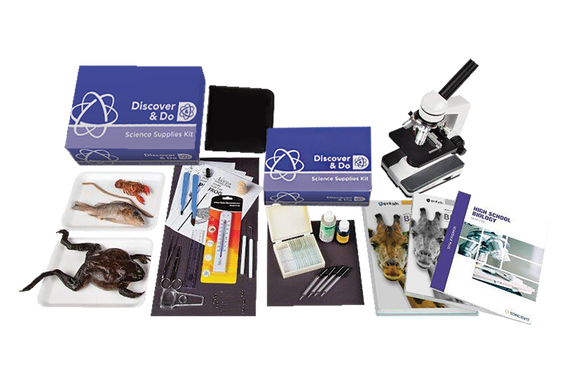
Science 250
Apologia Biology
High-school level biology lab. Includes experiments and a unique Sonlight schedule.
Age Range: 14-17
Grade Range: 9-11
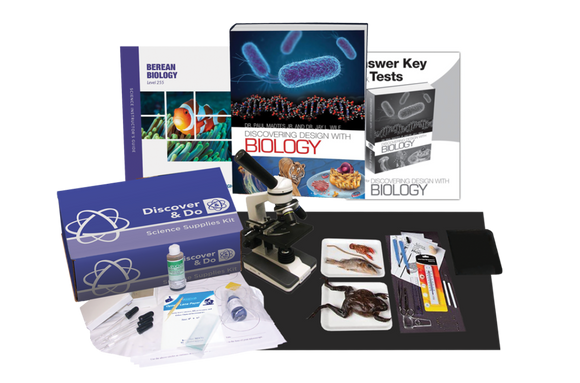
Science 255
Berean Biology
The 200-level Discovering Design with Biology is a laboratory-based high school biology course.
Age Range: 14-17
Grade Range: 9-11
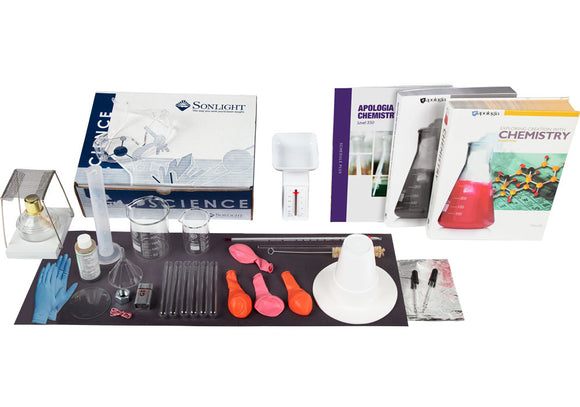
Science 350
Apologia Chemistry
Learn the theoretical and mathematical basis of chemistry. Follows a sequence of learning similar to biology.
Age Range: 16-18
Grade Range: 10-12
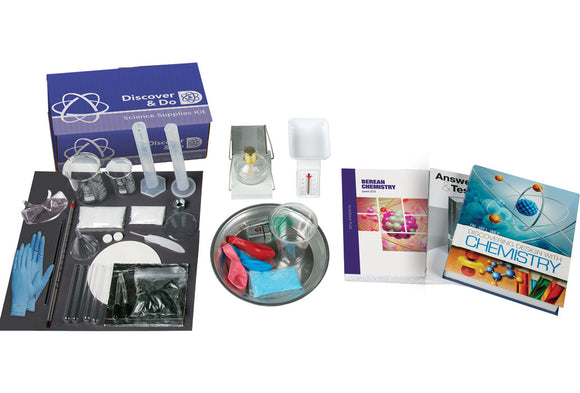
Science 355
Berean Chemistry
Learn the theoretical and mathematical basis of chemistry with a more conversational and approachable style. Includes a supply kit for hands-on experiments and a unique Sonlight schedule.
Age Range: 16-18
Grade Range: 10-12

NEW for 2026
Science 360
Apologia Health & Nutrition
Build lifelong wellness with this biblically based high school health course covering nutrition, fitness, mental health, and relationships. Includes hands-on activities and a unique Sonlight Schedule for flexible pacing.
Age Range: 14-18
Grade Range: 9-12
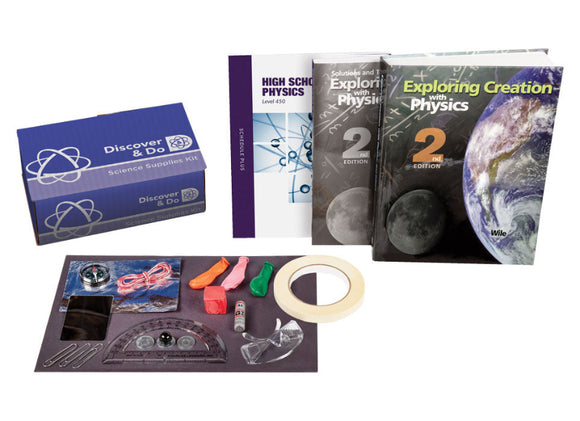
Science 450
Apologia Physics
A rigorous, college-prep course for high school physics. Designed for students comfortable with algebra and basic trigonometry. Includes hands-on experiments, supply kit, and a unique Sonlight schedule.
Age Range: 17-18
Grade Range: 11-12
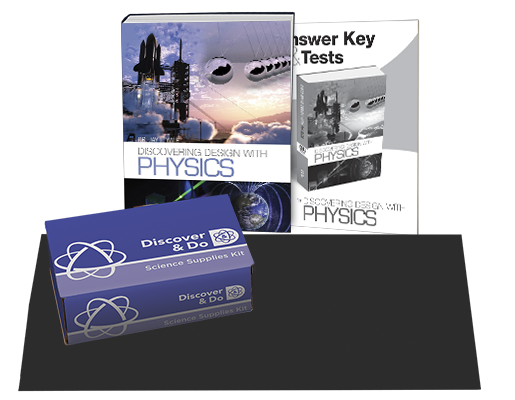
Science 455
Berean Physics
A high-school-level physics course that offers a clear, conversational approach to allow students to master core physics concepts while developing confidence in scientific inquiry. Includes hands-on experiments and supply kit.
Age Range: 17-18
Grade Range: 11-12
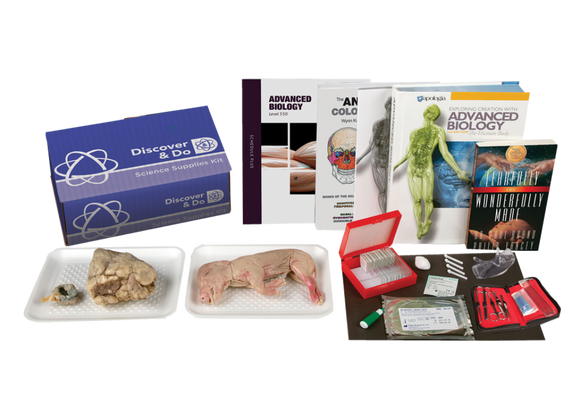
Science 550
Advanced Biology
Lab course covering both the anatomy and physiology of the human body’s 11 organ systems. Includes experiments and a unique Sonlight schedule.
Age Range: 17-18
Grade Range: 11-12
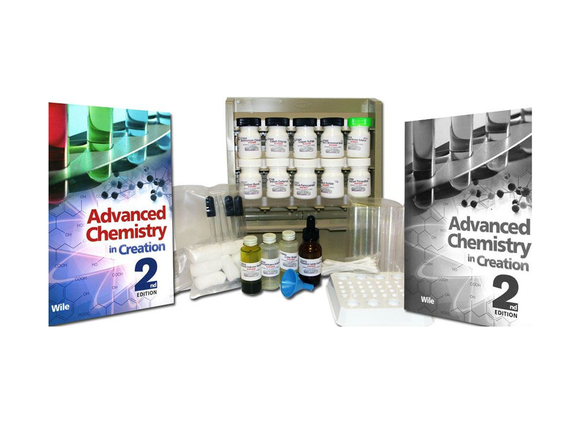
Science 551
Advanced Chemistry
Detailed descriptions of limiting-reagent stoichiometry, atomic and molecular orbitals, intermolecular forces, solutions, equilibrium, acids and bases, redox reactions, nuclear and organic chemistry.
Age Range: 17-18
Grade Range: 11-12
Homeschool Science Materials
Looking for additional science materials? Shop supplemental science supplies and resources.
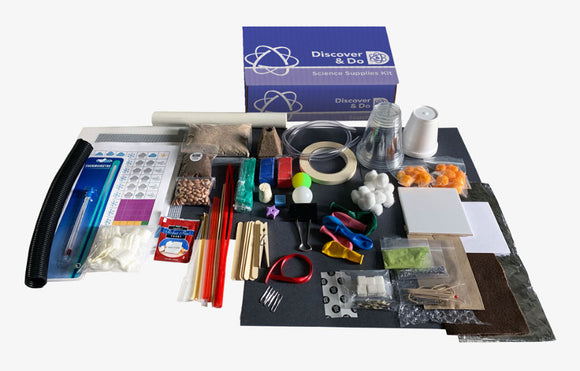
Science Supplies Kits
All the small and unusual items you'll need for the experiments in our science programs.
Included in your Sonlight Science program.
Discover & Do
The ideal video supplement to the early levels of our science programs.
Included in Sonlight Science K, A, B, C, D, and E. Levels F, G, and H added for 2025!
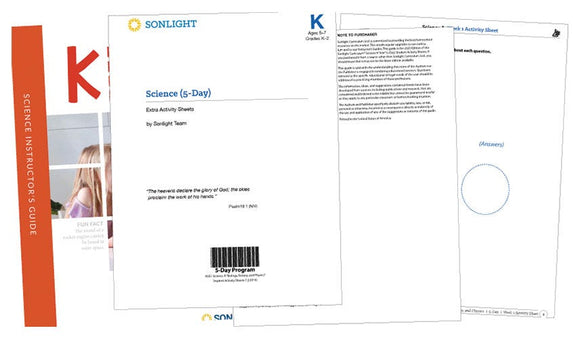
Activity Sheets
Need an extra set of consumable activity sheets for your Sonlight Science program? Find them here.
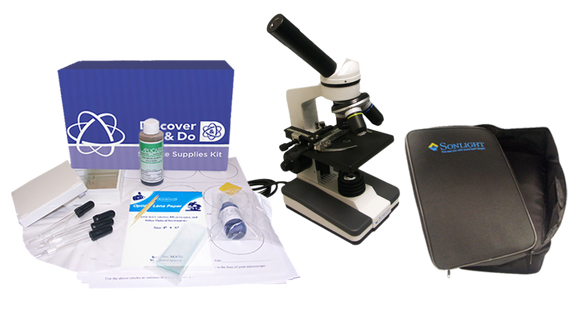
Microscopes
Sonlight offers a variety of microscopes to fit both your student's needs and your budget! Find the microscope and accessories you need to enhance your homeschool science explorations and study.
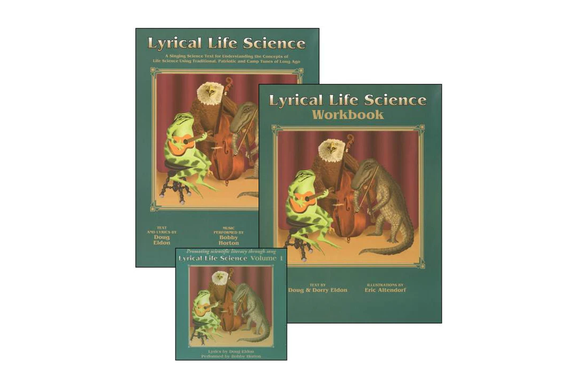
Lyrical Life Science
The musically and lyrically rich sound recording and text sets found in these Lyrical Life Science programs use humor as well as challenges to help students learn about various science subjects.
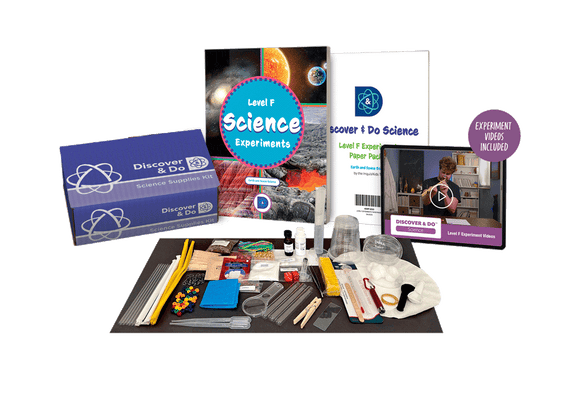
Discover & Do: Science Experiment Kits
Kids can’t get enough science? Get a taste of Sonlight's complete Science programs with these accessible and fun Discover & Do Science Experiment Kits.
Additional Information
Sonlight's Science programs are built on an Instructor's Guide, a collection of great books, and hands-on experiments. Let's take a closer look at each.
Science Instructor's Guides
Each Sonlight Science program is anchored by a customer-renowned Instructor's Guide. The Instructor's Guide (IG) provides structure and a complete schedule for the entire year: what books to read when; what experiments to do, videos to watch, and more. The IG also includes question prompts, explanations, hands-on activities (beyond the experiments), and additional notes to enhance the reading and reinforce what your students are learning. No need to create your own homeschool science curriculum or lesson plans as the IG clearly lays everything out!
Sonlight integrates a Christian perspective into our Instructor's Guides, so you and your children can look at the world through the lens of God's Word, the ultimate source of truth. We highlight God as Creator and Intelligent Designer. And we encourage your family to first seek to understand differing perspectives before critiquing them, so your children gain the ability to discern.
Each guide includes a list of what science supplies you will need, both for the present week and the week to come. (Need to save a milk carton for next week? Now you know!)
Instructor's Guides in levels K-J also include Activity Sheets filled with questions and simple activities, charts, illustrations, and pictures to help your children remember what they’ve learned. Teaching multiple students? You can purchase an extra set of Activity Sheets for each student (or if you plan to reuse the program with a younger student later on).
Click here to learn more about the Instructor's Guides in our homeschool science curriculum.
A Collection of Great Books for Your Homeschool Science Curriculum
Each science program comes with gorgeously illustrated books that captivate students and entice them to read more. Your children will not only learn the facts of science but also gain a love of discovery and get to know key scientists. These books become valued references for years to come.
A Highly Effective Combination
Sonlight Levels K-H combine Sonlight’s signature literature-based style of learning with the standards-based approach of learning through application.
Every week, your students will engage in an experiment directly tied to the rest of the content they study in their scheduled reading from the homeschool science curriculum.
The literature provides the context, while the experiments take your student through the critical thinking process of making a prediction, testing, and analyzing. This highly effective combination allows your children to experience the scientific process for themselves!
Hands-On Science Experiments
There is no better way to delight your kids with the wonder of science (and reinforce lessons!) than by experiencing it firsthand through hands-on activities and experiments. With Sonlight Science, your students will conduct simple, engaging, hands-on experiments and activities, all while reinforcing the concepts learned in your reading.
Sonlight Science levels K-H now include Discover & Do: Science Experiments. With Discover & Do, children will not just memorize the steps of the scientific process. Rather, they will conduct simple, engaging, hands-on experiments at home and actually use the scientific method to explore their world in an enjoyable and interactive way.
Each experiment ties directly to that week’s reading material for a more linear progression from reading to doing. Thanks to this new approach of Discover & Do: Science Experiments, your end-of-week experiments reinforce and apply the concepts studied in the days previous so you can plainly see your child’s developing mastery of particular science concepts.
Sonlight also adds extensive science supply kits into the homeschool science curriculum that include key supplies, making the experiments easy-to-do. These are boxes of materials that you probably don't have lying around the house, plus the stuff that, even if you own it, you're not likely to find at a moment's notice: everything from marbles and powerful magnets to wire, thumbtacks, straws, mirrors, seeds, and paperclips. This includes consumable supplies and non-consumables.
Additionally, Sonlight Science levels K through H include the all-new Discover & Do: Science Experiment Videos. These videos provide reinforcement of the concepts observed during the experiment and heard in the weekly reading passages. The highly entertaining videos reenact all of the experiments your students perform, providing review, additional factoids, and excitement to truly enhance your entire science experience.
Some families watch the videos first, then perform the experiments. Some let their children watch, and experiment on their own.
And some families find they don't get time for every experiment with their children. These videos allow them to still watch the experiments.
Next Generation Science Standards (NGSS)
The new, 2021 Sonlight Science levels K-H were designed to follow the classic Sonlight model of learning (reading, discussing, and doing) while also adhering to the Next Generation Science Standards (NGSS). These research-based, up-to-date science standards are simply good instructional practices. Dozens of scientists, esteemed scientific institutions, and science-based businesses have put their support behind these standards.* Now you have even more assurance that Sonlight provides an outstanding homeschool science curriculum.
*https://www.nextgenscience.org/voices-of-support NGSS is a registered trademark of Achieve. Neither Achieve nor the lead states and partners that developed the Next Generation Standards were involved in the production of this product, and do not endorse it.