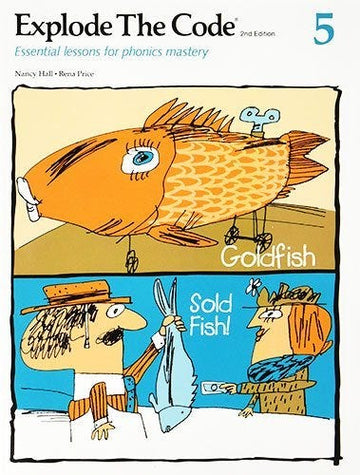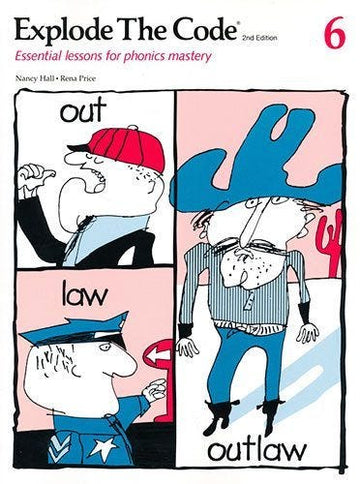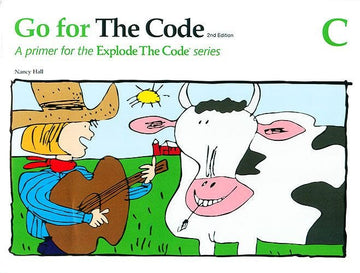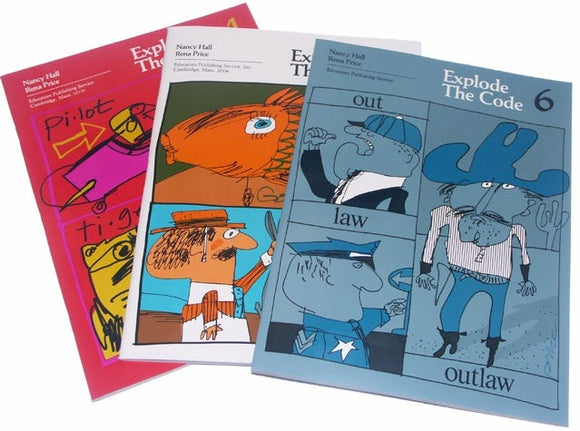
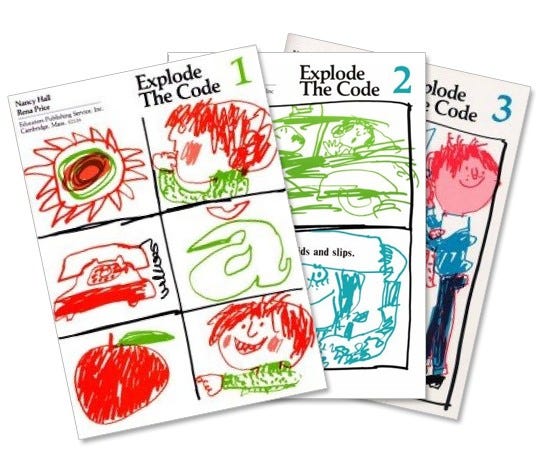
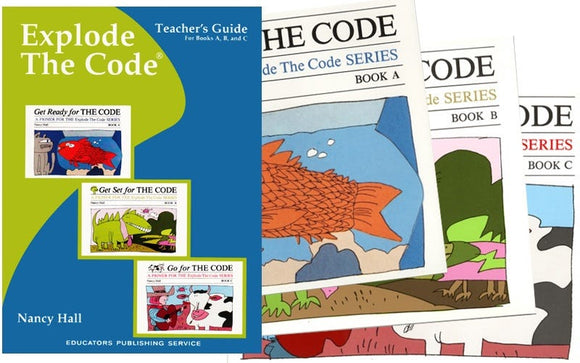
Consumable, Optional. These phonics workbooks fit all our criteria: systematic phonics and spelling rules, exercises that force children to think through the spelling of a word and comprehend what they are reading, and simple, non-distracting graphics. Scheduled as optional in Language Arts for Grade 2 Readers.
- Book 4 covers compound words ( pancake, catfish, etc), common suffixes ( -ful, -est, -ness, etc.), syllable divisions, open and closed syllables, and vowel digraphs ( ea, ai, etc.).
- Book 5 deals with -ed, -al_, ol_, -ild, -ind, qu-, and -ey words, and three-consonant blends ( thr-, shr-, str-, etc.).
- Book 6 deals with -ar, -or, -er, -ir, -ur, wor-, war-, -igh, -oo-, -ea, -ie, -oi, -oy, -ou-, -ow, -au, -aw, -ew, -ui-, and -ue words.
Note: These workbooks are part of an optional workbook series for those who want to supplement our "natural" language-learning approach. They are scheduled in the Language Arts for Grade 2 Readers Instructor's Guide. Answer keys for the tests are also found in the Language Arts for Grade 2 Readers Instructor's Guide.