About Sarita

Sarita Holzmann is the founder of Sonlight Curriculum, speaker, writer, curriculum developer, missions advocate, beloved wife, veteran homeschool mom, and active grandmother.

98 post(s):

05/16/2013

Why we study scientists with mixed legacies

A thoughtful Sonlight mom recently voiced her surprise that we include a biography on Rachel Carson called Listening to Crickets in our Science D program. The mom pointed out that not everyone regards Carson's work as beneficial, since it has led to some terrible unintended consequences.

The Instructor's Guide does include a note to that effect, but even so, I sincerely appreciate feedback like this. As I wrote last year, thoughtful criticisms of Sonlight's curriculum help us improve. They also exemplify a great benefit of homeschooling: parents know what their children are learning and can discuss topics where they disagree.

So then, why do we include the book? For one, Rachel Carson was hugely influential and we still feel the impact of her work today. As a scientist who authored the controversial book Silent Spring, many say her work launched the environmentalist movement. I think that's worth studying.

Inspiring kids to pursue science
I also want to show children how math and science can change our world. When Sonlight students read about Archimedes, Isaac Newton, George Washington Carver, Nathaniel Bowditch and Albert Einstein, they learn that scientists are real people who can have a huge impact on society (for good or bad). They learn to see science as a viable career option. They learn that research and discovery require careful, dedicated work.

So what's the problem?
Unfortunately, Carson's work has had some drastic, if unintended, consequences. Because of her writing, cultural perceptions about the pesticide known as DDT shifted enormously and the US and other countries banned the chemical.

But here's the complicated part. DDT seems to be a very effective way to protect against malaria. The ban of DDT in various regions correlates with a steep rise in malaria there. But because Carson painted the chemical in such a negative light, many governments and aid organizations refuse to fund projects in Africa that use DDT.

The mixed impact of scientists
I don't claim to understand all the specifics of DDT, public policy surrounding its use, or its prolonged effectiveness in controlling malaria. But I do know that scientists, like Carson, often create unintended consequences.

I think of Alfred Nobel, who invented dynamite and other explosives. When he realized people saw him as "the merchant of death," he established the Nobel Prizes to help mitigate his work's damage.

Thomas Midgley discovered a cheap way to make car engines run smoothly: add lead to gasoline. He also found that Freon provided an effective way to keep foods cold without ice blocks. Of course, scientists later determined that lead is highly toxic and Freon is linked to ozone depletion.

Automobiles revolutionized the flow of daily life in the U.S. … and cause a staggering number of deaths each year. The Wright brothers invented the airplane, and Orville lived to see planes used as devastating bombers in two World Wars. Brilliant breakthroughs in antibiotics have led to strains of mutated bacteria that resist all treatments. A scientist looking for new insecticides accidentally discovered sarin gas, which is now a deadly chemical weapon.

Scientific inventions, discoveries and political decisions all have consequences. Even what we intend for good can take unexpected turns.

We therefore need new generations of people equipped in their fields to continue research, public discourse, and critical thinking. If Carson was wrong about DDT, thank goodness for new scientists and public policy workers working to correct her mistakes. I hope that Sonlight's programs will inspire scientifically-minded students to pursue their gifts and use them well.

Learning opportunities in your homeschool
Even if your children aren't ready for groundbreaking scientific research, they can still grow from reading about public figures whom you (and they) may not fully appreciate.

The Science D Instructor's Guide helps you discuss this with your children through a 4-paragraph note about Listening to Crickets. In that note, we consider Carson's book Silent Spring, its impact, and how the world might be different had it not been published. The note brings to light the interplay of DDT and malaria, reminds us of our Christian call to be stewards of God's world, and points out that "However you look at it, without Silent Spring our world would be a very different place—in many ways worse, in other ways better."

So if you read Listening to Crickets and find yourself concerned, I encourage you to share your insights with your children. If they're interested in Carson or DDT, you could do some quick research online and see where the discussion stands today. You could talk about how complicated it is to do good in the world, as evidenced by the tension between caring for the environment long-term and addressing pressing human needs today.

This is a wonderful aspect of homeschooling – you can continue to learn beyond what the curriculum presents. That's a great way to help children become lifelong learners.

As we study scientists, politicians and public figures who made an impact, we'll continue to learn how history isn't nice and clear-cut. We can learn to think critically about a person's impact and to consider what difference our own actions will make.

Blessings,
Sarita


05/02/2013

Teaching children how to fail

Nine-year-old Betsy was set up to fail. Primped and pampered her whole life, she had never done a chore or fixed her own hair. When circumstances changed and Betsy went to live with cousins on a Vermont farm, her new family expected her to pitch in and help. Naturally, Betsy made mistakes as she tried new skills and adjusted to her new life.

But her story doesn't end in failure. If you've read Understood Betsy from Core B, you know that Betsy blooms as she learns new skills and discovers she's capable of far more than she ever thought. The country air and some reasonable hard work only make her happier, stronger and more confident.

As Betsy exemplifies, failure is a perfectly natural part of learning and growth. We all know this intellectually. But we live in a society that places a big stigma on failure.

That's why I appreciated a blog post a colleague recently sent me about modeling failure for our kids. Unlike the author of the post, I have zero interest in motorcycles, so I've never had the chance to fail while learning to ride. But I love the point he makes about parenting: we need to teach our kids how to fail.

Sonlight books show how failure and learning go together
Believe it or not, I consider a book's perspective on failure when I determine what to include in Sonlight's curriculum. I don't choose books where the characters are perfect. I avoid stories where children always make the best decision and only do things at which they know they'll excel.

I choose books where the kids, like Betsy, seem real. They face challenges and try new things. Not surprisingly, they often fail at those new things. (Ever taught a child to ride a bike? Lots of failure involved there before the successful takeoff!) But Sonlight characters keep trying, go on to learn valuable lessons, and ultimately make a difference in their world.

I think of books like Carry On, Mr. Bowditch, The Hundred Dresses, Call it Courage and Jacob Have I Loved. The characters are most certainly not perfect in these books. But they do persevere, develop virtue, gain new skills and become heroes in their own way by the end of the story.

Homeschooling can help kids develop a healthy view of failure
I actually think homeschooling can provide the perfect environment for kids to stretch their wings, try new things, fail, and succeed.

Compare this to a school setting. In many schools, children receive a grade on every bit of work they complete. When every math assignment comes back with red ink and a score that counts toward a final semester grade, how much pressure does that put on kids to succeed every time? I wonder if this pushes kids to either become obsessed with perfection or just stop caring. I certainly don't think it encourages kids to try things at which they might not succeed. It reminds me of an article about the inverse power of praising your children. If they know they won't get a perfect score, why even try?

But homeschooled kids can learn through mastery. They can try new things without the constant pressure of a grade stamped on their paper. They can mess up their math problems and then stick with the concept until they actually learn it. As my son Luke explains so well, failure is OK on the road to mastery.

Homeschooled children have free time to take up computer programming, art, video production, cooking, or a thousand other interests that all require trying, failing, and trying again. And they can do this without the constant pressure of grades on each assignment.

In society at large, failure of any sort can carry a huge stigma. May we instead teach our children that failure is not the end of the story. Just like Betsy, let's help them learn how to fail … and then how to keep on trying.

Blessings,
Sarita


04/18/2013

Why we study the Western and Eastern Hemispheres

Sonlight devotes much more time to studying cultures outside of Europe and North America than most curricula do. Why?

Well, I believe we should study those for whom God cares most deeply. Which turns out to be the whole world!

God doesn't value me any more than a remote tribeswoman in Papua New Guinea or a successful businessman in Shanghai. He doesn't love my country more than Angola or Afghanistan. Not that he loves me less; he instead loves every individual and people group with unbounded, infinite love.


Sonlight students Abby and Josiah T study the world in Core C

That's why Sonlight students spend so much time studying the whole world. All in all, Sonlight students get four amazingly rich years of U.S. History study (since we are a U.S. company and most of our users are in the U.S.) and eight years of captivating study of the rest of the world.

The academic reasons for studying Africa, Asia, the Middle East and more …
My husband John makes a great point in reason #8 of the article "27 Reasons NOT to Buy Sonlight":

In a standard American history/social studies curriculum, students begin with study of "my community," then move outward to "my state," "my country" and so on. They devote 10 of 12 years—over 80% of their homeschool time—to study of the history and culture of a nation that has existed for less than 10% of recorded history and encompasses fewer than 5% of all the people in the world! (click to keep reading)

We didn't want such an imbalanced education for our own children. So we balanced study of our own nation's history with study of the rest of the world. Since we want our children to feel at home in and succeed in our increasingly globalized world, they need to know about their neighbors on the other side of the planet. They need to see them as real people.

For more on this, I don't think I can say it better than John does in the link above, or how we state goal #3 in Sonlight's Top Ten Goals.

The spiritual rationale for a global focus
At the end of the day, our focus on world history and world cultures comes back to the fact that God loves all people, including those who are different than we are. If God loves them, we should to. And if we want to love them, we should probably know a thing or two about their personal stories and their cultural heritage, history and geography.

I take great comfort in the fact that the Bible says one day God will gather some to Himself from every tribe, language, people and nation (Revelation 5:9-10 and 7:9). And to think – God wants to use us to help bring others to Himself!

I hope that Sonlight's programs help you raise children with a heart for the world – children who realize the world is bigger than their own town, country or language. This is why you'll read so many stories woven into your curriculum that take place in other parts of the world. Your children "get to know" characters who live in cultures drastically different than their own. And in doing so, children realize that people who look different, talk differently or believe differently are still actual people who need to know Christ's love just as much as we do.

What does this mean for Sonlight Curriculum?
For one, our World History courses are more than Western Civilization courses. They're Western and Eastern Civilization courses (though we do focus a bit more on the Western cultures in these programs).

We also devote an entire year to the study of the Eastern Hemisphere. I don't know of any other homeschool program that does this. Our Core F: Eastern Hemisphere program takes you on an exciting tour of Asia, the Middle East, Africa and the South Pacific (including Australia and New Zealand).

Sonlight also includes many missionary biographies – stories of people who went to other lands to share the Good News of Christ. Since we think God is going to save some from every people group, we want to highlight people who go and serve in other lands.


Sonlight students Grace, Jack, Anna and Will H show their love for global studies

We also encourage families to pray for people all around the world. Many of our programs include prayer guides that encourage your kids to pray with you for these people groups.

Our overarching goal at Sonlight is to help you raise up your kids to have a heart for the world and equip them to do whatever God calls them to. I believe learning about the whole world is an absolutely essential part of that.

Blessings,
Sarita

P.S. I started thinking about some of my favorite books that highlight people of other lands. You won't want to miss out on treasures like Rickshaw Girl (India), And the Word Came with Power (the Philippines), The Bronze Bow (Israel), The Breadwinner (Afghanistan), Cry, the Beloved Country (South Africa) … and the list goes on.

What is your favorite Sonlight book from another land?


04/04/2013

God Creates People for a Purpose: What that means for Sonlight

The "new atheism" of today spreads a poisonous message: humanity is an accident – the product of random events. Our lives have no meaning. We have no purpose here on earth.

That is a lie from Satan. I stand against that lie and long for all children to know that God creates people for a purpose. You and I are not here by accident. Your children – whether born from your womb or adopted into your family – were ordained by God to live at this time in history and to grow up in your home, under your love and care.

So let us not waste our days or our children's days here on earth.

May we heed God's call for all people to live as his beloved children as we love and serve Him. May we spread His Kingdom of love and truth to the ends of the earth.

May we also hear God's specific call for our lives. I don't know what that means for you. But I believe God has called me to help parents raise up kids equipped to do whatever God calls them do. I also believe God has called me to help support and encourage missions to the unreached peoples of the world – those without a viable Gospel witness in their midst.

What does this have to do with Sonlight? This central belief that God creates people for a purpose plays into everything we do here at Sonlight.

For one, it greatly influences the books I choose to include in your curriculum. I choose books that help kids learn and grow. Since God created our children for a purpose, I want our students to learn the things they need to know so they can move forward with that purpose. If God has called your child to become a missionary doctor, we better give him or her a rounded education in preparation to succeed in college and then medical school! Same goes for children called to be pastors, accountants, entrepreneurs, parents, police officers, artists … may God help us prepare them for their callings.

Sonlight students Eli and Anna T of Haiti help run a blood pressure screening

I choose books and assemble curriculum that helps kids mature. Sonlight books do not portray perfect children. We show children who face complex situations and sometimes make mistakes. I want to show students that as they walk through life, they will mess up and sometimes choose the wrong path. But they can always repent and choose to walk in a new direction. Boy, that's important to me. I want kids to know there's a new path they can take even when things go wrong.

I choose books for your curriculum where people impact their world. I think it's important to give our students an example and a vision for the future. I want them to grow up knowing that God might call them to do great things – and that those great things will be difficult – but that God is faithful to walk with them through the challenges. I want them to see that life is so much more fulfilling when we reject the idol of comfort and instead follow God's path for our lives.

I also encourage families to read the Bible every day. Sonlight kids will go through the Scriptures multiple times in their pre-K through 12 journeys. I want them to know the whole scope and scheme of the Bible. I want them to know the characters and see the overarching story of God's faithfulness to redeem his people. Our students memorize Scripture every week. They discuss Biblical truths in the context of the other books they read. I long for them to take the truth of Scripture, understand that truth, and hide it in their heart so it naturally arises when they face tough situations.

Above all, I want Sonlight students to come to know the amazing, living God and choose to serve Him. May God spur us all on to live out our purpose!

Blessings,
Sarita


03/21/2013

Presuppositions Matter: How What We Believe Controls What We Do at Sonlight

I got thinking the other day: When I say "I believe in Jesus," what I'm really saying is "I believe He is who He says He is. I choose to align myself with His goals. I am playing on His team."

In other words, what we believe determines—or, at least, it ought to determine—how we act. If it doesn't, we probably don't actually believe it. So I asked myself: At Sonlight, does what we believe determine what we do?

I think it does. It determines everything from the curriculum we create to the way we interact with co-workers.

A foundational belief for us at Sonlight is that God creates people for a purpose. We aren't here to just have fun, be successful and live comfortable lives. I believe we are here to help bring God's Kingdom to earth, through ministering spiritually and physically to this broken, hurting world.

I believe education plays a vital role in that. So I thought I'd share just two of our underlying assumptions about education that determine who we are at Sonlight.

  1. Education should help children develop their gifts and become equipped to do whatever God calls them to do to further His Kingdom.


    Sonlight student Ari J

    This is so dear to my heart. Whenever I join a prayer group at the Sonlight office, they hear me offer the same basic prayer: Lord, may our kids [i.e., all Sonlight kids] be fully equipped and fully prepared for whatever you call them to do.

    Education shouldn't just help kids get good grades and test scores. It should help them become who God created them to be.

    I'm here to tell you I believe homeschooling is an optimal way to bring that about. Parents have the flexibility to help their kids succeed academically – advancing quickly in one subject and going slower in another as needed.

    Homeschooling also gives kids time to explore and follow their talents and interests. With so much more free time than traditionally-schooled students, homeschooled children have time for unstructured free play. They have time to learn computer programming or dive into serious art study. They have time to explore one thing and then move on to another. So often, God uses these interests to guide children into their callings as adults.

    One way Sonlight helps children discover and develop their gifts is through offering so many electives – art, music, computer programming, foreign language, college prep, critical thinking and more. I love what Luke wrote this week about how to help kids follow their interests: give them resources and role models. I completely agree.

    But we don't want kids to develop their gifts just for self-serving purposes. Instead, Sonlight helps spark a passion in your children to seek out what God is calling them to do … and to do it. Our curriculum is full of stories of ordinary people who saw needs around them, followed God's call and ended up transforming their world. I think of Gladys Aylward, David Livingstone, Mary Slessor, William Wilberforce … the list goes on and on. Even fiction characters in Sonlight's programs show kids that they can develop their gifts and do great things.

    Our heart behind Sonlight is to inspire kids who grow up and do great things – not for their own glory, but for the glory of God and the sake of serving real needs in our hurting world.

  2. Every child is naturally curious and can love to learn. Education should help nurture that love to learn.

    Since we believe education should equip children to do whatever God calls them to do, we believe education should also fuel children's natural love to learn. Why?

    Students simply cannot learn everything they need to know before high school graduation; we must give them a love to learn and thus prepare them to be life-long learners. You will never succeed at "force-feeding" a complete education to a child. There is too much to learn in the world!

    If we are to prepare kids for their callings, we must equip them to keep learning after they leave home. If children want to be doctors, missionaries, filmmakers, homeschool parents … whatever their call may be, they will need to keep learning as adults.

    You'll see this presupposition play out at Sonlight through the materials we pick. We don't only find workbooks that teach the minimum so you can check it off your list. Instead, we carefully select books and create a curriculum that helps kids love to learn.

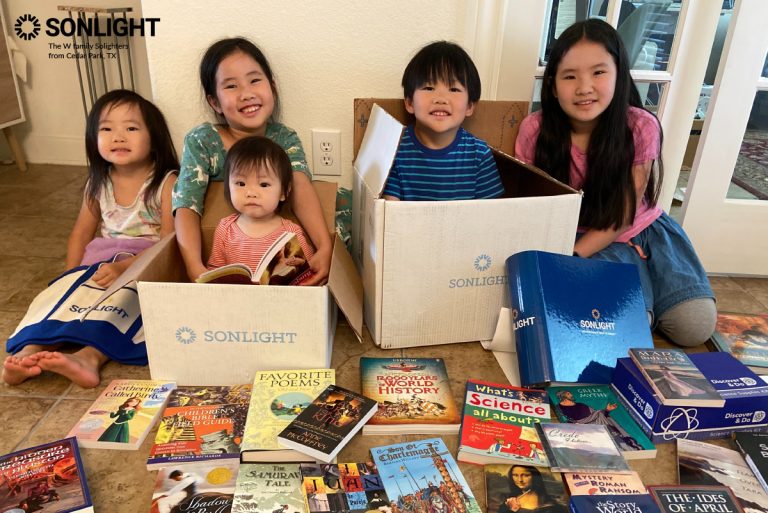
    We want our materials to be colorful, interesting and winsome. Have you read your fellow homeschoolers' Box Day Stories? They're snapshots of the excitement when families receive their new Sonlight homeschool materials. Now, how many companies do you know who provide Box Day experiences like that?

    Sonlight uses very few textbooks. Instead we use compelling stories, we use science experiments and math manipulatives. And this is all done for a purpose. We want to focus in on the fact that kids are curious and love to learn. We don't ever want to beat that out of our kids. We don't want them to get done with school and say I'm never cracking a book again.

    Instead, we want to inspire kids that learning is fun, useful and exciting. Then they'll be ready to keep learning and keep moving toward whatever God is calling them to.

So there you have it – just two of the presuppositions behind who we are at Sonlight. Do you share these assumptions? What core beliefs determine your own approach to life and education? I'd love for you to share with me …

Blessings to you!
Sarita


03/07/2013

Major Updates to Core W

I'm quite excited about the product updates rolling out on April 1. If you're on our mailing list you should receive the new 2013 Sonlight catalog by then. April 1 is also the first day you can order the latest and greatest curriculum online.

One Sonlight mom on the Forums, "happyhomeschooler," just wrote that she's very curious to see the changes to Core W. Well, I'm delighted to announce that we totally revamped Core W: One Year World History! I'd love to share some of my excitement with you.

You can skip down to the updates if you're already familiar with Core W. If not, I'd like to share…

What is Core W?


The Bronze Bow
, just one of the beloved titles you'll now find in Core W.

I developed Core W primarily for middle-schoolers stepping into Sonlight for the first time. The goal is to help kids who have lost their innate love of learning after years of lifeless textbooks and worksheets.

Designed for 12- and 13-year-olds in 7th or 8th grade, it gives a winsome overview of World History, an overview of the Bible, and kickstarts the type of reading and study students will do in the rest of their Sonlight years. Basically, Core W reminds students that learning is a fascinating and worthwhile endeavor.

You can absolutely use Core W if you've used earlier Cores, but we designed it especially as a starting point for children not accustomed to the academic rigors of Sonlight. It's an unusual name – Core W – because it is an alternative to Cores G and H, not just a combination of the two.

The spine of Core W, Hillyer's A Child's History of the World, presents a fascinating, easy-to-understand overview of world history. We also use the Hillyer book in Cores B and C, where the parents read it out loud to their children. Although middle schoolers can read Hillyer quite easily, the important thing is that they're getting a winsome tour of history. We seriously beef up the content level with the other books in Core W. Speaking of which …

Updates to Core W
This year we coupled the Hillyer book with a gorgeous book, the Usborne Encyclopedia of World History. Together, the text of Hillyer and the illustrations, timeline and call-outs of the Usborne book help kids grasp the flow of the story of our world.

For the fifth day of each week, we found an amazing new book that presents history in a novel way: The Kingfisher Atlas of World History. The book gives you snapshots of what's happening in a particular part of the world at a particular time. As students look at the same history from different angles, they make connections and really grasp the big picture.

New Titles
We re-read every book in Core W, plus hundreds of other potential books, and made sure we were giving you the absolute best books. We pulled many titles and replaced with others that we love even more.

One brand-new book is Operation Yes, which covers a very important demographic we haven't talked about much in Sonlight Cores: military families. The novel presents the story of a very gifted teacher on a US military base who uses drama to help kids face uncertain life situations. It was a very eye-opening and inspiring book for me.

You'll also find many of the very best books from Cores G and H included in the new Core W. Placed chronologically throughout the year, these books bring particular points in history to life. These are a few of my favorite new additions to Core W:

  • The Bronze Bow (first century Galilee) – one of those great stories of Christ that just takes your breath away.
  • A Single Shard (12th century Korea) – my daughter Amy's favorite book.
  • Murder for Her Majesty (Elizabethan England) – a comfort book I've probably read a dozen times.
  • The Sherwood Ring (1950s and Colonial America) – another fabulous comfort book.
  • The Good Master (Hungary in the early 1900s)– oh how I wish we could all just live under that good master's eye and learn from him.
  • I Am David (Europe, mid-1900s) – what many people have told me is their favorite of all time. A boy who grew up in a concentration camp escapes and makes his own way in the world.
  • The Breadwinner (Afghanistan, around the year 2000) – a heartbreaking but moving picture of what the world is like elsewhere. Under Taliban rule, women in Afghanistan weren't allowed to leave the home. In a household of all women, with no source of income, a brave girl dresses up like a boy to venture out and earn money for the family's bread.

Oh, I could just go on and on about these books and the whole Core W curriculum. The year is full of fun, moving, eye-opening, inspiring snapshots of the world throughout history.

I think you will find this year marvelous.

Blessings,
Sarita

P.S. Stay tuned and visit the Forums for more product updates.
Again, the new curriculum line releases April 1.


02/21/2013

A gift to your child's future spouse: organization skills

When I asked if homeschoolers need to teach organization, Anne-Marie wasn't so sure. She replied:

I would think homeschooled kids are less likely to need formal teaching [in organization skills], because they are more likely to see the creation of individualized organizational systems and to hear the rationale behind the systems.

In other words, kids see us organize our lives and belongings at home. They see our systems at work. So in theory, they absorb organization skills. Great point. But how do we help make sure our children really learn? I have two simple suggestions:

  1. Think out loud

    When you're ready to leave church or a swim meet, stop and say out loud, "Do we have everything we came with?" Let your kids help you think that through.

    When you walk in the front door with your kids, simply say out loud: "OK, let's put our coats away in their places. Lets put our shoes where they belong so we know where to find them next time."

    When you get more books or clothes, ask them, "Where should we keep this so we always know where it is?" And then create a place for it.

    Let your kids in on your thought processes. Demonstrate how you think through problems and come to solutions. It's a simple yet effective gift to give your children.

  1. Create a place for everything ... then put things away

    We've all heard it before, but I find great wisdom in "A place for everything, and everything in its place."

    When I walk in the door to my home, I know exactly what I'm going to do with my keys, coat, shoes and purse ... and the large stacks of books I often carry.

    They go in the same place every time.

    Our entry-way closet, with a place for everything.

    Close the closet door and I have instant neat! (It's the simple things, right?)

    Am I just compulsive? (Maybe.) But I don't waste time and thought finding somewhere to hang my coat; I always use the same hanger. When I leave the house the next time I know exactly where to find it.

    And that's the goal with having a place for everything: you don't have to think about it.

    Don't you have enough on your mind? Why waste the energy trying to call up a mental snapshot of where you last threw your keys? The goal is to have as few of those moments as you can. So if you don't have a place for your keys, try to pick one now.

    Again, this concept is something to model to your kids. For example, explain to them how you've organized your school space and why. Ask if they have ideas of where to keep their new science supplies. Ask for suggestions on the setup. They just might have a great insight.

Whatever our systems for organization, may it be that we model them to our kids. May we raise up children who are orderly and organized. I'm here to tell you that one day their spouses will thank you!

Blessings,
Sarita

P.S. If it's hard to put things in their place or even create organization systems because of clutter, you may be wasting precious time. It's just not worth having too many things in your closet or around the house.

For simple help decluttering, check out a helpful PDF from our Sonlight homeschool consultants: Conquer Your Clutter in 8 Easy Steps.

For more intense help getting your house under control, I'd recommend The FlyLady. I haven't personally used her system, but I know many who have. I love her tagline: You are not behind! I don't want you to try to catch up; I just want you to jump in where you are. She reminds you that imperfect housework still blesses your family (and yourself).


02/07/2013

The Meetto Project Needs Your Prayers

I felt devastated. A missions project that John and I had funded for about five years was recently pulled due to lack of progress. I tremble to realize that one day I will stand before God and confess that although we had funded it, I hadn't covered it in prayer.

So John and I have committed anew to pray more specifically, deliberately, and fervently for the various projects we support. And guess which one came up on our list recently: The Meetto Bible Translation project! Fortunately, the Meetto project is still moving ahead, but they definitely need our prayers – John's, mine, and yours.

If you recall, back in 2009, Sonlighters around the world teamed up to fund an accelerated translation of the New Testament for the Meetto People of Mozambique. We partnered with The Seed Company, an affiliate of Wycliffe Bible Translators that works with indigenous translators to speed up the process and get quality translations to bibleless people groups faster.

Since Sonlighters funded this project, it has progressed from only four books translated in 2009 to much of the New Testament and some of the Old Testament translated today, with plans to finish the New Testament by 2016!

How neat to be part of bringing God's word to a people who lacked it.

Project Overview
Original Goal: Translate the New Testament into the Meetto language
Location: Mozambique, Africa
Number of Speakers: 1,200,000
Year Project Began: 2009
Expected Completion Date: 2016
Funded by: Sonlighters like you!
Learn more here.

Translation Progress
The team has drafted three-fourths of the New Testament (20 books). Some books are nearly finished.

They will then be carefully checked in several specific ways. Read about the six steps of translation here.

The team recently distributed booklets of Scripture for community testing. The Seed Company reports, "Several denominations and mission organizations [are using] the books of Luke and Acts, the Bible stories book, the lectionary and other translated Scripture portions in their newly planted churches." Good news indeed!

Churches starting to use the Meetto language
I was shocked to learn that churches in the area have traditionally held their services in Portuguese. It's the official language of Mozambique and is considered more prestigious than the heart language of the Meetto people. Can you imagine using one language in your everyday life, and then another less-familiar language at church?

But what an awesome blessing that churches are now using the available portions of Scripture in Meetto. People are now hearing Scripture in their own heart language! Churches are even starting to use Meetto in their regular services. The Meetto people are finding the dignity that comes with knowing God speaks their language.

The stigma against speaking Meetto is melting away in other sectors, too. People used to feel shame in speaking Meetto publicly. But The Seed Company reports that because of the influence of the translation project, "Today, advertisements and public announcements on health and AIDS in the hospitals and in the marketplace are written in Meetto."

God Uses Scripture to Change Lives
As churches across the region start using Scripture in Meetto, God continues to move.

One woman, Ancha, listened to a pastor teach from the book of Acts in Meetto. Ancha served an evil spirit and would perform healings and cast spells to earn money. The evil spirit would often fill her with anger. But the pastor led Ancha to Jesus that day.

How did she respond? In a huge step of faith, she brought all her evil accessories to the pastor and they burned them. Free from the power of the evil spirit, but without her former source of income, Ancha is trusting Jesus as he leads her into a new life.

Ancha's story is just one of many of how God is working.

Serious Prayer Concerns
Though the work continues on, the translation team desperately needs more workers. Two of the three primary translators have moved on to other projects, at least for now. The lone remaining translator and his assistants are praying earnestly for God to send more help.

  • Please pray for God to provide more primary translators, someone who can do back translation, and translation consultants.
  • Pray for a solution to battery power for the computers, as the solar batteries keep losing power.
  • Pray that churches will eagerly use the preliminary copies of God's Word and offer helpful feedback to improve the translation.
  • Pray for unity among denominations, as churches from various Christian traditions work together to encourage the use of the Meetto Scripture and language in church services.

And of course ... pray that God will see this work through to completion!

If you participated in the The Seed Company project in 2009, thank you! If you want more information about getting involved with Bible translation, visit www.oneverse.com. You can also head to the Meetto Project page to read updates in the future.

Let's not forget about this strategic project. I have recommitted to pray for God to bless this project and use it for His glory. Please spend time praying for this project today.

Blessings,
Sarita


01/24/2013

When Hundreds of Thousands Turned to Christ

What happens when a nation crumbles morally? When substance abuse and corrupt politics rule the day? When the people turn from God and seek pleasure in violent sport, gambling and womanizing? When children have to fend for themselves on the streets? When the rich abuse the poor?

In some sense, both England and France were in this position in the 1700s. Then England saw peaceful, sweeping reforms, while France spiraled into a horrific revolution.

I know I'm simplifying history here. But what was the difference between these two nations? I just read a compelling argument that John Wesley likely initiated the stunning change in England's trajectory.


A statue of Wesley preaching

Once John Wesley experienced a true "heart conversion" to Christianity, he studied the Bible, preached it, and lived it. He preached in open-air settings to the working class poor, on their way from the factories to the drinking houses. He taught the Bible to illiterate women and children. He visited those in prison. He set up programs to teach job skills to the needy. He urged the rich to care for the poor. He worked to end the African slave trade. In short, his words and deeds proclaimed the Word of God.

And in His mercy, God brought revival. God used John Wesley, along with coworkers George Whitefield, Charles Wesley and others, to reintroduce the Bible to the common people of England. As Vishal Mangalwadi puts it in The Book that Made Your World: How the Bible Created the Soul of Western Civilization:

[Wesley] believed that God's purpose for him was to open the Word of God for his nation, pointing men and women to God through Christ. This, in turn, would reclaim their homes, towns and country from paganism and corruption. Wesley's central understanding of Christianity was that individual redemption leads to social regeneration.

When ordinary people heard the Gospel preached and saw it lived out, they turned to Christ. When they turned to Christ, their whole lives changed. They gave up their drunkenness, cared for their children, cared for the poor, began to treat others as people made in the image of God.

And thus, "England after Wesley saw many of his century's evils eradicated, because hundreds of thousands became Christians. Their hearts were changed, as were their minds and attitudes, and so society—the public realm—was affected."

Wesley did not follow God half-heartedly. Nor was he a superhero. Instead, he simply sought God in earnest, preached in earnest, and served in earnest. He and his trainees adhered to a strict schedule: "eight hours a day sleeping and eating; eight for meditation, prayer and study; and eight for preaching, visiting, and social labors." And thus, he worked on behalf of the English people. And God worked wonders. Wesley even inspired the younger William Wilberforce to devote his life to the abolition of the slave trade.

Wesley's life reminds me that God uses ordinary people to change the world.

I am concerned about our own nation's direction. Out-of-control spending. Inefficient welfare systems that do limited good. Huge lobby groups profiting from their pet projects. A devaluing of marriage. Children bouncing around from one foster home to another. The murder of precious unborn children.

But God could use you, and me, our children and our grandchildren to change things. Even one person can change the direction of a society—one person committed to God, to hearing from Him and spending time in prayers, coupled with a vision to change society for God's glory.

May we be people who fear not, but focus on what brings God glory. May we choose discipline and a heart sold out for God over the comforts of stability and material accumulation.

And may we be an example for our children. So that when God is ready to use them, they are ready to serve.

May God's Kingdom come!

Blessings,
Sarita


01/10/2013

My best tip for conflict resolution

The argument seemed dramatic at the time. I thought we should organize our books by color and size. But John wanted to organize them by topic! We spoke past each other, made assumptions, and hurt each other's feelings. A simple difference in preference turned into real conflict.

But then John changed the course of the conflict. He reflected on what had happened and identified what he could take responsibility for. He came back to me and said: "I was wrong when I did ____. Will you forgive me?"

That opened up true dialogue.

Of course I forgave him. His act of maturity helped me think about what I had done wrong. I likewise asked for forgiveness.

We laugh about that argument now. From the beginning, instead of letting bitterness take root and grow, John has led our family in discussing our problems and moving on without resentment.

One of our children asked recently if we had a good book to recommend about conflict resolution. I don't know of a great book* (do you?), but I did share our best tip:

Ask for forgiveness (don't just say "I'm sorry").

Our society loves to gloss over conflicts with a simple "sorry." We use it for almost anything: "Oh, I'm sorry you're disappointed. I'm sorry your package came late. I'm sorry you feel overlooked." We like to shove off responsibility by "apologizing" without accepting responsibility for what we did. It's like punching someone in the arm and then saying "Oh, I'm sorry that your arm hurts." (As if we have nothing to do with that pain.)

But when John and I had some fights in our early days, he would think long and hard about what he did for which he could ask forgiveness. He would determine what was truly his fault. He would be the first to say:

When I did this, I was wrong, will you forgive me?

That formula is almost magical. The hurtful arguments we've had over the years have all been erased ... they're not festering into bitterness.

Here are some specific examples of what we might say to each other:

  • I was wrong when I assumed the worst about you instead of asking what happened and listening to your response. Will you forgive me?
  • I was wrong when I was so focused on finishing dinner that I didn't stop to listen to you when you had something important to share. Will you forgive me?
  • I was wrong when I lost my temper and accused you of not doing anything to help around the house. Will you forgive me?

It takes humility and courage to admit you've done something wrong. Especially if you think the conflict was 95% the other person's fault. But responses like those above seem to disarm the situation. They open up true communication again. They help you treat each other as real people again.

Saying sorry isn't enough. It's a thin blanket you can throw over the issue. You can say "I'm sorry" in a way that communicates, "Even though I'm really OK, and I'm right, I'd like this tension to be over, so I'm going to say I'm sorry."

But when you ask for forgiveness - wow! I'm here to tell you, it is as healing as anything you can come up with. You get to the heart of the issue by accepting responsibility for your wrongs. You admit that you're a fallible human, and you therein remember that you're dealing with another fallible human.

This is not a magic cure-all. But I give thanks that John helped us implement it early in our marriage. Perhaps God will use it in your family as you continue to grow in your own relationships.

And if you have your own tips for conflict resolution, please share them below. I'd love to hear your thoughts.

Blessings,
Sarita

*After I wrote this, a trusted colleague suggested the The Peacemaker: A Biblical Guide to Resolving Personal Conflict, by Ken Sande. I haven't read it myself, but I've heard good things about the book.


12/27/2012

Update from a missionary you may know

In 1962, a farm girl from California hiked through the Filipino jungle. She and her colleague from Wycliffe wanted to translate the Bible for a tribe of former headhunters.

Just last month, John and I got to meet this missionary in person! We heard her speak and then shared dinner together. How fun to get an in-person update from a woman who has inspired me for so long.

If you've used Sonlight Core C, you know who I'm talking about: Joanne Shetler recorded her amazing story in And the Word Came with Power.

When we met, Joanne shared a fascinating recap of the story she shared in the book, and then gave some updates. I'll start with a reminder of her powerful story:

How God transformed the Balangao people
Joanne trekked through the jungle to tell the Balangao people about Jesus. At first, the Balangao couldn't understand why she had come. They thought she had come either to steal their language or to find a husband.

As people without a Bible, the Balangaos lived in constant fear of the spirit world. They struggled to raise enough animals for all the sacrifices the evil spirits demanded.

The prayers of Joanne's sending church helped change the situation. After Joanne's first furlough, the congregation changed their prayers from a simple "Lord, bless the missionaries" to "God, show the Balangaos that you're stronger than the spirits. Make the Balangaos desire you; help them believe your Word."

And God answered!

Once the church began to pray, Joanne asked her "father" (the man who protected and cared for her in the village) to correct the grammar in the Bible passages she was translating. In the Balangao culture, fathers correct their children, and children don't teach. This setup was perfect.

As her "father" read the words, he commented, "This is really good." Then he started to ask questions: "Where do people come from? Where does trouble come from?" He brought others with him to ask more. One man asked "What is it that you say to God when you want to become one of his children?" And then, "Is it OK if we tell this to other people?"

Most Balangao people were terrified to stop sacrificing to the spirits. They knew the spirits would retaliate. But then the spirit mediums themselves burned their spirit paraphernalia. They turned their backs on the evil spirits and pledged allegiance to God. Everyone expected them to die immediately. But they didn't. And so the Balangao began to seek this God who defeats the spirits.

Through miracles and unexpected ways, God has brought many of the Balangao people into His family. The joy and freedom they found has been contagious. Now they want to share the Good News with others.

So Balangao men and women have gone out to do translation work among other peoples in their area. One man, Ignacio, declared, "God called me to go to a people who have never heard." He then went to the next valley over to a people known for tribal killing, the Madokayan, in order to translate the Bible through the Seed Company.

Updates
Joanne shared that Ignacio has almost finished the Madokayan New Testament translation! You can "meet" Ignacio in a short video or read his first-person testimony on the Balangao Blog.

Ignacio's daughter hopes to serve as a Bible translator somewhere in Africa.

Balangao translators currently serve in China and throughout Papua New Guinea. Praise God for the multiplication that happens when a people hear the Good News for the first time!

Joanne now leads workshops in various places where Wycliffe/Seed Company missionaries are translating the Bible. She uses her experience to help address issues within the newly planted churches

The work is not over
As we once again celebrate this Christmas the Word becoming flesh and dwelling among us, may we remember the 1,969 people groups who still need the Scriptures in their own heart language. May we remember to pray for the translators who labor to break the power of the spirit world.

May God bring many more into His family!

Blessings,
Sarita

P.S. Joanne mentioned how fun it is to receive emails from Sonlight students who were impacted by her story. I loved this story of one Sonlight family who found the Balangao blog and contacted Joanne. How exciting for Taryn's kids to receive a response from a missionary/author!


12/13/2012

Countdown to Christmas: 12 days

I'll admit it. When I think of Christmas, I usually picture Christmas cards, pretty lights and peaceful nativity scenes. Joseph, Mary and Jesus seem so quiet and serene in my mind. Even so, I want to remember the bigger picture behind that baby in a manger.

So I asked myself: How does God see Christmas? Perhaps He sees the battleground assault He waged against evil and injustice through His Son. He sent Jesus to earth to totally break the system then in place. Jesus came to deliver and restore and redeem. Jesus came to fight against evil and conquer death itself. Why?

That story goes back a long time.

The garden
God placed Adam and Eve in a perfect garden and asked them to tend it. In the evenings Adam and Eve walked with God. God gave them perfect freedom in this garden, with one stipulation. He commanded them not to eat of one specific tree.

But Satan, a created but fallen angel came to deceive the couple. His deception worked, and they ate from the forbidden tree. Then when God came to walk with them, Adam and Eve hid. Their choice had separated them from God. Sin and death had entered the world.

The plan of restoration
So what did God do? Did He resign himself to that separation? No. Instead, He revealed His astounding plan.

As God described the consequences of that first sin, He also promised to restore all things one day. But it wasn't going to be an easy solution. He said that Satan would strike the heel of the woman's offspring, but the offspring would crush Satan's head (Genesis 3:15).

The plan at work
How did God accomplish that promise? He started with a man named Abraham whom He called and eventually gave a son in his old age. Then out of that son came the nation called Israel. God chose Israel to be the instrument through which He would bring redemption to the world.

The people of Israel were to live as a people set apart. God called them to reject the paganism of their neighbors and instead worship the one true God, live justly and care for those in need.

Of course, the people of Israel often disobeyed. So God sent prophets to them. As the prophets called them to repentance, they would also share prophecies that pointed to a future Messiah – an anointed one who would save all people. For centuries, the people of Israel looked for the coming Messiah. And when the time was ripe, at a very strategic point in history, God the Father sent God the Son to earth.

Jesus comes
In the fullness of time, Jesus put on flesh, was born as a baby, and lived on earth as a human. Jesus had to come because only God could right the fundamental wrongs of this world.

No human had ever lived a perfect life. But Jesus, as God and man, resisted all temptation, completely submitted to His heavenly Father, and boldly lived out His life's purpose. He lived a perfect and sinless life. He seriously challenged the religious status quo, blessed the poor and outcastes and sought out those who knew their brokenness. He revealed that He was God.

Of course, the leaders of the religious establishment did not like Him. They had
Him killed through one of the cruelest methods of execution in history – crucifixion.

Death is conquered
But here comes the great part of the story: Jesus didn't stay dead. He was put in a grave with a big rock in front of His tomb and a guard standing watch. But on the third day, He wasn't there.

Jesus hadn't just come back to life, He had defeated death. As the song Mighty to Save says, "He rose and conquered the grave."

He made it possible for us to walk once again in communion with God, for His own righteousness to cover our sinfulness. And to think – this triumph was possible because Jesus came as a baby. May it be that all of us choose His righteousness.

O come, let us adore Him
As we contemplate the Christmas story and see images of baby Jesus, let's remember that Jesus grew up. He grew up to fulfill His purpose to restore a broken world, to conquer the grave and sin forever, to demonstrate the Father to us. He came as a baby, but returned to heaven as the reigning King of Kings and Lord of Lords (Revelation 17:14).

As we celebrate Christmas, we sing "O come, let us adore Him." May it be that we adore Christ, the King who came to conquer sin and death on our behalf.

Blessings this Christmas season,
Sarita

Sonlight Christmas Sale


11/29/2012

Is Generosity a Life Skill? Should it be?

As a homeschooling parent, I know you want your children to be well-educated. They should know the 3Rs, be able to think critically, have a clear understanding of their world and more.

At Sonlight, we add "learn to be generous" to that list. Is that a proper function of education?

I think it is.

Sonlight student with bread
Sonlight student Gracie L bakes bread to share

Jesus taught us to be extravagantly generous with the story of the widow who gave her last small coins to the Lord's service. (See Mark 12:42-43.)

Therefore, we partner with various mission agencies to train our children to give, and give joyfully. Sonlight families, children and friends recently raised $157,487.14 to share the Good News through radio broadcasts via the Phoenix Phaxx project. With the matching grant, the total amount comes to $314,974.28. I couldn't be more grateful for both the money raised and the heart attitude demonstrated.

A key reason we host these projects is to help children learn to be generous. Studies show that generous people are more joyful. But, generosity also helps prepare children to do whatever God calls them to do. How?

When we model cheerful giving, we show children that we don't "own" money. When we tithe at church, bring meals to a needy family, or support missionaries, we demonstrate that we are stewards of the resources God gives us, that we are responsible to God for how we use our money. When children are allowed to give of their own limited resources, those lessons get written on their hearts.

One way we've helped teach our children a right attitude for money is to use the "envelope system." When John and I would give our children an allowance (which didn't happen as regularly as it should have) we taught them to divide it up. We explained that 10% needed to go in the saving envelope, at least 10% in the giving one, and then they could spend the rest with joy.

I believe the concrete lesson of financial stewardship can extend outward to other areas. By showing our children that a portion belongs to God's work, our children see that their money does not belong to them, but to God. From there, you can teach that their time (a different kind of resource) also belongs to God. God has bigger plans for their time than just their own pleasure.

This foundation can support the lesson that our children's entire lives belong to God. God entrusts them with time, personality, talents and resources. He gives them a call to follow. And they are responsible for stewarding their life to live it fully for God.

For we were created to serve God. We find great joy and purpose when we do so. When we give children the chance to bless others with their money, we give them a chance to experience the great joy of living for something beyond themselves.

So I'm curious: How can we do this more effectively? How can parents better teach generosity? The almost-annual Sonlight giving projects such as Phoenix Phaxx and My Passport to India provide great opportunities, but what can parents do the rest of the year? Have you had success with anything? Should Sonlight do something year-round?

I'd really love to hear your thoughts.
Sarita


11/15/2012

Why in the world did the Pilgrims give thanks?

The Pilgrims faced tragedy in their first year at Plymouth.

They landed at Plymouth Rock on December 16 – much too late to plant or prepare for winter. Without enough food or protection from the cold, families watched their loved ones suffer. In December, 6 of the 102 pilgrims died. In January, 8 more passed. In February, 17 more people died. In March, 13 passed away. At one point, only 7 people were well enough to care for everyone else who was sick. By spring, just over half of the original pilgrims remained.

Why then, did they give thanks? Would I have thanked the Lord in similar circumstances?

I believe that even as the Pilgrims mourned, they must have looked for blessings. When they met Squanto, who taught them to plant and gather new food, they recognized his help as a gift. When their crop produced well, they thanked God and rejoiced.

A harvested field
In the midst of their painful losses, they chose to give thanks for God's provision. And thus, the first Thanksgiving.

I'm currently reading One Thousand Gifts by Ann Voskamp. Like many other Sonlighters, I've taken the author's suggestion to start my own gratitude journal. Now every morning in my quiet time, I spend a few minutes recording things I'm thankful for.

And I agree with Voskamp – I think giving thanks builds joy. The Pilgrims could have been crushed under the weight of their loss, but they choose to mourn and give thanks at the same time.

Jesus Christ, who left the splendor of heaven to live as a man, chose to give thanks throughout his whole earthly life. Before he fed the five thousand, he gave thanks. Before he raised Lazarus from the dead, he gave thanks. As he prepared to face the cross and carry the world's sin, Jesus broke bread and gave thanks.

Jesus saw the gifts in his life as grace and in turn he thanked his Father. I wonder if this posture of gratitude helped build the joy in Jesus' life. Voskamp would say it did. She writes, "eucharisteo, thanksgiving, envelopes the Greek word for grace, charis. But it also holds its derivative, the Greek word chara, meaning joy."

One thing is certain – giving thanks opens our eyes to see the gifts God continually gives. If you don't keep a gratitude journal, consider whether you'd like to start one. From the very simple (e.g., warm cookies from the oven) to the more profound (e.g., the gift of children in the house) recording these gifts helps put me in the proper posture of gratitude before God. And, yes, I believe that posture builds great joy in my life.

Many blessings to you in this season of thanksgiving!
Sarita


11/01/2012

Who will you meet in heaven?

After this I looked, and there before me was a great multitude that no one could count, from every nation, tribe, people and language, standing before the throne and before the Lamb. –Revelation 7:9

I believe God cares about the whole world. I believe the whole world needs Christ. Do you believe that, too?

As you use Sonlight to teach your children about the world (including the West and the East) you're preparing them to live in our modern, globalized society. But globalization won't end here. Just think: one day we will actually stand before God, surrounded by believers from across time and across the globe.

Does that get you excited? It does me!

Right now, you have a chance to participate in work that brings people from every tongue and tribe to Jesus. You can put feet to what you've been learning with Sonlight. You already read about people from around the world. You probably cheer for missionaries from history who followed God with passion and purpose. Today, you can take that a step further as you enable your children to do something concrete for others.

Children in Jakarta, Indonesia
Children in Jakarta, Indonesia. One stop on the current Phoenix Phaxx adventure.

Perhaps you're involved in mission work already. Maybe you still partner with Mission India to support the incredible Children's Bible Clubs. (Do you remember Chris from the Passport to India project two years ago? That work is still going strong!) But if you're looking for a chance to help your children get involved afresh and anew ...

The Phoenix Phaxx project is an easy way for kids to do something for others. If you want them to have real-world experience in developing compassion, challenging any"me-first" mentality, and learning to live with a Kingdom purpose, why not start here?

Watch the videos. Pray as a family for those who have never heard of Jesus. And then, if your family prayerfully decides to do so, encourage your kids to be creative and raise funds for simple hand-held radios that may be the only way kids, families and entire villages hear the good news of Jesus.

I know it may seem odd to raise money for radios. I mean, who needs another radio? But I'm here to tell you that when a remote village without electricity receives a simple wind-up radio tuned to the Gospel in their heart language, people listen. Farmers come in from the fields to hear their favorite broadcasts. Children crowd around for the entertainment. And real people from overlooked people groups come to know Jesus.

What really captures my heart in this particular project goes back to the verse above. I really do believe that one day we're going to live in the New Jerusalem (Revelation 21:1-3) and meet believers from every tongue, tribe and nation. And it could be that as a result of radios we raised funds for, our kids will meet someone who said, "You know, I heard about Jesus from a radio."

Wow. May it be so! May it be that one day our kids meet someone on whom they had a direct impact.

Let's remember that through Phoenix Phaxx, daily life and other mission work ... we can genuinely enjoy the awesome privilege of sharing the Good News of Jesus!

Many blessings to you and yours,
Sarita


10/18/2012

Three tips for teaching children about work

"I did not have all the advantages your kids had," a woman told my husband. They were having an honest conversation about work. The woman shared what a hard time she has in life, bumping along from one part-time job to another.

She has an education, but as Luke explains so well, education does not guarantee you a job.

So what advantages did this middle-aged woman lack? What can we do as parents to help prepare our children for productive work and employment? This certainly doesn't cover everything, but here are three tips:

  1. Actively teach the skill of punctuality.
    This woman has lost many jobs because she can't get to work on time. As I understand it, her parents never got anywhere on time. She never learned the skills and habits of punctuality.

    I believe we can actively teach children how to show up unflustered and on time.

    Consider this tip: When you have to go somewhere, you probably work backward in your mind to determine when you have to leave. So why not share this process with your kids? Simply think out loud in front of them.

    You could say, "Well, we have to be at the co-op tomorrow morning at 9:00. It takes 20 minutes to drive there, so we need to leave at 8:40. We need 5 minutes to get out the door and packed into the car, so we should all be ready at 8:35. Our morning Bible reading takes 20 minutes, so we'll sit down for that at 8:15. Showers and breakfast take an hour, so we should get up at 7:15."

    My mom says that even when she's running late, she hurries so much that she gets there in time. She watches the clock and says, "ok, this is taking longer, what should I cut so that I still get there in time?" This is another process you could share out loud with your kids.

  2. Isaiah smoothing concrete
    My grandson Isaiah eagerly learns to smooth concrete on his family's farm.

  3. Show that work is not a 4-letter word.
    We live in a society that encourages us to get out of work whenever we can. We essentially hear the message "Wow, if you can scam the system and stay home and watch TV all day, you've won!"

    But I do not agree with that. I'm here to tell you that work can be a good thing. I believe we are created for work of all kinds – from employment to parenting to cooking. That's why we get satisfaction from it.

    Even before the fall, Adam had work to do. If someone just sits at home watching TV all day, he probably has an emptiness in his soul that can only be filled by productive, strategic work.

    All of my kids are good workers, and I attribute that in large part to the fact that they learned from a young age that work can be a fulfilling and good thing. They all worked at Sonlight from the time they were little, counting out and packing up Science kits. Let's help teach children the satisfaction of a job well done.

  4. Teach kids to think and learn.
    Sometimes employees can get in the mindset that simply showing up at work is enough. But for most bosses, that's not enough. At the Sonlight office, we honor and reward people who think big-picture, who step back and come up with more effective ways to do their job. When the management team makes a decision that an employee doesn't think is best, we want that person to speak up and say "No, I don't think that's a good idea, and here's why."

    My hope is that Sonlight helps you raise kids who can do just that. We're not training our kids to do the bare minimum and give the answer the teacher wants. We're raising them to always keep learning, to step back and think critically about things, to consider different sides of an issue and develop their own ideas. Those skills will serve students very well when they move on from school to the work of being an adult.

What do you think? What can homeschool parents do to help their kids grow up to do great work?

Blessings,
Sarita


10/04/2012

A 21-day Prayer Challenge

Do not be anxious about anything, but in every situation, by prayer and petition, with thanksgiving, present your requests to God.
–Philippians 4:6

I'd like to be more strategic in my prayer habits. I believe God hears our prayers and answers them. But I often find myself praying haphazardly.

I have so many cares and concerns rolling around in my head – from family needs to friends who are struggling; from dreams for Sonlight to anxiety for persecuted Christians in India. I'm afraid I often worry instead of presenting the situation to God in prayer.


A Sonlight family prays at breakfast

John and I heard Marilynn Chadwick speak at a Mission India conference a few weeks ago. She had such an encouraging outlook on prayer, I've started reading her book Sometimes He Whispers, Sometimes He Roars: Learning to Hear the Voice of God. I've found one of her ideas particularly helpful.

The Challenge
I'd like to invite you to join me in what Marilynn calls the 21-day prayer challenge. If you'd like to add some structure to how you pray for others, consider these steps:

  1. First, sit down with God and list out all the cares and concerns in your heart – all the things you'd like to pray for. Marilynn said most people end up with 50-70 items on their list.
  2. Next, start at the top of your list and work down the page, numbering the consecutive items 1 through 7 over and over until you reach the end. (When you're done, each item will have a number from 1 through 7 by it. This naturally divides the list into 7 groups.)
  3. Now, commit to pray for each group one day a week for three weeks. On Monday, you'll pray for all the items marked with a 1. On Tuesday, you'll pray for the 2s, and so on.
  4. Finally, Marilynn invites us to read one chapter of the Gospel of John every day for these 21 days. She recommends that you write down a verse or thought that sticks out to you each day from your reading. I'm excited to see that God has taught or reminded me of important truth each day as I've done this.

When you make your list of prayer points, Marilynn encouraged us to list the people/concerns near and dear to us, such as our spouse, each child and the deep longings of our hearts. She also encouraged us to think beyond our own families and communities. Consider including your church, missionaries you support, individual government leaders, and/or a particular country God has put on your heart.

I made my list and now pray with it daily. I like that I have a plan I'm following to ensure I really pray for what I want to pray for. Instead of an overwhelming jumble of concerns to lift up each day, I have about 8 things to focus on every day. I pray for my family daily anyway, but now I know I will focus in prayer for each person at least once a week. I now pray for John on Mondays, for Amy on Tuesdays, for Luke on Wednesdays, and so on.

I pray regularly for missionaries, but now I've added specific nations I pray for each day. I pray that a vibrant indigenous church will form, that the government will bring peace for the people, and that God will be glorified in that country.

I don't know if I'll use this strategy long-term, but I'll at least do it for 21 days. Does this sound like a tool that would help you? I'd love for you to join me.

Blessings,
Sarita

PS: I know this plan only covers one type of prayer (i.e., petition). But I think it will help me be more strategic in that one area!

PPS: I like the paraphrase of Philippians 4:6 in The Message: "Don't fret or worry. Instead of worrying, pray. Let petitions and praises shape your worries into prayers, letting God know your concerns." May we do that indeed!


09/20/2012

Raising Kids Who Do Great Things

Do you remember the scene where Caddie Woodlawn skates out onto the thin ice? Of course, she falls through and a fun adventure turns into an emergency. With no time to call an adult for help, her brother Tom snaps into action and rescues her.

How do we raise children to be proactive in times of need? How can we help them learn to use their own strength, wits and gifts?

I just finished About Average, the new book by Andrew Clements. In line with The School Story and Frindle, Clements presents a main character who doesn't just react to situations. Jordan Johnston thinks about how she wants to live … and then lives it! Because of her daily choice to be proactive, she's ready for action when a big need comes.

Of course, Jordan doesn't think she's doing anything special. Her friends seem to have amazing talents, but she feels very ordinary. The real key for Jordan is that she does not just sit by passively. She tries lots of different activities to see what she enjoys. She soaks up any chance to learn new things. When a classmate starts to pick on her, Jordan chooses to respond with kindness. Without realizing it, Jordan cultivates all sorts of skills and virtues.

And in the end, when a terrifying tornado heads straight for the school, Jordan has already practiced taking charge and stepping up. All of the skills she's learned throughout the book come into play. She uses those skills and ingenuity and ends up saving her classmates.

The ending may be a bit far-fetched, but the message is true: ordinary kids can think about their world and solve problems without waiting for an adult to tell them exactly what to do.

I believe that books like these can inspire our children to live intentionally (under the protection and day-to-day guidance of their parents, of course). Such stories provide models of ordinary, imperfect children who take responsibility for their actions and choose how to live.

That's why I include books in Sonlight Cores programs where kids think, plan and solve problems. Consider My Father's Dragon, Sticks Across the Chimney, Rickshaw Girl, Understood Betsy, Caddie Woodlawn and so many other Sonlight books. They feature strong kids who don't just sit back and let life happen to them.

May these stories inspire our children to do great things!

Blessings,
Sarita

PS- Can you think of other favorite books (Sonlight or not) that inspire children to be proactive in life? Let me know!


09/06/2012

The rule of THUMB. (Who will tell them? And how will they hear?)

When John and I first started Sonlight in 1990, we were on staff at the U.S. Center for World Mission (USCWM). We still carry the international Christian missions movement dear to our hearts. We want to see the Good News of Jesus Christ made known throughout the world, the Good News of a God Who loves us (the only god who makes this claim)—a God Who loves us so much that He gave His own Son to die for us.

So we were concerned about a fact we learned at the USCWM. At least in 1990, 95 cents of every dollar donated to Christian causes here in the United States stayed in the United States. And, of the 5 cents that went outside the U.S., 90 percent of that (or 4.5 cents) went to meet the needs of people groups that already have a viable indigenous church movement (for example, to mission efforts in Mexico and Guatemala—where the church already exists ... and thrives).

I know that significant, valid work happens with that 99.5% of US giving. But that leaves only half a penny of every dollar donated to Christian causes in the U.S. that goes to the billions of people who live in the ethnic groups that have no viable, indigenous, reproducing church movement among them.

It was with these statistics in mind that John and I made a decision about our personal giving strategy. After giving our tithe to our local church, we focus the rest of our giving on reaching out to and ministering to the needs of these under-funded, unreached groups.

As a company, Sonlight has always donated a minimum of 10% of gross income to missions organizations. Since 2005 we have been able to increase our missions giving to over 50%. Again, we focus on unreached groups.

We remember the unreached groups by the acronym THUMB: Tribal Peoples; Hindus; Unreligious Chinese; Muslims; Buddhists.

John and I have very carefully chosen four mission agencies who reach these five areas. Sonlight partners with The Seed Company (working to reach Tribal Peoples), Mission India (working to reach Hindus), and Frontiers (working to reach Muslims).

But when we went looking for mission agencies to reach Unreligious Chinese and Buddhists … we had to look hard! Most mission agencies just don't focus on these groups.

Then we found Far East Broadcasting Company. Billions of people in Asia live relatively cut-off from access to the Gospel. Many are part of minority ethnic groups and don't speak the dominant language of the region. Too many have never even heard the Gospel of Jesus Christ.

Sonlight has partnered with FEBC for years. John and I have visited FEBC partners in Southeast Asia. We've heard firsthand stories, and we praise the Lord for the powerful, surprising work He is doing among unreached peoples in those lands.

Today, I am thrilled to announce an exciting program you and your children can join. Sonlight and FEBC have teamed up to bring you what we're calling Phoenix Phaxx' Pocket Guide to the Great Commission. It's a long name, but a thrilling adventure.

You and your children will explore far-flung countries of the world, learn about what it means to share Jesus with others, and even have the opportunity to raise funds so that people can hear the Gospel for the very first time. John and I will match every dollar you give.


Curious?

Watch the intro video, meet your tour guide Phoenix Phaxx, and register today!

I do hope you'll join us.

Blessings,
Sarita


08/23/2012

"Dear Sarita: Why did you choose that book?"

I've received a lot of feedback in 22 years. I treasure the stacks of letters from Sonlight parents who love the books I choose.

But occasionally, I get letters that criticize—or even express great disappointment—in the titles I so carefully include in Sonlight's programs. While I greatly prefer the over-the-top-positive letters (I am human, after all), I've come to appreciate the harder letters as well.

I'm grateful for all moms who invest enough time in their children's education to be able to critically evaluate what their children are reading … even if they disagree with my selections in the end. Many parents who send their children off to be educated by someone else have little knowledge of what their children are learning. They trust the system has worked out all the kinks. They trust the school format provides all the oversight and covering their students need.

So, kudos to all moms who are involved enough with their children's education and training to be able to evaluate their curriculum. May you continue to critically evaluate, wisely critique, and demonstrate for your children a lifestyle that follows the example of the Bereans—who carefully studied the Scriptures to see if what Paul said was true (Acts 17:11).

Of course, I believe Sonlight provides a balanced, Christ-centered education. And thousands upon thousands of families worldwide agree. But I never want kids to just swallow someone else's view hook, line and sinker. I want them to think critically and evaluate for themselves using Biblical principles. That is exactly what Sonlight's educational approach trains students to do.

So if you ever come across a book you disapprove of in our curriculum, consider it a chance to demonstrate discernment. I think most families choose to read such books with their children and discuss the sticky content. This leads to incredible conversations that help you shape your children's values. But you are certainly welcome to simply skip a book as well.

If you do skip a book and let me know about your disappointment, I'll remind myself as I carefully review and digest what you share that I'm hearing from a parent who has modeled discernment for his or her children. And I'll be grateful for your involvement in their education—and mine!

Many blessings,
Sarita

P.S. If you're interested in how I choose books for Sonlight's programs, check out What it Takes for a Book to Become a Sonlight All-Star.


08/09/2012

Seven Reasons to Study History (Rather Than Social Studies)
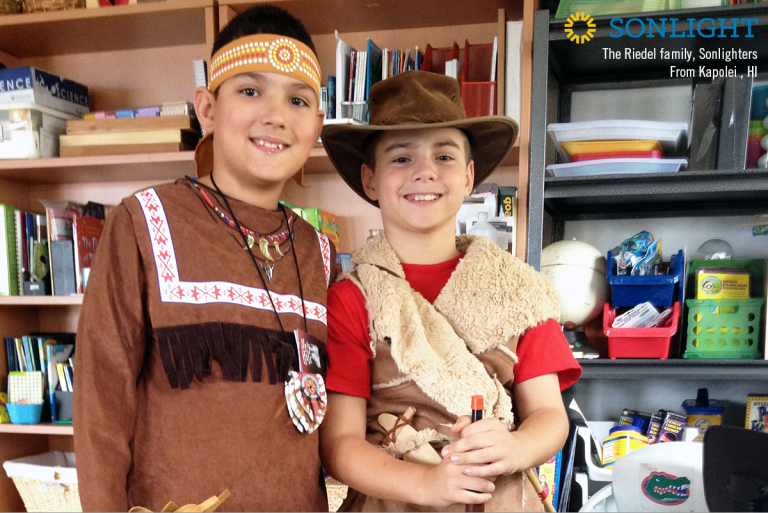
When I was in school, we learned about the world in seemingly unrelated snippets. My teachers called the subject Social Studies. We might start the year studying Chinese culture. Then we'd study the Pilgrims because it was getting close to Thanksgiving. Then we'd take a break to study the Plains Indians and build miniature teepees.

Social Studies remains a core subject in many educational systems today. I think schools often do Social Studies because it's a unit and you can just pop it into places when you have time. It's expedient. But I don't think it's a very effective way to learn.

I believe children need to study History. Why?

  1. History provides the framework we need to make sense of our world
    With Social Studies, I never learned the big-picture of history and how the world works. But a history-based curriculum (like Sonlight) gives your children the framework of knowledge they need. As you move through time you give them a cohesive map of knowledge they will build on their entire lives. As they learn new information (like details of the current strife in Myanmar), they can "place" that knowledge in the appropriate place in their mental map.


Sonlight student Cherish L poses with a spread
from her Book of Time, the timeline she'll use
throughout her Sonlight studies.

  1. History helps us understand other cultures
    In Social Studies, we might study cultural facts about a specific Chinese dynasty. But when we study the span of China's 3,000 years of recorded history, we get a much better sense of who they are. We see how Confucius, who lived around 500 BC, influenced Chinese culture at each point of their development. We see how his emphasis on honoring superiors still governs Chinese culture.
  2. History helps us honor other cultures
    Sometimes we can think our culture is the only group who has done it right; we're the only ones who have it all figured out. But when we do that, we dishonor all the people who have lived before us and achieved great things. Think about it—in 3,000 years of recorded history, for example, the Chinese people have had some pretty remarkable achievements!
  3. Studying history teaches discernment
    As we study history we read a variety of texts. You can't very well study it any other way. I believe that teaches us to discern right from wrong. It helps us learn not to swallow everything we read or see on TV. Consider the legacy of Franklin Delano Roosevelt (the President during the Great Depression and WWII). Many biographers paint a rosy picture of his work, whereas others present a more critical perspective. As students read and study history from different perspectives, they learn how to weigh different opinions and come to their own conclusions. In the case of FDR, they'll likely conclude that he made bad decisions in some areas, did some things OK, and did other things quite well. I don't think any other discipline teaches this discernment skill as well as history does.
  4. History helps us make wise decisions
    Did you know that the pilgrims attempted socialism? As we study history, we see they created a common storehouse and asked everyone to bring the food in; they were going to share all things. These pilgrims all shared the same cultural background, worshiped in the same way, and believed in a common cause. But after one season, they decided that socialism didn't work. They discovered that if people didn't have rewards, they didn't work hard enough. As we study history, we can learn helpful lessons for our world today — we can learn from history.
  5. History inspires us
    As you look at Sonlight's history selections, you'll see a lot of biographies. We do that on purpose. We want our kids to read about those who have just been ordinary people like them, and who went out and did amazing things. These historical figures can inspire us to think bigger thoughts, to be people of purpose, to be people who desire to make a difference. At Sonlight we regularly pray that our students will be people who stand up and say "I want to make a difference in our world."
  6. God values history
    This was a new thought for me recently. I believe God honors history. Think of the Bible: it's divided into 66 books, and many of them are direct history. They tell the story of what happened to specific people, in a specific place, at a specific time. And there's a lot of history in the other books as well. God wants us to read this history and learn from it. So even God thinks history is something worth spending time thinking about and reasoning on. I've heard that the Bible (and, of course, the Torah) may be the only Holy Book that includes history. Just something to ruminate on!

So my challenge to homeschoolers is to skip the scattered Social Studies approach and instead study History. (Of course, since I believe this is so important, you can rest assured that Sonlight takes the History approach.) Let's learn from history — as history helps us live with wisdom and make sense of our world.

Carry on!
Sarita


07/26/2012

A Public School Success Story: The 1,000 Books Project

I read a stunning article last month. It begins:

"Melinda started 2nd grade with everything against her. She lives in poverty, her mom is not literate in English or Spanish, and she was severely abused at the age of 6. At the beginning of the year, she owned only one book."

How could Melinda's teacher best help her? He chose to focus on one thing he could change in her life. Considered the simple fact that most impoverished children own few (if any) books:

"A 2001 study… found that the ratio of books to children in middle-income neighborhoods is 13 books to one child, while in low-income neighborhoods the ratio is one book to 300 children."

How can kids treasure books when their culture at home doesn't? So Melinda's teacher, Justin Minkel helped change that culture.

He helped each of the 25 children in his class build a modest home library. Each child created a special space at home for books. Then over the course of two years, Minkel gave each of the 25 children in his class 40 books of their own.

The project worked. Melinda, for example, moved from a kindergarten reading level to a fourth-grade reading level … and realized that she could learn. As Minkel reports, "The total cost for each student's home library was less than $50 each year, a small investment to move a struggling reader from frustration to confidence."

I highly recommend you read the entire brief article, The Home Library Effect: Transforming At-Risk Readers.

How to motivate reading
I love Minkel's approach here. I too believe that reading intervention is less about fancy methods and expensive programs than it is simply fostering an intrinsic motivation to read.* In Minkel's words, "To help kids develop a love of reading, put great books in their hands. Then watch in amazement as their worlds change." That's the main "secret" to Sonlight's wildly successful approach to reading!

So let's chalk up another win to home libraries. Whether you live in a remote village overseas, a nice suburban neighborhood with high-ranked schools, a low-income area with poor schools and no books … you're doing your children a great service when you build a treasure of books at home.


Sonlight students Ruth and Rebekah H
of France enjoy their own home library.

As a special challenge today, I'm going to consider how I might help other impoverished children build a small treasure of books to call their own. Does that call grab your heart, too? What ideas, big or small, do you have for what you could do?

Blessings,
Sarita

*Of course, when specific learning challenges such as dyslexia are involved, a certain amount of skilled intervention can be quite helpful.


07/12/2012

Why I made John cry ... and other reasons to read out loud

Have you ever read Charlotte's Web … and not cried at the end? When you're reading out loud with your children, I think those tears could be a gift.

Sometimes we think books can "only" help kids develop critical thinking skills, vocabulary, cultural literacy, empathy, character and a love to learn. But consider these additional reasons to read out loud with your children:

  1. Read-Alouds help children see that it's OK for dad (or mom) to cry

    Since I did most of the homeschooling in our family, John and I made sure he got some quality Read-Aloud time each night. And you know what? I would purposefully hand him books I knew would make him cry. Even John got a bit choked up as Charlotte and Wilbur's story drew to a close.


    John reading to Amy, Luke, and Jonelle

    I felt it was important for children to know that it's OK for a man to cry. Even someone as strong and sure as their father could get caught up in a good story and express emotion. When dad (or mom) cries during a good story, kids see us demonstrate empathy for the characters and they learn an appropriate way to show emotion.

  2. Read-Alouds help children focus

    Children today must learn to focus. When teens today have to choose between checking Facebook again or keeping their attention on the schoolwork in front of them … it's hard for them to stay focused.

    One way we can help students resist distractions is through reading aloud together. When my children were young, they'd often play with Legos as I read out loud. With their hands busy, their minds could truly engage the story. When the phone rang or my husband took a call in the next room, my children would tune in all the more intently. They wanted to know what happened next! They didn't act up because they wanted to hear the story. They tuned out other thoughts, sounds and distractions to pay attention to the task at hand. That ability is a huge advantage in life.

  3. Read-Alouds motivate children to do their math.

    On a typical homeschool morning at the Holzmann house, we would get up and tackle math, language arts, spelling, and other more laborious work.

    But then came the really good stuff; we'd reconvene after a short break and dive into the day's reading.

    Three of my four kids would work diligently through their other subjects each morning because they knew that fun reading lay ahead. (I'll admit that one of my children still needed a little extra encouragement to stay on task in the morning.) But for the most part, my children worked hard because they wanted to get to their "real" books and find out what happened next in their Read-Alouds and Readers. Your situation may be different, but this setup certainly worked for us. Literature-based curriculum helped turn school into a pleasure.

Do you have other ways that Read-Alouds help your children? I'd love to hear!

Blessings,
Sarita


06/28/2012

World Missions Update

I sat eagerly, waiting for the promised "fire hose of information." John and I had joined other charitably-minded, missions-focused business owners for a special conference on missions and giving. Our missiologist speaker for the event was Lindsay Brown, the International Director of the Lausanne Movement.

Brown started with a bold statement: In the last 23 years—from 1989 to 2012—the global evangelical church has grown exponentially.


A woman hears the Gospel through a radio broadcast.
Image courtesy of Far East Broadcasting Company.

Let's take a quick tour of the countries he mentioned as I share some highlights with you. May you be encouraged as I was!

Russia

Brown reported that in 1989 there were about 80,000 Evangelical Christians in Russia. Today there are 800,000. That's a remarkable growth rate.

One obvious explanation for the growth is the fall of Communism. In 1991, the USSR collapsed and freedom to evangelize opened up throughout Russia.

But consider another factor as well. Stalin—the head of the Soviet Union from 1941-1953 and one of the most evil leaders of all time—picked up many Ukrainian Christians and "banished" them to Siberia. I assume he hoped to quell their spirits and keep them from spreading their faith. But perhaps God used those Christians to soften the ground that then exploded when Communism fell years later. At the time, those Christians probably couldn't begin to understand why God would let such a thing happen to them. Of course, we don't know why these things happen as they do, but we make our best guess. And on this side of history, it certainly seems like God used those Christians mightily.

Mongolia

In 1989, there were six Christians in Mongolia. Just six. Today, there are 150 churches. Brown suggests the reason for the growth here is quite different than in Russia. He says that radio broadcasts have shared the Gospel throughout the land and have had an enormous impact.

Albania

When Albania came under Soviet control after WWII, the government decided to make it the first atheistic country in the world. They wrote atheism into the Albanian constitution. In 1989 there were two believers in Albania. Two women.

Brown told a story that happened in 1992. A short-term missions group from the US set out to share Jesus in Yugoslavia. But on a layover in London, they learned that fighting had erupted on the streets of Yugoslavia.

So they ended up going "next door" to Albania instead. They did the exact same thing they were planning to do in Yugoslavia: they taught English using the Bible as their teaching tool. When they left Albania, there were 10 believers in the country. Two of the new believers were linguists. They took the archaic Albanian-language Bible and developed a modern, easy-to-read translation. Today, the Albanian church is the fastest growing group of Christians in all of Europe.

Consider that in 1989, there were no nominal Christians in the country. There was no religious base of any sort. The people lived in a spiritual vacuum. So when the Good News came in, they were ready for it! Brown estimated that the number of Albanian believers has already soared to 10,000.

China

China has the largest number of Evangelicals in the world. It is also home to the most dramatic growth of the Evangelical church anywhere. What has contributed?

Brown shared an interesting suggestion. The Communist government has long allowed Christians to enter the country and teach English. It's a popular way for foreign Christians to enter the country; these teachers come in and use the Bible and Pilgrim's Progress as their literature.

Then came the Tiananmen Square Crackdown in 1989. The government basically crushed citizens who were protesting for a little more liberty. At that point, Brown believes, many people became disillusioned with the government and turned to the Church for answers. The Chinese church and foreign missionaries were ready.

India

Of the many reasons for exponential church growth in India, one factor Brown cited was the martyrdom of an Australian missionary and his two sons. In 1999, militant Hindus burned Graham Staines and his two sons alive in their car. The leader of the extremists was lauded as a local hero. Amazingly, Graham's wife went on the radio and gave a gracious speech saying she forgave the perpetrators. She acknowledged that wrong had been done, but declared she held no bitterness toward them. Brown believes this was a great inroad to the Hindu world.

Nepal

The first foreign missionaries entered Nepal in 1954. It's estimated there were only 20,000-30,000 believers at the time. In 1990, there were 900,000 to one million.

Ethiopia

Around 200,000 new believers are baptized in Ethiopia each year. Wow.

God is on the move

Why do I share all this? It's easy to forget that God is on the move. Sometimes I only consider my own country and focus on declining church numbers. But God has a purpose to save some from every tribe, nation, people and tongue. He is moving to accomplish that even now.

Just look at the ways He has worked recently: through a government's collapse, radio broadcasts, short-term trips, martyrdom … through whatever means He chooses.

Let's join the movement

Brown's invitation is the same as mine. Let's keep an open mind to see and support God's surprising work around the world!

Blessings,
Sarita


06/14/2012

Keep the Picture Books Alive!

Have you read Jill's plea to keep picture books alive? I'd like to shout her message from the rooftops.

I believe picture books are a vital, wonderful part of a child's education. From my position as an educator, mother and grandmother, I think we simply must give our children picture books.


Reading with two of my grandchildren

But why are many parents skeptical these days? Jill linked to this New York Time's article that might explain. The article quotes Dara La Porte, the manager of the children's section of a bookstore:

"I see children pick up picture books, and then the parents say, 'You can do better than this, you can do more than this.' It's a terrible pressure parents are feeling — that somehow, I shouldn't let my child have this picture book because she won't get into Harvard."

Not surprisingly, Jill rejects this pressure. She encourages us to go against the culture and keep reading picture books.

To elaborate on Jill's keen insights, I'll expand on ideas shared in the comments to her post and share some of my own thoughts as well. Whether you have toddlers or older kids around, here are…

Four Reasons to Let Your Kids Read Picture Books

  1. We shouldn't expect our kids to read at their highest level all the time.

    Some parents feel pressure to keep their children reading at their maximum ability level all the time. If Susie can read at a fourth grade level, for example, then she should always read books written at a fourth grade level. That's the only way for her to grow, right?

    But consider that you and I would never hold ourselves to the same standard. Sure, I'm capable of reading scholarly articles and great classics of literature. I enjoy them. But I certainly don't limit my entire reading material to The American Economic Review and The Brothers Karamazov. I would never cut out all newspapers, blogs, cookbooks, children's literature, popular-level non-fiction and other less heady literature.

    Why not? For one, I'd miss out on what those other types of reading would teach me. But even more alarming, I think I'd start to lose my joy of reading.

    And that is the last thing we want for our kids – to squash their love of reading by making it feel like a chore.

    I think that after children read a book at their highest reading level, they deserve a little breather. After stretching Susie's reading comprehension with a 4th-grade level book, why not exercise her compassion with a simple yet emotionally moving story? Why not stir her appreciation of art with some great illustrations? This variety feeds a love of reading.

    Even when Susie is reading a picture book, you'd better believe she's still learning. For one thing …

  2. Picture books often use advanced vocabulary and sentence structure.

    One reason parents shy away from picture books is because they falsely label them as "simple." But consider that classic picture books (like the ones you'll find in Sonlight's preschool and pre-kindergarten programs) are created for adults to read to children.

    This means they're created with the intention that the child has more resources at his disposal than the mere words on the page. The child can rely on the words in connection with the illustrations, presented by an adult who can explain and elaborate. So the vocabulary isn't limited to words children may know on their own. This means the books draw on more advanced word choice and syntax.

    All this serves to build children's vocabulary and help them develop an ear for good writing.

  3. Picture books introduce children to great art

    As Helen said in the comments to Jill's post, "Have you seen the talent in those illustrators? Many picture books include an art lesson as you go!"

    I agree. We chose the books for Sonlight's preschool programs based on more than just their text. Each page of a picture book demonstrates how an illustrator turned a concept into art.

    Two good examples are Peter Spier's Caldecott Award winner Noah's Ark, a full color, creative look at what it may have been like to be Noah. Intricate, detailed, humorous (the number of rabbits who leave the ark is WAY more than the two who enter). By contrast, the incomparable Dr. Seuss uses only two colors in Horton Hatches the Egg. His whimsical illustrations offer less detail, but marry so perfectly to the text. What a valuable lesson in visual communication! What a fun way to get children thinking creatively.

    As you read a variety of picture books with your kids, they'll gain an appreciation for watercolor, line drawing, realistic drawing, more interpretive art, and a dozen other styles of art. All wrapped up with delightful stories.

  4. Reading picture books together promotes family bonding!

    When you have a great picture book in hand, children want to see the pictures. You want to point out aspects of the illustrations they may not have noticed. They want to point out aspects of the pictures that interest them.

    All this means that children get the wonderful experience of sitting in the lap of an adult who loves them, interacting, and forming a shared memory together.

    As Jill says,

    "We don't need more kids who can read at 5th grade level when they are 4 years old, we need more kids with imaginations who get to cuddle up with mom or dad on the couch to share great picture books. It makes me weep to think that we are so busy trying to get our kids ready for college that we miss the joy of childhood and family and relationships along the way.

    Preach it, sister!

So let's keep reading picture books with our children. I believe all our lives will be richer for it.

Blessings,
Sarita


05/31/2012

Would you Google Watergate? Or, How to teach "enterprise thinking"

Do your students trust the Internet? A little too much perhaps?

The famous Watergate journalist Bob Woodward recently criticized a class of elite journalism students at Yale. Their failure? He says they show "a heart-stopping over-confidence in the quality of the information on the Internet."

Woodward—who helped break the Watergate scandal—recently read the students' responses to the question "how would you cover the Watergate scandal if it unfolded today."

Apparently, the journalism students imagined they'd find the details of the scandal on the internet. In Woodward's words, they thought "that somehow the Internet was a magic lantern that lit up all events."

If you're interested, you can read all about this in The Wall Street Journal article "Before Watergate Could Be Googled." The article certainly got me thinking.

I remember Watergate. It took serious enterprise journalism to discover the facts and bring a private scandal into the open. Do students of today realize that? I wonder if students in the Internet/Information Overload Age really grasp that someone must do original research in order for new information to appear online.

Every field—journalism, the natural sciences, the humanities—requires some kind of original work. You can't report on a scandal if no one talks to the people involved. You can't study new data on the natural behavior of chimpanzees if no one goes out into the jungle and takes notes. You can't study contemporary literature if no one has written anything new.

Enterprise Thinking

Bob Woodward and Carl Bernstein practiced enterprise journalism; they hit the streets to find new, unpublished information. But I imagine your children aren't journalists. They're students (for now, at least). So what might be the equivalent exercise for them? Maybe we could call it "enterprise thinking," the ability to think for oneself.

How do we help kids learn to think for themselves?

I wonder if a good starting point is to teach kids to read with a critical eye. If we want them to really understand a complex topic, they'll need to read more than just a textbook passage, a Wikipedia article, or a few Facebook posts. They should read entire books and articles; they should consider different views and really dive into the topic.

I certainly hope to foster this type of study and critical thinking with Sonlight Curriculum. Sonlight students spend time reading and analyzing newspaper articles from Core F on up. Sonlight also uses "real" books to present complex issues and help students research various topics. When studying the American Civil War, for example, students read firsthand accounts, biographies, historical fiction and more.

My hope is that as students consider different viewpoints they learn not to take one person's answer (or one internet search) as the whole unbiased truth. I hope they learn to think critically and come to their own well-reasoned conclusions (under the authority of Scripture and with parental guidance, of course).

I wonder—if we can help our students learn that, will they be more prepared to dive in and tackle the challenges of original research and original thought when their time comes?

What do you think? How can we seek to raise up children who critically evaluate and engage their world?

Blessings,
Sarita Holzmann


05/17/2012

Sonlight for Gifted Students, Part 2

How do you homeschool an accelerated learner? In my last post I shared four suggestions for gifted students. But they all had to do with academics. I pray that gifted students using Sonlight go on to impact the world through more than just sheer intellect.


Sonlight student Quentin F became an Eagle Scout last year

So in addition to tips 1-4, let's consider three more enriching ideas:

  1. Remember that education is more than academics
    With all students—including accelerated students—our role as parents is to guide them in much more than just academics. If your child is an accelerated learner, perhaps he can use some of that extra time to dive into projects that make a difference in your community or the world.

    Is there a charitable project your child can participate in or even create and spearhead? Consider how you can help your child learn that life is more than knowledge and good grades! May all our children discover the joy of giving our time and talents to serve others.

    And also, kids are kids. Help them enjoy the many other facets of life! Can they explore various sports, art forms, musical instruments, outdoor activities, entrepreneurship and more?

  2. Consider a gap year

    Concerned that your child will finish high school early? Consider the benefits of a "gap year" before sending her off to college.

    Just think of how much she could learn and serve during a year helping a missionary family overseas, serving with an international aid organization, or even volunteering in your home community. Many top colleges value the life experience such opportunities provide.

    And finally …

  3. Find community and advice on Sonlight's Accelerated Learners Forum

    I developed many of the ideas I shared in these two posts through 20+ years of working with homeschoolers. But the wise parents on the Accelerated Learners section of the Sonlight Forums helped me form more specific tips and advice. You'll find many of the thoughts I shared on a thread called "I am not bragging, really. I am asking for help!"

    The Accelerated Learners forum will connect you with other parents who can offer encouraging words, listening ears and timely advice. You'll find help for academics as well as other aspects of parenting a gifted child, including self image, sibling rivalry, burnout and more.

    This is a private forum, so you'll need full Forum access to read and post on it. Get ready to meet some parents who have "been there, done that" and are happy to help!

If you're teaching a gifted child, I pray these suggestions might help and encourage you. As you well know, parenting is an exciting, rewarding journey. God bless you as you navigate the ups and downs ahead!

Blessings,
Sarita Holzmann


05/03/2012

Sonlight for Gifted Students, Part 1

How do you homeschool accelerated learners? How do you keep pace as they zoom through books? How do you meet their thirst for knowledge?

A homeschool mom emailed me recently to ask these questions. Though I don't know the particulars of her very bright daughter, I can share a few tips I've discovered throughout the years.


Sonlight student Joshua N uses an electromagnet he created in Sonlight Science E

Four tips for teaching accelerated learners

  1. Use a Curriculum as your Foundation

    If you're of the "unschooling" persuasion, you'll probably disagree with me here, and that's OK. But I firmly believe that you can best help your children by using some sort of curriculum as the foundation of your homeschool.

    My learning in school came in unrelated snippets. One week we studied the pilgrims. Then we moved to ancient China. Then we studied space. I never learned the big-picture of history and how the world works until I pieced it all together on my own and kept on learning as an adult.

    Using a history-based curriculum (like Sonlight) gives your children the framework of knowledge they need. As you move through time you give them a cohesive map of knowledge they will build on their entire lives. As they learn new information, they can "place" that knowledge in the appropriate place in their mental map.

    For example, if your child becomes fascinated with Ancient Egypt, that interest will pay off all the more because they'll be able to place what they learn within the general framework of history. They'll know when Egyptian kingdoms came onto the world scene and how they influenced the cultures around them.

    Without a curriculum, students don't gain this "map" of knowledge. They learn in bits and pieces and only fit it all together if they're lucky (or if mom exhausts herself creating her own program to fit everything together).

    A curriculum keeps you on track and makes sure your children learn the important things they need to. The big-picture doesn't get lost in their detailed curiosity about butterflies or the engineering principles of Egyptian pyramids.

    But here's the catch. The curriculum isn't the ending point. It's a jumping off point. We'll look at that in tip #3.

  2. Use a literature-based curriculum as your foundation

    In the past twenty plus years, I've seen Sonlight's literature-based programs work splendidly for learners across the spectrum.

    Why? Because one piece of literature (unlike one textbook) can speak to children at a variety of levels. Little ones can listen in to understand the general ideas and more advanced students can appreciate the nuances of the text and find connections with other concepts they've learned.

    Literature-based curriculum provides the flexibility to speed up and slow down as best suits your family. It naturally leads students into all sorts of self-led learning. As you read Charlotte's Web, you can easily slow down and detour into learning about spiders. As you read Johnny Tremain, you can dive further into the intricacies of the American Revolution.

    Furthermore, as one mom wrote on the Forums, "Great literature is a hallmark of the truly educated mind." I agree. Literature provides the cultural literacy, vocabulary and global awareness children need. Even gifted kids need to learn empathy and develop emotional intelligence to interact with others (which reading can provide). Before they can learn to write they need to learn the rhythm and flow of good writing by hearing good examples. They need to discover the joy of books as a lifelong source of new knowledge.

    Even gifted children aren't born knowing all of this, but literature inherently teaches it.

  3. Go broad!

    Do you have a genius in your fold? Enjoy your accelerated freedom and help them explore the world around them. You'll know you're hitting what you need to because of the curriculum you use as your foundation. So enjoy some tangents and enrich that foundation!

    As Deanna in CO wrote on the forums, "Gifted kids are still kids, after all, and the world is an enormous place, with tons of different kinds of things to learn."* If your children fly through their programs, enrich their studies with a broad spectrum of other areas they may never think to explore.

    For example, could you add any of these areas to your children's plate?

    • A foreign language (or several foreign languages)
      • Consider that the educated class of past eras often learned many languages as children and teenagers. I've heard that J. R.R. Tolkien knew at least twelve!
      • Could you add Spanish, Russian, Mandarin, Arabic, Latin, Biblical Greek, Ancient Greek, Biblical Hebrew, sign language … or other languages that could prove useful?
    • Computer programming
    • Electrical engineering
    • Music theory
    • Mechanical engineering (from fixing cars to designing machines)
    • Robotics
    • Creative Writing (Encourage your child to write stories, plays and poetry, or participate in the NaNoWriMo Young Writers Program to help your child write her first novel.)
  4. Use more than one program per subject
    Is your child flying through math? Deepen and broaden his understanding by using more than one math program at a time.

    I highly recommend Life of Fred for accelerated math students. It approaches math from a different perspective and helps students see the big picture of math. It's a great starting point or a fabulous addition to your current math regimen.

    Enrich your Sonlight Core with extra courses that go deeper into a particular subject. Check out The Teaching Company for lots of courses that examine particular eras or themes of history. (But please use discretion as you decide on courses; The Teaching Company courses are created for secular adult learners.) Your Core will keep you on track with the big-picture movement through history, and your extra courses will broaden your child's appreciation of specific ideas that catch their interest.

I hope these thoughts help as you consider how to homeschool your gifted learner. But I know I only scratched the surface here. Do you have experience teaching accelerated learners? I'd love to hear what you've found helpful. What advice would you give other parents?

Thanks for your input! And stay tuned for more tips coming soon …

Blessings,
Sarita

*I am indebted to Deanna in CO and other parents from the Accelerated Learners forum for many of the specific suggestions in this section.


04/19/2012

Why I Read the End First

John "caught" me the other day reading the end of a book first. "Does it spoil the fun for you?" he asked. "Isn't it sort of cheating?"

Despite what my middle school English teacher taught me, I usually read the end of a book first. It helps me enjoy the book more. As I explained to John, when I read the end first, I can gladly work my way through the rest of the book knowing that the ending is sound.


Sonlight student Luke C gets to the end of a good read

It turns out I'm not alone. A study by the University of California San Diego suggests that readers actually enjoy a story more when they know the ending right from the beginning.

You can read about the study in an article by Jonah Lehrer called "Spoilers Don't Spoil Anything." (But just a heads up—the article contains a little language that I would not use and some might find offensive.) Lehrer defends his own tendency to read the ending first saying that "I like the story more because the suspense is contained." I agree.

I don't want to spend hours reading a book only to be disappointed by a cheap or unsatisfying ending. If it doesn't have a good ending—if the protagonist doesn't transform and grow in character, if the story doesn't go anywhere—then I have better books to read with my time. But once I know those things do happen, I can watch the story unfold and notice many beautiful nuances I may have missed otherwise.

Take the marvelous 2010 Newbery winner, When You Reach Me as an example. The author masterfully crafts the story; all the bits and pieces throughout the book finally coalesce at the end. Throughout the story, the heroine comes into contact with all sorts of strange people and events. If you don't know how it ends, you could find it kind of scary. If I hadn't read the end first, I would have spent all my energy wondering where it was going and whether the author would suitably tie up the loose ends.

But having read the end first, I saw how all the pieces do in fact come together and resolve. So as I read through the work, I picked up on a hundred nuances and subtleties I may have otherwise missed.

Isn't this why we re-read our favorite works? We know how they end; we know we aren't in for a surprise twist. But we still enjoy the suspense of watching the story unfold and seeing the intricacies of how the author weaves the tale.

As you may know, my favorite books of all time are The Chronicles of Narnia. I've read them about twice a year each year since fourth grade. I'm certainly not surprised anymore by the plots. Yet I still delight in each re-reading because I get to watch these masterpiece stories unfold. I come at each story from a slightly different place in life each time. I can soak in the artfulness of the stories and appreciate the different nuances I notice each time.

I think you can get some of these same benefits on a first reading of a book simply by reading the end first.

Of course, you don't have to read the end first. It works well whichever way you prefer. And that may be one more reason to love books over other media (or at least in addition to other media). I think you need to work through movies and video games in order; books continue to demonstrate their flexibility.

So mom or dad, if you choose to stay up to finish a Read-Aloud and see how it ends, feel more than free to do so. You'll remove tension from your life because you won't worry about whether it ends well. AND you still get to enjoy the book when you finish it with your children. The best of both worlds!

Blessings,
Sarita


04/05/2012

Behind the Scenes: Why we revamped the 2012 IGs

It all began with Wayne. He took a long, hard look at Sonlight's Instructor's Guides and wondered if they had become a bit complex over the years. Were they truly the straightforward, easy-to-use homeschool guides we intended them to be?

That led to many discussions between Wayne, me, the Sonlight team and current homeschool moms. We ultimately decided to spend 2011 revising the IGs. We took what made the IGs great and reformatted the Core A-G IGs to make them (we hope!) much easier to use.

With these updated guides on the website now, I'd love to share the rest of the "behind-the-scenes" story with you in this video (if you haven't already seen it). You'll see me share with the Sonlight team last month. To skip the introductory remarks and get right into it, start at 1:26 in the video:

May God bless your faithfulness as you continue to teach your precious children! And may the coming year be your best one yet.

Sincerely,
Sarita Holzmann


03/22/2012

Five new favorite books in Core F: Eastern Hemisphere

Have you browsed Sonlight's new catalog online? If so, you may wonder why I included many new books in Core F: Eastern Hemisphere this year. When I first wrote Core F years ago, I didn't have many options available for books that explored those far-off countries. So while I've always loved the books in that Core, I've kept my eye out for new books to use as well.

This year I reviewed each and every book in Core F to see which I might replace and which I wanted to keep. After reading scores of new works, I found several stunning new titles. Here are five of my favorites:

China:Where the Mountain Meets the Moon
Our young hero, Minli, lives in the Valley of Fruitless Mountain. Her rural Chinese family works hard in the fields each day. But merely growing enough food to survive is difficult and they struggle to get by.

Minli's father has always told her stories about the wise man who lives on the moon. So one day, Minli heads out to find him and ask for help. This quest turns into quite the adventure as she leaves her home for the first time to find wisdom outside of the village.

I love the beauty of this tale, which is part Chinese folklore and part fantasy. You'll appreciate the believable themes of friendship and courage throughout. I also love the wonderful folk art illustrations.

Mongolia: I Rode a Horse of Milk White Jade
For this story, we travel to 13th-century Mongolia. A horse crushes Oyuna's foot when she is a baby. Her family believes they are cursed with bad luck because of this bad omen. But as crippled Oyuna grows up, she falls in love with horses and delights in the freedom she finds on their backs.

When Kublai Khan's fierce soldiers invade her village one day, Oyuna must make a fateful choice. The soldiers come to steal horses and gather new soldiers for their conquest. So in hopes of restoring her family's honor and staying with her beloved mare, Oyuna disguises herself as a boy and joins the soldiers on horseback for their quest. Not surprisingly, Oyuna's journey will change her life forever.

This book is a treasure for children who love horses. But I think it can inspire all of us to greater determination and courage.

The West Bank: Habibi
A beautiful story that deals with tough but timely issues, I debated about whether or not to include this book. I decided to include it because I believe we must be willing to examine the reality of Palestinian/Israeli tensions in the West Bank.

I believe Habibi can help us see both Palestinian Arabs and Israeli Jews as real people just like you and me. I consider that very worthwhile.

The story features a contemporary Arab-American family from St. Louis who moves to the father's homeland. Not surprisingly, this turns the teenage daughter's life upside-down. She doesn't know much about her father's heritage, she doesn't speak the language and she doesn't know the cultural rules that are supposed to dictate her conduct. I love this because she offers an outsider's perspective on the culture and tensions her neighbors take for granted. When she begins a forbidden friendship with a Jewish boy, things really start to get interesting.

I wouldn't recommend Habibi without the accompanying notes in the Core F Instructor's Guide. For one thing, the author includes a chapter where the non-religious family in the middle of a world driven by religion tries to explain how all religions lead to God. We counteract this popular but false idea with notes in the IG. That said, I trust that Habibi will help put flesh on the ongoing cultural and religious strife in the West Bank.

Many countries and cultures: Best-Loved Folktales of the World
I love how folktales give a different insight into other cultures. What character traits do they value (such as hospitality, conformity, inquisitiveness, cunning or bravery)? Who do they consider a hero? What do they do when times are hard? How do they reward wisdom and punish foolishness?

This delightful collection of tales includes many you've probably never heard—from East Asia, India, the Middle East, Africa and more. I use these as Read-Alouds for those doing the 5-day program. May these stories add richness, perspective and depth to your cultural studies throughout the Eastern Hemisphere.

Sudan: A Long Walk to Water
Master storyteller Linda Sue Park gives us an inspiring work based on a true story. She takes us to Sudan, where she weaves together two people's stories: one girl growing up in Sudan in 2008, and one of the "Lost Boys of Sudan" who escaped Sudan in the 80s and ended up as a refugee in the United States.

The girl, Nya, walks for eight hours every day in order to fetch water for her family. She has dreams of what to do with her life, but feels trapped in the struggle for day-to-day survival. The boy, Salva, flees his war-torn village on foot, survives crocodile-infested rivers and under-equipped refugee camps to eventually build a new life in Rochester, New York.

But the story really gets good when Salva decides to head back to Sudan to help his people. Watch as he struggles to offer Nya the hope she needs.

I trust this book will inspire children to see that they can make a difference in the world today. May you enjoy this true story as much as I did!

Whether you look forward to the Core F journey this year or in years to come, may these books and others open your eyes to these fascinating parts of the world. If your children are past Core F and on to the upper-levels, you might still enjoy these works as supplemental reading. After you read them, please let me know what you think!

What books are you looking forward to in your program(s) this year?

Blessings,
Sarita

P.S. Remember that these books, the updated Core F, and all updated curriculum will be available for purchase starting April 2.


03/08/2012

How Reading Fiction Helps Kids Develop Empathy
You probably know that reading helps children develop vocabulary, become great writers, and receive information in a way they actually remember.

But did you also know that reading, particularly fiction, helps children become more empathetic?


Sonlight students Viviana, Nora Jane and Noble G

Empathy, in turn, helps our children develop a heart of compassion for a broken world. It helps them look beyond the "stuff" of life the rest of the world runs after and focus on what is truly important. Empathy helps us and our children see beyond our own feelings and be aware of others that God puts in our path. In other words, we have good reason to strive to raise our children to recognize and identify with the emotions of others.

Over the last few years, several studies in Psychology have pointed out how reading fiction helps this goal. As Dr. Keith Oatley of the University of Toronto writes,

"Through a series of studies, we have discovered that fiction at its best isn't just enjoyable. It measurably enhances our abilities to empathize with other people and connect with something larger than ourselves."[1]

That's because the very act of reading fiction takes us outside of ourselves and into the mind of another person. In real life, we may get occasional glimpses into other people's minds. A friend may tell us exactly what she's thinking or how she feels, and we can respond accordingly.

Usually, however, we just have to guess at people's thoughts, emotions and motives. Children aren't born with this ability to guess at people's inner worlds; it's something they must learn. And first, children must learn that other people even have emotions and desires distinct from their own.

Fiction helps teach this because it gives a free pass into other people's minds. We might see how a character feels when someone makes fun of him, how he reacts to a scary situation, and how he shows his family that he loves them.

What a valuable resource! Oatley writes:

"We set aside our own plans and concerns for a while as we take up our book; we then take on the plans and concerns of a fictional character, and empathetically imagine what that character might feel."[2]

Reading fiction (good fiction, at least) takes us out of our own thoughts for a while. We enter into another's world and experience life through his eyes. We consider his predicaments. We hope that things work out for the hero. Some homeschool moms say they've actually found themselves praying for a fictional character before.

In other words, fiction helps us imagine what others are thinking and feeling and trains us to feel empathy for them.

How does it do that? Since "novels can be thought of as simulations of how people react to combinations of social forces," reading them helps us "construct a mental model of the person to know what's going on inside their heads." This ability seems to transfer over into real life.

You can read more about Oatley's studies here. But whether or not you know the science behind it, know that those precious times reading with your children are building skills to last a lifetime.

Keep on reading!
Sarita

[1]"Changing Our Minds," Winter 2009. Accessed March 2012 at http://greatergood.berkeley.edu/article/item/chaning_our_minds/
[2]"The Psychology of Fiction," September 2011. Accessed March 2012 at http://www.psychologytoday.com/blog/the-psychology-fiction/201109/narrative-empathy


02/23/2012

How to Cultivate Contentment

When I read Paul's shocking words "I have learned to be content whatever the circumstances" (Philippians 4:11), I sometimes wonder … how? What is the secret?

Life makes it easy to be discontent. We don't have to work hard to complain. Just look at what encourages us to grumble—from pervasive advertising that tells us what we lack, to housework that never ends, to our physical appearance (which always seems less than perfect). Even homeschooling can make us feel like we are never doing enough, are never good enough, or have a less-than-ideal family life.

But grumbling is such a lousy way to live! What can we do to combat this and learn, like Paul, how to be content? I appreciate what Charles Spurgeon wrote in a short devotional many years ago. (I read a daily devotional from him, and my daughter Jonelle receives these devotionals twice a day via email; you can sign up for that free service here.)

Spurgeon suggests that we must purposely cultivate contentment. I would add that practicing gratitude is one very practical way to do that. May Spurgeon's words encourage you as they did me:

"I have learned, in whatever state I am, therewith to be content." Philippians 4:11

These words show us that contentment is not a natural propensity of man. "Ill weeds grow apace." Covetousness, discontent, and murmuring are as natural to man as thorns are to the soil. We need not sow thistles and brambles; they come up naturally enough, because they are indigenous to earth: and so, we need not teach men to complain; they complain fast enough without any education. But the precious things of the earth must be cultivated. If we would have wheat, we must plough and sow; if we want flowers, there must be the garden, and all the gardener's care.

Now, contentment is one of the flowers of heaven, and if we would have it, it must be cultivated; it will not grow in us by nature; it is the new nature alone that can produce it, and even then we must be specially careful and watchful that we maintain and cultivate the grace which God has sown in us. Paul says, "I have learned ... to be content;" as much as to say, he did not know how at one time. It cost him some pains to attain to the mystery of that great truth. No doubt he sometimes thought he had learned, and then broke down. And when at last he had attained unto it, and could say, "I have learned in whatsoever state I am, therewith to be content," he was an old, grey-headed man, upon the borders of the grave-a poor prisoner shut up in Nero's dungeon at Rome.

We might well be willing to endure Paul's infirmities, and share the cold dungeon with him, if we too might by any means attain unto his good degree. Do not indulge the notion that you can be contented with learning, or learn without discipline. It is not a power that may be exercised naturally, but a science to be acquired gradually. We know this from experience. Brother, hush that murmur, natural though it be, and continue a diligent pupil in the College of Content.

I pray that I become more content each passing year. Will you join me on that journey?

Sincerely,
Sarita


02/09/2012

Why our children should learn to concentrate

What do you suppose our kids must learn in the age of Facebook, texting and instant information?

I think it is how to focus.

They need to learn other things as well, of course. But consider some ideas I recently read about: The hang-up in education used to be access to information. For example, if you lived in England in the year 1500, you'd be lucky to know how to read, let alone own a single book or live near a library.

But your children probably have more information at their fingertips than they could ever use. They have books and the internet at their disposal. A quick Google search can yield information about nearly anything. But many children today are unable to effectively use this information because they are not learning how to concentrate.

I know high school students who think they can do good scholarly work while texting constantly with friends and checking Facebook every two minutes. I don't believe that serves them well. Rather, I suggest we must help our kids learn how to purposely avoid constant interruptions, to stand against the barrage of information … and actually focus on the task at hand.

I read a fascinating article about this in The Wall Street Journal titled "Learning How to Focus on Focus." The subtitle says it all: "In an age of information overload, simply paying attention is the hardest thing." I wish I could let you read it all, but the full article, apparently, is only available to subscribers.

The author, Jonah Lehrer, refers to "executive function," which he defines as "a collection of cognitive skills that allow us to exert control over our thoughts and impulses." He cites studies that suggest that people who learned to regulate their impulses as children (e.g., sitting and focusing on homework instead of running over to watch TV), were far less likely to reach extremes such as becoming criminals or being addicted to drugs later in life. In fact, Lehrer says, "In many instances, the ability to utilize executive control was more predictive of adult outcomes than either IQ scores or socioeconomic status."

That's good news to me. Why? Because regardless of children's natural IQ or socioeconomic position, we can definitely help them increase their ability to concentrate. Parents can help children do this through activities that require them to focus. (And by turning off the TV, cell phone and computer while they concentrate.)

I love this quote from the article:

Given the age in which we live, it makes no sense to obsess over the memorization of facts that can be looked up on a smartphone. It's not enough to drill kids in arithmetic and hope that they develop delayed gratification by accident. We need to teach the skills of executive function directly and creatively.

The article suggests that activities like art, physical exercise, tae-kwon-do and difficult board games can all help children increase their ability to focus. I've seen 7-year-olds fall in love with chess and play games that last for hours. And let me tell you, when children become that engrossed in thinking, good things happen in their brains.

I'd also like to encourage you to limit the number of distractions your children regularly encounter. It is perfectly reasonable to ask your children to sit down and work without access to electronic distractions. That skill alone will help your children their entire lives.

So what do you think? Do parents today have to work harder to help their children learn delayed gratification and focus? What has helped your own children learn to block out distractions and concentrate?

Blessings,
Sarita


01/26/2012

Surviving Information Overload (Without Eating Books)

An old Zits comic showed Jeremy submissively eating books. From that bored teen's perspective, this is the drudgery of school: eat a book, hold it in your mouth, then spit out the information on a test. Then repeat. In the final frame of the comic, Jeremy's mom suggests his perspective on education is … lacking. (You can see the comic here.)

Not surprisingly, I agree with Jeremy's mom.

Education can be—should be—so much more. I rejected textbooks as a young homeschooling mom largely because I didn't want my kids to simply ingest and then regurgitate information. I wanted my kids to interact with information and learn to think.

When you use a textbook, you get one author's (or a committee's) perspective presented in a concrete "this is how it is" fashion. You get a biased view presented as objective truth. But every author (and every team of co-authors) writes from a distinct perspective. No one can write completely objectively. So you simply can't read one history textbook and think you know exactly what happened and how.

But when you read real books from a variety of viewpoints, you get to consider many different perspectives. Even though no single book is completely objective, you get to weigh the differences and think for yourself. This is what Sonlight strives to help your student do.

Sonlight isn't the only way to encourage this type of interactive learning, but its literature-rich approach (coupled with the guidance and counter-balancing arguments in the Instructor's Guides) has proved hugely successful in teaching children how to think critically.

We live in the age of information overload. Our children will be bombarded with advertisements, news stories and arguments from different biases their entire lives. So let's prepare them to navigate that reality. We can't shelter them from all ideas that disagree with our own, so let's teach them how to interact with different views in a Godly manner. Let's show them the joy of genuine study and learning.

That, I hope, provides a welcome alternative to Jeremy's unappetizing view of education.

Blessings,
Sarita


01/12/2012

Are Academics Important?

Have you read the news about the nation-wide SAT scores for the graduating class of 2011? The average reading score is the lowest on record.

I'm not sure why scores are dropping nationally. And I know that homeschoolers tend to do better than their traditionally-schooled peers on standardized tests. But when I spoke at a homeschool group recently, I noticed a subtle, troubling attitude toward academics. I heard comments like: "Oh, we probably won't get to math this year," or "We're just focusing on character training this year. We're really easing off other studies." I got the sense that, to these moms, anyway, academics just weren't that important.

I know that education is not about test scores. I love that homeschooling lets you tailor your plans to your family. And maybe you do need to take a short break from intense academics to focus on character issues.

But ultimately, what is the goal of homeschooling? I believe it is to equip children to do whatever God calls them to.

And with few exceptions, equipping children for their callings includes the pursuit of excellence in everything, including academics. Such excellence will mean different things for different children (and may or may not result in great test scores). But the point is that when we challenge our children academically, we are helping them reach their individual, God-given potential. Why should we do this? I believe . . .

  • When we challenge our students academically, they learn how to work hard and overcome challenges. Whatever our children are called to, they will need to know that they can face challenges, work hard and overcome. How will they learn this lesson if we never prod them?
  • Many, many careers require a solid academic education. If God calls our children to college, seminary, the military, vocational trade school, the mission field, or elsewhere, they need to have the academic skills to succeed there.
  • Challenging our children academically can help uncover their calling. Let's say your child is called to the medical field. Giving him opportunities to excel in math and science can help him discover that calling.
  • A solid academic education prepares our students to be salt and light in the world. If our kids are to have an impact in this world, they need to be able to read, think, talk, and pray about the world. They need to be able to relate to people who believe differently than they do, are unfamiliar with the God of the universe, or hail from a culture that is unlike the one they come from. Academics can help prepare our students for all of this.

Homeschooling is often a balancing act. We don't want to focus solely on academics and push our children too hard. But we don't want them to get off too easily either! We want to help them reach their potential—whether that includes getting into technical school, acing the SAT, or pursuing a field they've never even considered.

We don't need to do what many public schools seem to feel they must do and simply focus on getting kids through the system. We want our students to pursue excellence; we want to equip them for God's service.

I imagine you are already doing that. Sonlight is here to help as you persevere in that worthy task! Any ideas of how we can come alongside you even more effectively?

Blessings,
Sarita


12/29/2011

The cost of monetizing child-rearing

The U.S. Department of Agriculture (USDA) now estimates that new parents will spend $225,920 to raise a child. The USDA even provides a calculator so you can estimate your expected cost over 18 years.

I tried the calculator myself. Phew! That's a lot of money for food, clothes, childcare, education, activities, larger vehicles and larger houses.

The recent media attention to this expense has me pondering a few questions.

  • Do parents need to be spending this much on their children? Probably not.
  • But do parents feel pressure to spend this much on their kids? Apparently so.
  • How much do children really cost? Homeschoolers may be the first to point out that it doesn't have to be so much. It really is OK for kids to wear hand-me-downs, for siblings to share a bedroom, for one parent to stay home (and avoid childcare costs all together), to homeschool instead of paying for expensive private school. And then there's the fact that each successive child doesn't cost the same as the first—that's where hand-me-downs, sharing bedrooms and buying food in bulk come into play. I've seen homeschoolers point out that children really do seem to be "cheaper by the dozen."

But the bigger issue for me is the question of monetizing children. What does a society lose when it thinks of children in terms of a price tag? Do we risk thinking of children as commodities from which we expect a certain return? Do we begin to forget that children are a blessing from God? Do we scare prospective parents away from the joyful and noble (and difficult and stretching) call of having a family?

I wonder what the balance is here.

Yes, we should be wise financially. But we should foremost depend upon God.

And yes, there are significant costs (beyond the financial) to consider as well. But children are blessings that transcend costs.

What can we do together to share the beauty that children are indeed blessings?

Sincerely,
Sarita


12/08/2011

Omnipotence and Impotence: The Wonder of the Incarnation

I joined my church congregation recently in singing about the "Darling of Heaven, crucified." Together we proclaimed "Worthy is the Lamb, seated on the throne."

Those words struck a new chord as I thought about the Incarnation, when Jesus, eternal God, a spirit, took on flesh. Jesus reigned in heaven before he came to earth. He created the universe. The angels and saints adore and worship him without ceasing. He truly is the "Darling of heaven."

But Jesus chose to leave all that. He emptied himself and put on flesh. And the Word became flesh and dwelled among us. This creator of the universe, who holds the stars in their place, who guards our very lives—He emptied Himself and became an infant. An infant has no power, no authority, no control. A newborn can't even hold his head up, let alone decide where he goes or what he does.

Yet Jesus chose, as the maker of His parents, to subjugate Himself to them—to entrust Himself to their care and authority—and become a baby. So that he could grow up and, as a human speaking to humans, fully communicate God's love. So that one day He could redeem us and offer us adoption as children of God.

G.K. Chesterton says it well: "Omnipotence and impotence, or divinity and infancy, do definitely make a sort of epigram which a million repetitions cannot turn into a platitude."

Omnipotent God took on the impotence of a baby. Jesus, divine, put on powerless infancy. The Incarnation will never be a platitude. It is a mysterious reality that each year makes us bow down and say "God, you are amazing."

May we look upon what Jesus did and say, "May Your mystery, love and salvation shine ever brighter in our lives and in this world."

Blessings to you,
Sarita


11/24/2011

On Potatoes and Pilgrims - Thanksgiving Reflections

As I remember the roots of Thanksgiving Day, I'm humbled. We base it on the day of thanksgiving the Pilgrims enjoyed. To put their thanksgiving into perspective, remember that they did not come off of an easy year:

    potato harvest from my garden
    What am I grateful for? Among other things (see the list below), a garden.
  • Their trip from England to the New Land had been delayed several times. Can you imagine the packing and unpacking involved? How unnerving and daunting for moms to provide for their families after having sold and/or packed all their possessions;
  • They had spent nine weeks crossing the ocean through storms in a very small vessel (think of sea sickness, cramped conditions, homesickness)
  • They landed in an unexpected place in a land with no access to man-made resources and unfamiliar plants to grow and eat (imagine if something broke and had to be replaced—this was not possible);
  • They often feared for their lives from unfriendly Indians (they built stockades and kept watch, never certain what would happen);
  • Out of the 102 people that sailed, 47 people died that first year. Hardly a family would have been untouched by death. They certainly struggled with doubts about whether they made the right choice (e.g., My husband/child/brother would still be alive if we had stayed in Europe).

This group of people gathered to give thanks to God for his care and his provision!

In light of this example, I offer the following list as a starting point of my own thanksgiving to God. I plan to not repeat any thanks from my thanksgiving list last year merely because it encourages me to reflect more deeply. So here is my list, in no particular order:

  • Books: They provide a chance to learn and expand the mind; I'm thankful for a chance to read daily.
  • Godly friends: I'm grateful for the opportunity to meet weekly with a precious sister who has wrestled for two years with incredible health issues and great pain. To hear her testimony of God's goodness and see her cling to Him is good for the soul.
  • potato harvest from my garden
    I am exceedingly grateful for my daughter Jonelle's healthy pregnancy so far. Here we are on a walk with Natalia this summer.
  • Work: I know many who think of work as a negative. But I believe we are created for work (of various kinds – from employment to cooking and laundry), and that's why we get satisfaction from it. I am grateful that work is fulfilling even when it's hard.
  • Healthy Pregnancy: My daughter Jonelle will deliver by C-section on December 9. After two life-threatening pregnancies, I'm grateful for a scheduled C-section and the promise of new life. We're anxiously looking forward to a brother or sister for Natalia.
  • Thrilling results from Sonlighters' generosity last year on behalf of the needy: Last fall Sonlight families and their friends raised $157,000. As this money was doubled through a matching gift, Sonlighters sent 314,000 children in India to Bible Club. Many of these children have reportedly become believers, and I look forward to meeting some of them in heaven. I love that so many Sonlight students and families experienced the joy of giving. I heard stories of children giving up birthday presents and working hard to raise money. I think the joy that came from that must have been great.
  • Bird watching: Now that the frost has put my flowers to bed, I fill my bird feeder and enjoy watching the antics of my feathered friends—finches, chickadees, mourning doves, woodpeckers, nuthatches (one of my favorites) and more. Fun!
  • New crop: John and I planted potatoes this year. We planted one pound and figure we harvested at least twenty pounds. What a tasty increase!
  • Two 90-year-old parents: John's dad turned 90 this year, as did my mom. John's siblings and their spouses, his dad and his wife (John's mom died many years ago) and any grandchildren nearby met in Colorado for a family reunion. Since the family is normally quite scattered over the globe, we enjoyed seeing one another to catch up and share meals.
  • Homeschoolers (this one bears repeating from last year's list)—people who choose to not put their children on a school bus but rather invest in their children during the day at home—may your reward be great!

I would be interested in hearing your list. What are you thankful for?

Blessings,
Sarita


11/10/2011

When rewards don't work - a new look at motivation

We all know how motivation works. If you want employees (or students) to produce quality work, you reward good things and punish bad things. Right?

Well, yes ... sort of.But fascinating research has shown again and again that there is alarge exception to this idea. It turns out that contingent motivators work well for mechanical tasks but NOT for many cognitive tasks. In other words, if you tell your employees "do a great job with this creative project, and I'll give you a giant bonus," chances are they'll perform worse than if you hadn't offered the bonus!

Check out this entertaining video on the topic. It's designed forcorporate audiences, but I think many concepts could apply to homeschools as well. I wonder if we could simply substitute "students" for "employees" and "grades" for "financial rewards" in many of his examples. (And just a warning – this video uses some phrases I wouldn't want children to say.)

So … how do these concepts pertain to homeschooling? I'm sure you can think of more, but consider two applications:

  1. Contingent rewards work for mechanical tasks
    If you need your children to finish their chores faster or crank out those rote math facts quicker, grades or treats might help motivate them to speed up.
  2. Contingent rewards can hinder cognitive tasks
    If you keep big rewards hanging overchildren's heads for each task, they might have a harder time performing. I know of a dad who offered his son a big-screen TV if he won a certainchess tournament. But not surprisingly, that kind of pressure usually backfires: it hampers the child's ability to think strategically during the chess games.

    One of the benefits of homeschooling is that you remove the constant contingent rewards attached to each assignment. In public school, you do an assignment and you get graded on it – every time. Every assignment and test you turn in will come back with a large red letter rewarding or punishing your work. That weight can shut down "out-of-the-box" thinking. If children feel like every assignment needs to earn an "A," they are less likely to take risks and be creative.

    But when homeschooled children are free to progress in their studies without incessant grading, they learn other, more intrinsic types of motivation. They can experiment, fail and learn from it. They may even be more open toconstructive criticism because that criticism doesn't always come with a "punishing" grade as well.

So what do you think? Does this research surprise you? It has certainly made me consider how to encourage creativity in the Sonlight office. Does it sparkany new ideas you'd like to try in your homeschool?

Blessings,
Sarita


10/27/2011

Another reason for children to play an instrument

I originally wanted my children to play the piano. It's so useful in worship services and can be played solo. But I couldn't seem to fit the additional teaching into our schedule.

Fortunately, we found another avenue for musical expression. I firmly believe in the many benefits music can bring (such as boosts to work ethic and self confidence), so I found a local honors band. My kids could all participate at the same time (so I only had to drive them once a week), and they loved it. I shared the story of my children and music a few years ago, including the benefits I hoped music would give them.


Justin (my youngest) really got into the trombone in high school. He even started a daring trombone group that performed at high school football games! (Read more here.)

But flipping through The Wall Street Journal last week, I found another benefit to music I hadn't considered before. A recent study suggests that musicians have better auditory processing skills than non-musicians. According to the study, people who played an instrument since the age of 16 were "significantly better than non-musicians at distinguishing sound frequencies, sound gaps and speech amid noise, tasks associated with auditory processing in the brain." From age 18 to 91, musicians demonstrated better auditory skills than their peers.

It may be that those drawn to music already have a natural ability to distinguish sounds and make sense of the sounds around them. But it makes sense that the act of learning and playing an instrument also develops these skills.

Read the rest of the (brief) article from The Wall Street Journal here: To Keep Hearing Young, Play an Instrument.

You may know that you can't fit music into your life right now. But if you're looking for another reason to get your kids started, here you go! Consider looking for a quality local youth band or orchestra, browse Sonlight's music options, and give your kids the gift of music. I am certainly glad my own children got to enjoy the wonder of making music while growing up.

Blessings,
Sarita


10/13/2011

Why did Nehemiah pray?

I imagine Nehemiah was excited to see Jewish travelers approach. Like most Jews at the time, Nehemiah lived in exile and must have been eager to hear news of home.

But the news he heard was not good: Those who survived the exile lived in disgrace. The walls of Jerusalem lay in ruins, the gates burned to rubble.

So Nehemiah fasted and prayed. It appears he prayed for four months, confessing the sins of Israel, asking God to remember his Covenant with His people, and asking God to grant him favor with the King. (Read his prayer here.)

And at the end of that time, Nehemiah was serving in his normal role as cupbearer to the king. The king noticed Nehemiah's long face and asked why he was depressed. Because he had spent so much time in prayer, Nehemiah was ready for this open door.

He told the King how bad things were back in Jerusalem. The king asked what Nehemiah wanted to do. So Nehemiah prayed quickly and replied with exactly what he wanted to do (go to Jerusalem and rebuild the walls) and what he would need from the king to make this happen (letters to grant him safe travel and timber to rebuild the gates). Because God was behind the plan, the King granted his request.

Nehemiah returned to Jerusalem and rebuilt the walls—in 52 days. These walls had been down for 100 years. In 100 years people had been trying to rebuild these walls and they couldn't get it done. The Bible doesn't say Nehemiah had wall-building experience or even leadership experience. The rebuilding process certainly was not easy, but God was clearly working to accomplish His goals. I think God could use Nehemiah to complete such a great task because of those four months of prayer and Nehemiah's courage in trusting the Lord.

If we ever think we're too busy for prayer, let's remember Nehemiah's story. I am convinced that we accomplish the tasks God has for us (whether homeschooling, managing a household or running a business) not in spite of taking time to pray, but because we pray.

Blessings,
Sarita

PS- I can't help thinking that Brother Andrew's story in God's Smuggler bears striking resemblance to the first and second chapters of Nehemiah's story. Brother Andrew was an ordinary man who prayed fervently and stepped out in response to God's continuous call. God protected and provided for him in astounding ways, and the Kingdom of God was advanced. If you've never read God's Smuggler, I highly recommend it. May we, like Brother Andrew, pray fervently and live courageously for the sake of God's Kingdom.


09/29/2011

Why Sonlight Prays

If you're ever in the Sonlight office at 8:30 in the morning, you'll hear a cheerful voice come over the intercom. Karla from Customer Service invites the whole Sonlight team to morning prayer. (Sometimes she even sings the invitation!) Morning prayer is completely voluntary, but employees gather every day in the library, conference rooms and kitchen to pray together.

Why do we do this? Because one of Sonlight's core values is to pray fervently and often.


A morning prayer group at the Sonlight office

John and I have held prayer dear to our hearts long before we started Sonlight 21 years ago. Before starting Sonlight, we worked for an international missions movement. We prayed with our co-laborers every morning. And we saw God do amazing works in answer to those prayers.

So every morning for the past 21 years, Sonlight employees have spent 15-30 minutes in prayer. Think of the prayers that have gone up! Here are some reasons why I take prayer so seriously:

  1. The Bible tells us to pray

    Sonlight is a Christian company, and many of our employees are Christians. When the Bible tells us to pray without ceasing (1 Thessalonians 5:16-18), we pay attention. I'm still not sure what "pray without ceasing" means exactly, but it certainly entails praying often. We schedule set times for prayer to ensure we actually stop and pray.

  2. We need wisdom

    Twenty-one years ago, John and I had no idea how to run a company. We prayed fervently for wisdom and guidance. And we still pray for and need those things today. As the book of James says, "If any of you lacks wisdom, let him ask of God, who gives generously to all without reproach" (James 1:5).That doesn't just mean we should ask for wisdom for "big" things like who to marry or what career to pursue. Ask for wisdom in everything in life!

  3. Prayer makes a difference

    Remember the prayer book that went out of print, due in part to the prayers of Sonlight students around the world? Prayer changes things.

    I love the images in Revelation of the prayers of the saints rising before the Lord (Revelation 5:8 and 8:3-4). Not one of our prayers is lost before the Father. I believe He truly does act on behalf of the prayers of His children!

  4. Prayer helps unite us

    Praying with our co-workers helps to unite us on important matters. When we share what's on our hearts and pray for one another, the company and our customers, God helps unite us to our common purpose.

  5. This work is important

    Sonlight has the astounding privilege of helping to impact families and children. We can choose books that have a significant impact on people's lives. Our curriculum can help foster conversations that have significant results. We want to make sure this is all covered in prayer. We do NOT want to go into anything lighthearted or flippant.

  6. We want to support our customers

    Homeschooling moms face unique challenges unlike any other challenge in the world. I don't know anyone busier than homeschool moms. It is so important to my heart to cover you in prayer. We pray regularly for the specific needs of our customers. If you have something you'd like us to pray for, please email me or (if you have Forum access) post in the Prayer Closet Forum.

  7. All this belongs to God; prayer helps us keep that perspective

    We pray because this company belongs to God. We sometimes think we own what we have. That is simply not true. God owns it all. We are just stewards of what we have. As His stewards, we want to seek His face and find out what He wants us to do. Prayer helps us do that.

I count it a great privilege to talk with our Father on behalf of this company, my co-workers and homeschool families across the world. May God honor the prayers of His people and act mightily through this company, through Sonlight customers, and throughout the world.

Why do you pray? Have you seen prayer change your family or homeschool?

Blessings to you and yours,
Sarita


09/15/2011

Seven questions to ask when choosing an extra-curricular activity

When I was a kid, I had a few activities available to me: a Christian version of Girl Scouts, high school track, summer camp … and not much more than that.

But today, the possibilities for children can be overwhelming. Depending on where you live, you could choose anything from soccer to cross-country, equestrian team to baton twirling, taekwondo to pottery-making.

How do you even begin to choose? As you pray for guidance, talk with your spouse and children, and look into options, consider these questions:

  1. What are my goals for this activity?

    What do you hope your children/family will gain from an outside activity? Perhaps you want your children to make new friends, get exercise, learn how to work hard physically, or explore a potential talent. Whatever your goal, let that direct your selection process.

  2. What skills will this activity teach my children?

    Once you have an activity in mind, take stock of the skills it could teach your children. As I shared in my last post, different activities tend to teach different skills—from teamwork to responsibility to creativity.

  3. What is the realistic time commitment and cost for this activity?

    Now it's time to look honestly at an activity and consider the time commitment and cost it entails. Is your family ready for the cost and time the activity requires?

  4. Can I put all (or at least more than one) of my children in this activity?

    In my early years of homeschooling, I really wanted to give each of my four children the perfect opportunity to explore his or her gifts. I wanted each to pursue whatever activity his or her particular interests inspired. So I signed Amy up for ballet and Luke for baseball, put Jonelle in soccer and took Justin to karate.

    It was a nice idea. But before long, I was going crazy driving all over town and accommodating four different schedules! The hectic pace made our family feel scattered and stressed. So I drastically reduced. We decided that all the kids would swim on a year-round team and play in an honors band. It was such a relief to have our schedules align, and our kids enjoyed being on larger teams together.

    I know many families want to let their children do many different activities in hopes of giving them every advantage in life. But I also know that homeschooling is (often) a huge advantage in and of itself. And I know how busy homeschooling moms are. I don't like to watch a mom become exhausted from running her kids to and fro … and ultimately feel like she has to give up homeschooling because she has too much on her plate. In my particular situation, it worked beautifully (for the kids and me) for us to condense our activities. Would a similar strategy work for your family?

  5. Do I like the coach/leader and the other families in this activity?

    What is the coach like for this activity? Do you respect his or her teaching and character? As we all know, coaches can have significant influence on children.

    Also, I hesitate to include this because I don't want to over-generalize or imply that you should only interact with families just like yours. But I would encourage you to consider the types of families you'd interact with in a given activity. Would you enjoy their company? Would your children benefit from spending time with them?

    My kids participated in swimming and band while they were young, and then cross-country and band in the high school years. At least where we lived, the families and children involved in these activities tended to be hard-working and encouraging. They were just the types of people I wanted to influence my own children.

  6. What do my children want to do?

    Of course, I would also encourage you to involve your children in the decision. If your kids really want to try a particular activity, consider giving them a trial run. Or maybe give them a way to show you they're serious. If your daughter is begging for piano lessons, for example, you might work out an agreement that she can start lessons if she practices 10 minutes a day for the next month. Then agree that you'll re-assess after 3 months of lessons. Who knows? Maybe your children really will fall in love with music, art, dance, or whatever it is they keep asking for.

  7. How can I help my kids explore their gifts?

    Do you suspect that you have a budding artist, public speaker or dancer in your house? Perhaps a trial run of a certain activity will help you find out.

    Or perhaps there are other ways to encourage these interests. From the moment he knew it was possible, Luke has loved to make films. Jonelle is a natural artist who constantly creates with her hands. When we discovered these interests, John and I helped Luke nurture his gifts without enrolling in "extra-curricular activities." We helped him purchase some start-up equipment. Whenever an art course came up within our schedule, we signed Jonelle up. The projects she created in these classes were the foundation of her art school portfolio. That portfolio provided her with both entrance to her school and a scholarship to attend.

    Luke went on to study filmmaking in college, and now produces films as part of his full-time work. Jonelle went to art school and continues to use design in all areas of her life. They both developed skills that will give them a venue for expression (and income) their entire lives. Are there ways you can similarly encourage your children to pursue their interests?

Now that I shared my thoughts, I'm curious to hear yours: What questions have helped you decide what activities to pursue? Which activities does your family particularly enjoy?

Blessings to you and yours,
Sarita


09/01/2011

Three reasons to pursue extracurricular activities

After I spoke at a homeschool conference last year, a mom came up to me with a big thank you. She breathed a huge sigh of relief as she told me I had just given her great freedom.

I looked at her quizzically. What had I said that would have freed her? It was an almost off-hand comment I had made to consider whether or not an extracurricular activity or two might be a good fit for her family.

She explained that she had just come from another session where the speaker said she should never put her children in extracurricular activities. He had said that good homeschool moms keep their children with them at all times.

I know that different approaches work for different families. And many do well with no outside activities. But when I had my kids at home, a select few extracurricular activities provided a great blessing to my family and those around us. Why?

I learned a few things from my family's experience:

  1. Extracurricular activities can help teach valuable life skills.
    Different activities help kids learn important skills they can carry with them for life. For example, I think that music can teach perseverance, sports can teach teamwork, any structured outside activity can teach responsibility (e.g., how to get out the door on time and keep track of your belongings), and competitions can teach sportsmanship. Is there something you want your children to learn that an outside activity could help you teach or, perhaps more, help your children learn (by doing)?

    I should probably point out that when I speak of teaching—or, rather, learning—responsibility, I mean holding children accountable for their own behaviors and not "doing it for them."

    One advantage of teaching responsibility in the context of an extracurricular activity your kids love: There will come a time when you say to your child, "You must take care of your equipment," or "Don't lose ______," and then your child promptly loses the equipment or leaves it at home. If you refuse to jump in to save him, he will never forget the lesson; the pain of the lost opportunity will etch it in his mind.

    And while I'm on the subject, I should probably note: These kinds of lessons can be very painful for you as well as your son or daughter. You may be sorely tempted to step in and reduce the pain. I urge you not to. Your son or daughter will not (I hope) have Mom or Dad standing by to pick up the pieces after him when he is off at college or married. He needs to learn these lessons now . . . at age 7 or 8 or 14.

    So let him pay the price when he forgets or can't find his goggles and he is at the swimming finals. Let him pay the price if you're on the way to the band performance and he realizes he doesn't have his music. In the long run, he'll be better for it.

  2. Sports can help children get the exercise they need.
    I enrolled my children in a club swim team as a way to encourage them to get out and exercise. And I actually found that swimming for two hours a day was very effective in keeping them calm at home. With such a fun and productive outlet for their energy in the pool, they didn't really want to do anything too wild in the house. Plus, I really believe the great exercise helped them stay healthy and prepared them for active lifestyles as adults.

    It was actually this point that led to the idea for this post. John and I had just spent several hours in the presence of a family with a bunch of young children. Wild children. We were driving home and remarking to one another about how exhausted we were. Why? Why couldn't we take it the way we did back when we had children of our own of that age? Was it really that we were getting so old?

    And then it hit me: No. Our children never acted that way. They didn't have the energy to be wild at home because they had used it all in the swimming pool.

    Do you have some wild children who wear you out? Maybe a focused sport activity—like swimming—could be the perfect solution to multiple problems.

  3. Extracurricular activities can help children develop socially.
    Dare I say it? I do think that a carefully-chosen extracurricular can help with socialization. It can give opportunities for children to develop new friendships, learn how to interact with a variety of peers and their families, work together with people different than them, and be part of a team. There are other ways to find these opportunities, but consider whether extracurriculars might be a good fit to help with this.

With that said, it's important to remember that all extracurricular activities are not created equal. Some activities help your kids get the exercise they need. Some involve incredible time commitments. Some are relatively inexpensive. Some tend to schedule all major competitions on Sundays. Some teach self-discipline. Some seem to attract encouraging families ... while others, unfortunately, seem to attract parents who display a shocking lack of sportsmanship at games. So my advice is to think carefully about which activities to pursue before you sign your kids up. Sometime soon I'll share some questions and thoughts to consider when choosing which activities to pursue.

Meanwhile, I pray God blesses you and your family as your learn and grow together inside the home and out in the world.

Many blessings,
Sarita


08/18/2011

How Sonlight's curriculum helps you talk with your children about racism

Even if we believe we need to talk with our children about race, the task can feel daunting at times.

You probably want your children to grow up knowing that God made everyone, He loves everyone and we should love everyone too ... regardless of skin color. But how do we create learning opportunities and conversations that help lead to that reality?

You can probably guess what I'm about to say: I firmly believe that great books (as part of a cohesive curriculum) provide many of the opportunities we need.

What kind of curriculum helps?

Sonlight's curriculum is full of biographies, novels, children's literature, and historical fiction. One key benefit to reading "real books" with your kids is that they learn to see people of all races and nationalities as normal people.

In Sonlight's curriculum, I include many books that help you get to know cultures very different from your own. You'll meet characters from throughout history and get to know families (fictional and real) from the U.S., Canada, Mexico, South America, the Middle East, Egypt, South Africa, tiny Pacific Islands, India, China, Japan, Australia and many other places. Not surprisingly, these characters have a spectrum of skin colors.

So what will you learn from these families?

Sonlight's literature-rich curriculum shows that people are people

When my family read Roll of Thunder, Hear My Cry, we saw the main characters as an ordinary family like us who happened to live in very difficult times. My family is white, the family in the book is black, and race is a central issue in the story. But instead of focusing on our differences, my children came away inspired by the fact that these characters valiantly chose courage in the face of injustice. My kids formed emotional connections with the characters, learned some of the historical realities of discrimination, and learned to see this family as real people with hopes, fears, physical needs and love like ours.


In fact, my children and I were often impressed with just how similar people really are around the world. Maybe their houses are a little different, but they still have houses. Maybe their food is different, but they still eat food. Maybe their practical day-to-day struggles look different than ours, but these characters still have emotions like ours, families like ours and hopes and dreams like ours.

Furthermore, as we read about families around the world who didn't know Christ, it sparked my children's desire to help others know Jesus' love and truth. These books helped us understand that everyone in the whole world needs God just like we do.

Literature-rich curriculum combats the central idea behind racism

Since books can help us understand that people are people all over the world, books can help combat the central idea of racism: that other people are scary, creepy, or even less-than-human.

Racism deceives us into thinking that a whole group of people is somehow a "lower" type of human than our group is. In extreme cases, racism teaches that certain groups of people aren't quite humans at all. I think of the caste system in India that condemns hundreds of millions of people to the status of "untouchable" and less-than-human, simply by virtue of their ancestry. I think of tragic genocides throughout history where the aggressors, in order to be able to carry out such violence, convinced themselves that their victims weren't actually humans (for example, the Holocaust and the Rwandan Genocide of 1994).

While genocides are an extreme but real outcome of racism, I pray that we can raise our children to resist all forms of racism. Helping our kids see others as humans goes a long way toward that goal. Even more, helping our kids see others as humans encourages them to reach out and love all those around them ... even those who look different.

I believe that if we can help our children see from early on that people are people—regardless of skin color—we are doing them a great service.

Sonlight's curriculum shows that discrimination (past and present) is real

Beyond helping our kids see people as people, reading and studying Sonlight also brings to light the fact that racism is a real issue—both in our world's history and in the present day. Because most of us live in a rather protected environment, we often have no idea how the rest of the world lives.

Our curriculum and books give you the opportunity to gently introduce your children, over time, to the fact that even though people are still people around the world, some people have it tougher than others. And sometimes, this hardship is tangled up in racism.

When you read about a prince captured in Africa and brought over as a slave to the Americas (The Kidnapped Prince, in Core H), you help your children understand that slaves faced incredibly difficult lives and injustices. Similarly, Sonlight's curriculum will help you put a human face on racial strife in South Africa (Journey to Jo'burg in Core F and Cry, the Beloved Country in Core 300), the plight of Chinese immigrant railroad workers in the U.S. (Dragon's Gate in Core 100), Genghis Khan's brutal conquest (Genghis Khan & the Mongol Horde in Core F), struggles between Native Americans and Spanish conquistadores (The King's Fifth in Core H), Japanese Americans in WWII internment camps (Farewell to Manzanar in Core 100), Mother Teresa's ministry to the 'least of these' in India (Teresa of Calcutta in Core F) and more.


Rest assured that you'll read many lighthearted books in between some of these heavier works. But I believe these books help us raise children who know that the world is a difficult place, and know that they can (like the characters they've read about) choose to act with courage and integrity in the midst of those circumstances.

To sum it up, I believe books woven together in a complete curriculum help us see that people are people, that discrimination is real, and that we can choose to love others instead of being scared of them.

But what do you think? Have you seen this to be true in your home? What kinds of conversations have Sonlight's curriculum and books fostered in your family?

Blessings,
Sarita


08/04/2011

Drowning: Learn the Signs

Note: I said last time that I'd share here about how literature helps us talk with our children about race. But when this important information about drowning came to my attention, I decided to share it now before swimming season is over. Look for some thoughts about literature and race next time!


When my youngest, Justin, was a young toddler, I sat with him on the first shallow step of a pool. I looked away for a moment. When I looked back, he was upright under the water, just looking up at me. No flailing, no screaming, nothing.

My heart stopped and I grabbed him out. If I had not looked back when I did, he would have drowned. Praise the Lord he was OK.

As if one terrifying incident like this isn't enough, a similar thing happened a few years ago. I was relaxing with all my kids and grandkids at a pool. The adults outnumbered the children and we were all "paying attention" to the kids swimming. I was even in the water myself. Yet as I happened to look over, there was one of Amy's young boys silently submerged, upright underwater. Again, he was not flailing his arms, calling for help, or even looking panicked. I raced, running through the water, sure I wouldn't get there in time. I grabbed him up and all was well. But again, if I hadn't noticed when I did, he might have drowned.

In both of these situations, I had a definite feeling that something was wrong, but it was not at all obvious that these children were in the process of drowning.

The silent signs of drowning

You may have already seen the article circling the internet right now about the real signs of drowning. But in case you haven't, I wanted to point it out here. Click to read "Drowning doesn't look like drowning."

As the article says, drowning in real life does not look like it does on TV. Victims rarely flail or yell for help. Once they start drowning, they go into an instinctive response they cannot control. It is silent, calm and looks harmless.

As the article shares, victims are usually upright with their mouth hovering around water-level. They cannot call for help, wave or reach for a rescue device. Their eyes look glassy and unable to focus.

Click to watch a short video of a young boy in the midst of this "instinctive drowning response" before he is rescued by a lifeguard. (I apologize that you'll have to watch a short ad before the actual video starts.)

What to do if you see these signs

If you ever wonder if someone is drowning, simply call out to them "Are you OK?" If they can answer you, they're fine. If you get a glassy stare in response, you may have less than 30 seconds to reach them before they drown.

If we're not aware of the fact that this isn't what it looks like on TV, we're not prepared. Praise Jesus that neither of my situations ended up as a tragedy, but I am just shocked at how it all happened so fast, while adult supervision was right there!

So please, learn the signs of drowning, and pay attention carefully to children around water. If they get quiet, recognize that there is a problem.

I share this not to panic you, but pray that a little education can go a long way here. As a person "in the know," you just might be the one to save a life some day.

Blessings,
Sarita


07/21/2011

Talking to children about race

Have you ever read a book you couldn't stop thinking about? I keep returning to Nurture Shock because it has challenged some of my assumptions about child development.

Take race relations, for example. Popular thought goes something like this: we can raise our children to be "color-blind" if we just put them in diverse environments and never talk about race.

But does that really work?

The authors of Nurture Shock say it doesn't. Instead, they present convincing evidence from many studies to show that even young children do notice skin color.

I admit that as parents, we can be very uncomfortable talking about race. I am even a touch hesitant to write about it, lest I unintentionally/needlessly offend. In their research, co-authors Po Bronson and Ashley Merryman pick up on parents' extreme hesitance to talk about this issue.

In particular, they note that white parents tend to feel especially uncomfortable talking about race. Perhaps parents seek to avoid any hint of prejudice by simply never mentioning skin color. But we do our children a disservice by remaining mute on the issue. Our children need us to help them make sense of their world in so many other arenas … why not race, too?

Children are not color blind

Have you noticed that children have a driving need to categorize and organize their world? As the Bronson notes, "Children categorize everything from food to toys to people at a young age." And it appears children categorize by skin color as well.

For example, researchers tested three-year-olds by displaying photographs of other children and asking whom they would like to have as friends. A stunning 86% of the white children chose photographs of other white children. When those same children were five and six, researchers gave them a small deck of cards and asked them to divide the cards into two piles any way they wished. While 16% sorted by gender and 16% used other factors (such as age), 68% of the children sorted the cards by race. Even at six months old (through a fascinating study I don't have time to explain here), children were naturally attuned to race differences. Researcher Dr. Phyllis Katz concluded "At no point in the study did the children exhibit the Rousseau-type of color-blindness that many adults expect."

Since children notice these categories during their most formative years, it follows that we should help them understand what they see.

Here are some pointers from the book:

  1. Parents should not just drop hints about racial equality. We should talk about it explicitly.

    When parents want to teach their children about racial equality, they tend to say things like "God made everyone equal." But Bronson's findings show such vague statements don't convey much meaning to kids. They don't translate into the concrete messages we want our kids to embrace.

    So instead, we can say things more explicitly, such as: "God made people with different skin colors. He loves all of us, no matter what color our skin is or where we come from. Our family also loves people who are black, brown, white and anywhere in between!"

  2. As kids generalize in order to understand their own identity, they may say things about race that make you cringe.

    This doesn't mean they'll grow up to be racist, but it does mean you have a great opportunity to teach.

    When Bronson's young son, Luke, began asserting that his favorite basketball player on TV was the one "with skin like us," Bronson kept talking with Luke until he got to the bottom of the issue. It turns out that Luke was self-conscious about his hair, which looked so different than the black players' hair-styles.

    I like how Bronson sums it up: "My son was looking for his own identity, and looking for role models. … I dealt with these moments explicitly, telling my son it was wrong to choose anyone as his friend, or his 'favorite,' on the basis of their skin color or even their hairstyle. We pointed out how certain friends wouldn't be in our lives if we picked friends for their color. He got the message, and over time he not only accepted but embraced this lesson. Now he talks openly about equality and the wrongfulness of discrimination."

  3. Merely placing children in proximity with children of other races doesn't seem to help unite races.

    Bronson says that the more diversity there is in a public high school, the more the students will self-segregate by race. Unless there are specific initiatives to help children think constructively about race relations and form cross-racial friendships, the pressure to "fit in" with one's own ethnic group trumps.

    In their research of many scientific studies, Bronson and Merryman found that merely putting children in situations where they encounter other races isn't enough. Parents need to talk about the fact that we can be friends and interact with people of other races just as we would with people who happen to have the same skin color as we do.

  4. Books about race relations can help children understand their world more appropriately.

    Bronson didn't spend much time on this point, but I of course found it fascinating! And it reinforced what I already knew: literature helps open up important conversations you need to have with your children.

    I have found that to be true in my own family. It never crossed my mind that I needed to talk to my children to let them know that just as girls can grow up to be doctors and engineers, so too can Blacks, Native Americans, Whites and Hispanics. But, my children grew up with clear understandings of racial issues.

    I believe this is because we studied so many cultures around the world and did not shy away from difficult racial issues. As the children grew, we simply read, discussed and were deeply impacted by Sonlight books we shared, such as: To Kill a Mockingbird; Roll of Thunder, Hear My Cry; Farewell to Manzanar, and Sing Down the Moon (plus many more).

    Why do I think reading is a huge key to helping raise children who don't judge others based on race? I plan to share more on that next time.

If you're as intrigued as I am by these reflections on race relations and child development, I'd suggest you track down a copy of Nurture Shock. Perhaps you'll find the whole book as interesting as I did.

As parents, may we be purposeful in imparting to our children all of our heritage and raising them with a right understanding. Let's help our kids make sense of this fascinating world God created.

Blessings,
Sarita


07/07/2011

Five myths homeschool moms believe

As homeschool moms*, we usually know somewhere in our heads that we are our children's best teacher. But getting our hearts to believe that can be another story. When we're honest, many of us face a nagging fear that we just don't measure up.

It can be easy (and quite discouraging) to look around and assume other moms have it all together. That we're the only ones who ever struggle.

As someone who has been there, done that, and made it to a new stage of parenting (where I get to enjoy my grandkids and interact with my self-sufficient adult children) ... let me encourage you here. Let's debunk a few discouraging myths that just aren't true.

Myth #1: All "good homeschool moms" have children who perform above average.

If your child is ready for college-level work at age 14, that's great. But far more of us have children who are "average" or struggling. And that's OK too. Really. Some children learn to read at age 3. Some learn to read at age 8 or later. Neither scenario makes that child more or less loved and valuable in your eyes or God's.

Just as students in a school system range widely in their abilities, so, too, in our homes. Even with that variation, homeschoolers' scores on standardized tests still average significantly higher than non-homeschoolers. Plus, homeschoolers consistently receive personalized instruction from a teacher who cares greatly about their well-being and success. So wherever your students are academically, rest assured, you are serving your children exceedingly well.

If your children are "ahead" in some subjects and "behind" in others, or on target in everything, or behind in everything, you're in good company. Many Sonlight moms teach children who need extra guidance or a slower pace academically. And many Sonlight moms teach children with special needs. If you have access to the Sonlight Forums, make sure to check out the special place just for parents of children with special needs and learning challenges.

This brings up one of my favorite benefits of homeschooling: We can meet our children's unique needs … wherever they are.

Myth #2: "Good homeschool moms" never struggle.

While some moms make it look easy to gracefully manage their home and homeschool, we all struggle at times. As mother, teacher and manager of our household, each role includes a broad range of tasks. So give yourself some credit: you love your children and are striving (albeit imperfectly) to follow God during this unique season. That is a praiseworthy thing indeed.

Myth #3: "Good homeschool moms" always have complete mastery of the material their kids are learning.

Ever find yourself learning something new as you homeschool? Me too! I think that's great. In fact, this is another joy of homeschooling: you get to learn alongside your children and continue in your lifetime of growth and learning.

And remember that once kids get into high school, many homeschool moms become more of a learning coach instead of the primary instructor. If you'd rather not teach Chemistry and Algebra, you can still coach your children as they use quality self-teaching programs. They get to learn upper-level skills and valuable self-motivation at the same time.

Myth #4: "Good homeschool moms" love every minute of their homeschool.

I believe homeschooling is a worthy and delightful calling. But who loves every minute of anything? As with all endeavors, homeschooling comes with good days and bad days. Good seasons and more difficult seasons. Even if you strive for a positive attitude and continually thank the Lord for his blessings, there will probably be days when you dream of just sipping lemonade at a quiet, solitary beach.

Let me encourage you with what I wrote about last month: life will not always be as it is now. Though Satan tries to trick us into despair, he does not know the future, so we choose to trust God instead. I pray that gives you some hope when you face struggles.

That said, I don't believe it's helpful to indulge in daydreams of a time when the kids and life are perfect. I appreciate the honesty and wisdom of a tagline a Sonlight mom on the Forums uses: "It is counterproductive for me to dream of days that belong in a season other than the one I'm in."

Myth #5: "Good homeschool moms" should pour every last ounce of energy into their children.

Do you feel guilty for seeking out 30 minutes of solitude? Perhaps that solitude is the best thing you can do for your children. We all recharge in different ways, so find out what works for you and make it a priority.

Whether that is making time to exercise (don't underestimate the value of endorphins!), spending quiet time in prayer and Bible study, or making sure that you and your husband get to sit down and have real conversation together, I'd encourage you to be a good steward of yourself.

Remember that the staff here at Sonlight prays regularly for our customers. If you have a request you'd like us to lift up, just email me at President@Sonlight.com or (if you have Forum access), post in the Prayer Closet over there.

May God bless you and your family abundantly right now. May He remind you that He is always with you and His love for you never changes … no matter how good of a homeschool mom you feel like today.

Sincerely,
Sarita Holzmann

*I should clarify that the Sonlight community includes more than just great homeschool moms. We have great homeschool dads as well! If you're a dad, thank you for the work you do, and please pardon me as I speak directly to moms here. I do hope that you, too, can relate to much of what I share above.


06/23/2011

Six ideas to encourage summer reading

I've heard many stories like this one about children who use Sonlight and now LOVE to read. As part of the full curriculum, the remarkable Readers and Read-Alouds in each Core have helped them catch the reading bug. When summer break (or another vacation) comes around, you couldn't stop these kids from reading if you wanted to. I love that.

But what about children who still struggle to read? Those for whom it hasn't quite "clicked" ... who haven't exactly fallen in love with books? What can you do this summer to encourage them? Here are six simple ideas:

  1. Keep reading!

    This may sound obvious, but summer is a perfect time to keep plugging away with reading. Even if you take a well-deserved break from other studies, most children benefit from continuing to read every day. This could mean sharing a Read-Aloud together at bedtime, having your children read to you, or setting aside 20 minutes a day for everyone to grab a book and read silently.

    Especially for children struggling to read, this steady little bit of work each day can pave the way for a reading breakthrough. It also keeps your kids from losing whatever reading confidence they've built up over the school year.

  2. Read to a dog

    One of the fun tips I've seen pop up more and more is the idea of inviting children to read to dogs. Several different studies show that reading out loud to dogs can help kids gain confidence and fluency in reading. A quick Google search will turn up interesting studies and various library programs around the country. Sometimes called a "Reading to Rover" program, libraries often host specially trained therapy dogs to cuddle and "listen" to children reading out loud to them one on one.

    It seems that kids love the fact that the dog won't judge them, won't correct them, and listens with endless patience. Plus, these pets tend to calm children who would otherwise be nervous about reading out loud.

    So if you have a cooperative dog at home (or at Grandma's house, a neighbor's place, or the library), consider encouraging your children to read one-on-one to their furry audience. Who knows? Both the dog and the child might love it.

  3. Let your children read books a notch below their ability level

    Sometimes, we eager mothers want our children to push themselves all the time. But when you're helping children fall in love with reading, that may not be the best strategy. It's often better to let them read books that might seem too easy for them.

    You want great stories to drawyour children in so they're compelled to keep going. But when kids are frustrated because they struggle with each page of a book, they will probably miss the joy of the story. They may decide that reading is an unwelcome, unrewarding chore.

    But if children are allowed to read exciting books a bit below their ability, they will slowly gain confidence and (we trust!) eventually catch the reading bug. When that happens, they'll probably shoot ahead and start choosing harder books. I've heard of second-graders who would always pick picture books for their pleasure reading, until they suddenly found the joy of reading and took off into chapter books. Better to lay a foundation for the love of reading before pushing too far ahead.

  4. Check out audio books for long road trips

    Summer road trips are the perfect opportunity to catch some great books on CD. Just head to your library and check out some audio books before you take off.

    When John and I would take the kids on car trips, I used to get books on tape from the library and a small tape player for each child. The only thing we'd hear from the kids for hours on end was, "Can you pass me another book?" I must say, it's a nice way to promote reading … and some peace and quiet in the back seat.

  5. Join (or create) a summer reading program

    Whether or not your kids are already hooked on reading, they might enjoy a local reading program. With fun events and prizes, these programs can have great influence in getting kids to read. If your local library or book store doesn't host a program, consider creating your own. A simple sticker chart with some basic prizes (such as an ice cream cone or a special date with mom or dad) could be all that you need for some serious reading fun this summer.
  6. Model reading for your children

    Don't forget to pick out some great books for yourself, too. When your children see you enjoy reading on your own, it helps them realize that reading is a worthwhile activity. So don't feel guilty for heading out to the porch with a good book this summer. It may actually help your children!

If you're wondering what to read during your break, take a look at any Sonlight Readers or Read-Alouds you may have skipped this year. Or get a head start on a few for next year. If you have access to the Sonlight Forums, head on over for some great summer reading suggestions. You could also start your kids on a book from a series. A series can keep them busy for a while, and helps them read with discernment as they learn to skim the information that is repeated in each book.

Do you have other ideas to encourage reading this summer?

Happy reading,
Sarita


06/09/2011

Humor: You Know You're a Homeschooler When ...

Does something ever happen that makes you think, "Wow, I really am a homeschooler!" I'd like to share some quick stories that fellow homeschoolers have emailed to me recently. These sure made me smile (or even laugh out loud). Enjoy!

You Know You're a Homeschooler When ...

  • "Someone asks your children what grade they are in, and they try to help each other figure it out." –Mary Beth
  • "You have the math lesson timed to the dryer cycle!" –The B Family
  • "When you send your son off to college and he emails you and tells you that organic chemistry isn't that hard. [Update: He got an A in the class!]" –Sandra H
  • "Your kids are playing Simon Says with directions like 'pretend you are an oblique line segment!'" –Niki C
  • "When the conversation you are having about 6th/7th grade chemistry is so in depth that a college sophomore majoring in Engineering asks you if you have a degree!!!!! I told him yes, I have my 'M-O-M' degree. :)" –Stacey A
  • "My teenagers love talking things over with me and don't mind being seen in public with me." –Carol C
  • "You can take a picnic bench, an oatmeal container and a hula loop and turn them into an ear canal and eardrum." –Jeana R
  • "You go to get groceries and your kids bring pencil and paper so they can figure math problems as you go down each aisle." –Heather
  • "When you come home with new pajama pants and t-shirts for yourself and your daughter, and your husband says 'New school uniforms?'" –mamaoz
  • "Your children get together with their friends to play ... The Boxcar Children." –Momma Crystal
  • When your kids beg to watch TV and then turn on a documentary. –mandismith
  • "Your daughter wants to have a party and invites seven other homeschool girls to join her in working at the church Food Closet on a weekday morning." –Karen L
  • "Your daughter is filling in a blank on a questionnaire that asks, 'Where do you go to school?' and she writes, 'Under the dining room table.'" –Cindy

How about you? Do you have a good finish to the sentence "You Know You're a Homeschool When ..."?

Blessings,
Sarita


05/26/2011

Please chime in: Do homeschoolers need to teach organizational skills?

I asked my staff a question recently, and I'd love to hear what you think, too. Do homeschoolers need to teach organizational skills to their children? Is there something Sonlight can or should do to facilitate this?

I've always been an organized person. I naturally "give a place to everything and put everything in its place." But not all my children learned from my example or inherited this trait!

One of my children seems unorganized. When he was young, I thought he was just messy. Then in his high school years, he kept nearly everything he owned in a jumbled heap in the trunk of his car; I just attributed it to messiness with a touch of laziness.

But I've since realized: it wasn't that he didn't care. My son truly lacked some important life skills. If I had taught him organizational skills, they probably could have helped him immensely in his high school and college years.

I just finished an interesting book about this very topic: The Organized Student: Teaching Children the Skills for Success in School and Beyond, by Donna Goldberg and Jennifer Zwiebel. It chronicles how they help disorganized public school students develop the skills they need to make it through school and beyond.

The authors say that disorganized students in public schools fear they won't have what they need, so they carry it all on their backs. When the teacher asks for a completed assignment or permission slip, students just rifle through their backpacks hoping the right paper will appear.

In grade school, these kids function OK because their teachers do so much to manage the paper shuffle. In junior high, these students start to struggle. They have multiple teachers with many subjects and no one holding their hand anymore. If they don't get help in junior high, they can really fall behind in high school. Not because they're lazy or unintelligent, but because they lack organizational skills.

I read this and thought, Wow! Are we doing our homeschooled kids a disservice? So often in a homeschool, mom keeps track of every paper, cleans up the school area and makes sure everything gets put back into its place. Students aren't naturally forced to develop organizational systems.

But when students go off to college (or jobs or any other calling), they must keep track of assignments, papers and all sorts of stuff. And, one day they'll have an entire house or apartment to organize. With bills, doctor's appointments and car insurance to keep track of, do they have the skills they need?

I really don't know the answer, so I'm asking you: What have you observed in your homeschool? Do your kids naturally know how to be organized? Do you teach organizational skills? Would you like to teach those skills? Is there a product or service that would help you teach organization?

I promise I'm not asking this to make you feel guilty. The last thing most homeschool moms need is another area to worry about. But if this is a legitimate area of need, I'd love to be able to help somehow. So please, share your thoughts. I'm eager to hear what you think.

Blessings to you and yours,
Sarita


05/12/2011

Lesson #3 from the Farm: Avoiding Discouragement

In the last Beam, I talked about how John had just returned, tired but excited, from Virginia. Soon after he got home, it was my turn! My daughter Jonelle, her little girl and I traveled to visit Amy and her family on the farm two weeks ago. We all had a great time, got our hands dirty, put a lot of plants in the ground, and laughed a lot. It was good to spend the week with children and grandchildren.

As promised in the last Beam, I'd like to share lesson #3 of what I've learned from Amy and Phil's adventure in farming. (If you missed them last time, read lessons #1 and #2 here.)

Lesson #3: Resist a discouraging lie

Over the past few years, I've seen how easy it would be for Amy and Phil to succumb to the thought that their lives will always be as they are now. That they will always live in a tiny construction trailer. That they will always be novices at farming. That they will always feel on the verge of being overwhelmed.

And don't we all face a similar temptation? How many times have you thought my house will NEVER be clean; my children will never mature; my son will never learn to read (or multiply two-digit numbers, or ...); I will never feel like I'm doing enough in homeschooling; I will always feel overwhelmed by laundry. And on and on.

I do NOT believe such thoughts come from the Lord. I think they are lies that Satan wants us to believe. The Enemy loves to discourage us, and the lie that "life will always be like this" (especially when we're already frustrated with something) is often a pretty effective way to get us down. But remember—the Enemy is a deceiver. He does NOT know the future! Yet he so often manipulates our weaknesses and tempts us to lose hope.

Only God knows what our lives hold for us. And our God is a God of hope. He doesn't promise that our lives will get easier, but he does promise never to abandon or forsake us. And that is cause for celebration.

I believe knowledge is power here. As we identify Satan's lies in our lives, we are better equipped to resist them. So please: hope in God and resist lies! Amy has learned to remind herself that she will not always live in a trailer. After they get the land in working order, they will (God willing) have a larger, nicer dwelling. But for now, they choose to live in the trailer because of their longer-term goals for the farm and their family.

We too can choose to look at the long-view. Sure, your house may not be as clean as you want it to be now, but maybe that's a trade-off you're willing to make while the kids are young. Someday, when your house isn't full of little people, you can have it as clean as you want!

And chances are pretty good that your children will mature with age, your son will learn to read (or conquer his current academic struggle) ... and your laundry will actually slow down one day.

For now, you choose to keep your children home because of the larger picture of what you want your family to be. As homeschoolers, let us take the long view and keep pressing on.

God bless you in that worthy endeavor.
Sarita


05/02/2011

Farming (and Homeschooling) with a Long View

When John got home earlier this month he was slightly sunburned, very tired, and quite excited. He had just spent nearly two weeks with our daughter Amy and her family on their farm in Virginia.

While there, John planted 1,000 chestnut trees and 28 fruit trees on the property we own "next door" to Amy and Phil's farm. Though I stayed home, John's experiences helped me reflect on the life of a farmer. I think I've learned a few lessons since Amy and Phil started their adventure "living off the land" a few years ago.

Lesson #1: Farming is hard

With our children grown and our nice little house in Metro Denver, it's admittedly pretty easy for John and me to keep our day-to-day life functioning. I can get up, throw a load in the laundry, cook some easy breakfast, do my work at a desk or on the couch and run to the store whenever I need something. But since Amy and her family moved to Virginia, I have been shocked to realize how unbelievably difficult it is to start a farm.

Farmers seem to face absurd obstacles every day. The weather continually dictates what they can and can't accomplish at any given time. Machines and gadgets break at just the wrong moment and keep Amy and Phil from their work. Then, just when the family is ready to go in and eat supper, they discover that the sheep have escaped. So Amy and Phil take off running down the hillside to corral them back into the pen.

It seems like every day on a new farm is the equivalent of the washer breaking, the car dying, and a leak springing in your roof. Amy's blog post "If not one thing it's another" seems to sum this up pretty well.

And as I think about this, I remember again that simply raising a family is hard, even if you do have a comfortable house in town and a steady income. There is a day-in/day-out fortitude necessary to keep caring for your family and yourself.

Lesson #2: The importance of taking the long view

So how do farmers (and homeschoolers) press on through daily trials? In light of the multitude of difficulties farmers face every day, I've come to appreciate anew the importance of taking the long view. Amy knows she must celebrate the little victories each day, even though large difficulties continue to loom overhead.

Even if giant fields are not yet tilled or planted, a fluke hailstorm killed last week's transplants and the family is still living in a 250 square foot trailer, they can rejoice that (most of) the new lambs are thriving, their four-year-old is faithfully praying for the new little lambs, and tiny new buds are growing on the peach trees. And in the midst of the immediate challenges and joys, Amy and Phil keep their eyes on what they hope this farm will be one day.

. . . So it is with raising a family and homeschooling. As I'm sure you know all too well, success does not come overnight. The hopes you have for your children as adults may seem impossibly far off. Though you face trials now, taking the long view can help you keep moving forward. Your primary reason for homeschooling is probably not to make today easier. You are probably homeschooling for the longer-term benefits you hope to cultivate—for example, to form close family bonds over time, to give your children a better education in the long-run, to help your children grow up with Godly values and beliefs.

To stave off discouragement and keep these long-term hopes alive, I think it helps to celebrate the little steps of progress when you can. Celebrate that your children read better than they did a year ago. Celebrate when they master a new concept in math. Celebrate when they offer to pray for a neighbor or take on extra responsibility. Celebrate when you finish each school year.

Even if life isn't easy today, I pray that you can keep the big picture in mind and persevere as you move ahead. Your long-term goals are worthy and good. May you keep forging ahead toward them.

Which brings me to my next point: be wary of the lie that you will always face the exact same struggles as you have now. This can discourage us and keep us from pressing on. Besides, it's simply not true! But more on that (Lord willing) in the next Beam . . .

Until then,
Sarita


04/14/2011

Language Acquisition in Babies, Part II

If talking (and reading) to babies is the best way to help them learn grammar and vocabulary, should we talk to them all the time? What role does touch play in helping babies learn?

I'd like to continue the thoughts I started in the last Beam about babies and language acquisition. In case you missed it, here's a basic summary: Focused human interaction is by far the best way to help babies learn to speak. I pointed to this video and talked about the fact that TV programs and audio clips do not seem to help babies learn. But simply focusing on your baby, interacting with him or her and talking about what your baby is looking at, does wonders for helping your child learn to speak.

Touch helps children engage

This week I want to focus on a few additional points. The first is touch. Of course we love to cuddle with the adorable babies in our lives. As mothers, we have an irrepressible urge to hold and hug and kiss our children. And that's great! Besides the emotional benefits such affection brings, touch is actually an important aspect in helping babies learn.

Researchers did a study about how a mother's responsiveness can encourage a baby to vocalize more. In the test group, whenever a baby vocalized, the mother either responded with a word or touched the baby. They found that the baby's vocalizing went up dramatically. Both those responses let the baby know that mom was engaged, which helped the baby continue exploring the world of words and babble.

Now, think about how you read to toddlers and babies. You almost always take the child on your lap, hold the book in front of you and interact with both the child and the book as you read. We want to help our kids engage with words, so we read, we talk, we touch, we point. All this helps children learn.

"Baby talk"—is it necessary?

You know, I always thought that "baby-ese" was silly. Why not talk to a baby as you would a much older child? But what some experts say is that baby talk extends the sounds of the words that babies hear. So babies hear more of the vowels and more of the consonants.

To demonstrate, think about how you'd say this to a baby: "Oh, look at your pretty smile!" You'd probably draw the words out longer than you usually would. That actually helps the baby hear distinctions between the different sounds and words.

I think it's fascinating that this type of baby-talk is an almost universal phenomenon. Mothers just naturally talk to their babies like this. It makes me wonder if there's more importance to it than I used to think.

Should you talk to your baby all the time?

One caveat about all this. Experts do not recommend that you take this information and talk at your baby constantly. They say babies' brains need time to process, synthesize, and pull all these things together. In other words, if we get overly concerned with vocabulary acquisition and talk to our babies constantly, they don't have proper time to take it all in.

I think that makes a lot of sense. It's probably better to do a focused time with them and then allow them to just process and soak it all in.

This concept carries over into homeschooling in general. There is no need to 'do school' for 10 hours a day so your children will learn more. So much of what children learn comes through free play, when their minds are free to wander and explore however they'd like. Short, focused times of learning mixed with large amounts of free time for creativity and play: now that sounds like a recipe for learning (and a fun childhood)!

As I said last week, so much of this seems to come pretty naturally to parents; especially homeschoolers. We naturally talk to our babies, read to our children, give them time for free play, feed their imaginations and let them explore.

So please, carry on in your good work raising and teaching your children.

May God bless you and your family,
Sarita


04/01/2011

Language Acquisition in Babies

Babies have an amazing ability to acquire language from 6 to 8 months. At that point, they are capable of learning any language. At 9 months, that ability almost magically turns off. They (usually) get stuck in one particular language, and that's the language they use for the rest of their lives.

Or at least, that's the research that Patricia Kuhl presents in a fascinating TED talk. She shares results from her extensive research in early language and brain development. Find her talk here (I suggest watching at least from minute 3:54 to 7:54):

http://www.youtube.com/watch?v=G2XBIkHW954&t=3m56s

One take-away from this video is that TV learning does not work for young children. You can't put babies in front of a TV program or audio clip in a foreign language and expect them to learn. It appears that TV programs in a baby's first language don't help either. For an interesting New York Times article about the popular Baby Einstein videos, click here.

What babies need instead of TV is to interact with someone face to face. Babies learn the best from a live, human teacher. So please, please talk to your babies.

Studies have shown that children who are raised in more robust language homes develop language skills better. Young children who have families who talk to them a lot develop vastly larger vocabularies than children whose parents don't talk to them as much. The same goes for reading. Children whose parents (or older siblings) read to them develop vastly larger vocabularies than children who do not have anyone reading to them. A large vocabulary helps children learn to read and communicate effectively.

As more studies emerge on childhood language acquisition, researchers see that it's not enough just to throw a barrage of words at your children. The best way to engage a baby—and we saw it somewhat in the above video where the baby is intently looking at the Mandarin-speaking woman—is to get your baby's attention and talk about what he or she is looking at. (This thought comes from Nurture Shock, a book that checks to discover if ideas we believe to be true are matched by the research.)

We want to respond to a baby's babble and actions. So for example, if the baby is looking at the fan, you say, "Oh look, it's a fan. It's spinning." When a baby "talks," respond by letting the baby know you're listening, you're aware, you're connected with them. For example, when a baby coos, you say, "Oh, really?" They coo again, and you go, "That is so interesting." All of this (that most of us do normally) helps babies learn to speak more effectively.

For those of you have chosen to adopt, rest assured that additional research shows that most internationally-adopted children do ultimately catch up linguistically. And whether adopted or not, we can try to give children every advantage through being intentional with our communication.

How do we apply this? As you spend time with young children, talk about what they're looking at.

When my granddaughter, Natalia was a very small baby, she'd occasionally become fussy at my house. So I'd pick her up and we'd go around the room, looking at everything in the house. We'd stop and look at a picture. Oh, did you know your dad made that? That's a sunset; look at all the colors in the sky. She would stop fussing immediately and show amazing interest in what I was looking at.

And now that she's a bit older, she has an incredible vocabulary. We can never believe how many words she's come up with, and I think it's largely because her parents and family have put so many words into her by responding to her when she was quite young and beginning to speak.

This is also where books come in. Though Natalia and I would look at everything in the house, my house couldn't introduce her to everything in the world around us. In books you can bring the world to life. For example, think about African animals. I certainly can't bring wildebeests into my home, but through books I can show different animals and talk about them. With a book you can point (and thus draw your child's attention to the item): look, here's a wildebeest; this is a big herd of them. See, they're running through the African valley.

Our goal is to both increase our children's vocabulary and introduce them to our fascinating world. At times, I've stretched Natalia beyond her ability. She'll point to something and I'll go into a very detailed description of what it is and how it works, and she just glazes over. I think, well, she wasn't ready. But I don't think it's hurt her. I'll just bring it up again at a later point in time.

So to affirm what you probably already know by instinct: please talk to the babies in your life. Respond to them, coo to them, read to them, enjoy them. Watch in delight as they learn to speak! And be assured you're preparing them wonderfully for future learning.

Blessings,
Sarita


03/17/2011

Catalog talk: what you'll see this year

I'm sitting here with a new 2011 catalog in front of me. I suspect I'm a bit biased, but this just may be the most helpful catalog Sonlight has ever produced. I pray it will be.

We started this latest catalog last summer when we evaluated what worked with our 2010 catalog and what didn't. In particular, we focused on an issue we've run into for years:

It used to be simple to choose a Sonlight program. Until we started to help people customize.

When Sonlight started in 1990, we didn't have many options of what you could order. You either bought the package we were selling, or you didn't buy anything.

But we homeschoolers like to customize and individualize. After all, that's part of the beauty of homeschooling: you can tweak curriculum and approaches to fit your unique children.

So we began adding options. Now you can choose the best level of Readers for your younger children; you have three different award-winning handwriting programs to choose from; you can choose from a variety of math curricula, each with different strengths; and you have the option of doing school 4 or 5 days a week.

I believe this customization is immensely helpful for many homeschoolers. But it also creates a problem: new customers sometimes feel overwhelmed when looking at Sonlight. How do they know where to start and what to choose?

So we focused even more this year on clarity. What does the "choosing process" look like? How do you know what you need to order? How can we guide new and veteran customers through a process that helps them choose the best curriculum for their family?

Accordingly, you'll see some changes in this catalog, including:

  • New, detailed Scope and Sequence charts for Sonlight's Core, Language Arts and Science programs. See how these programs progress from year to year and get a big-picture overview of what you'll learn using Sonlight.
  • New "choosing charts" at the end of each Core. At the end of the description for each Core, you'll find a clear, sequential decision tree to help you decide just what to choose for your children.
  • A new "Core wheel" graphic to give a visual of the decision process. First you choose the Core at the center of your curriculum, then you go around the circle and complete your curriculum with the other subjects and resources you need.
  • New descriptions for each Core program. In years past, we spent a lot of catalog space describing each book in each Core, but we didn't spend much time describing each Core itself. This year, we wanted to cover questions like: What does this Core cover? What is its goal? Why did I create it in the first place? What books are the backbone of the history studies (i.e., your "history spine") and why did we choose them?

    So look for detailed descriptions from me with answers to these questions and a glimpse into my heart behind each Core. I trust this will give you a better idea of which Core is a good fit for you. Here's a snippet from my description of the first half of Intro to American History:

    My overarching goal for this Core is for children to understand the context and progression of American history. I want them to grasp why people came to a new land and how they persevered and settled the continent.

    I want them to know that entire civilizations lived here before the Europeans arrived. That our Founding fathers struggled mightily to create a new sense of equality and write a living Constitution. I want to them to see that settlers and founding fathers were faced every day with decisions about how to live in a new world. ...

    We celebrate the positive in our history: the establishment of a government by a free people apart from a king, the move toward unprecedented equality, the compassion that has historically flowed out of the American Church, two Great Awakenings that led thousands back to God ... I could go on. As a people, we Americans have been far from perfect; but there's still a lot of good in our history to teach our children.

    It was hard work, but I loved thinking and rethinking through each Core to come up with these descriptions. It reminded me of just how much I love all these programs and all those great books. As I moved from Core to Core, I kept saying, "Oh, these books are just incredible! I remember the kids cracking up with laughter at this one; we all were in tears by the end of that one; this other one was just so interesting!"

As you look forward to selecting your curriculum, my prayer is that your new 2011 catalog will help you find inspiration and encouragement for the school year ahead. That you get excited all over again about homeschooling.

May you look back fondly at the programs you've already done and eagerly anticipate the adventures that wait ahead.

Many blessings to you and yours,
Sarita


03/03/2011

Mid-Year Doldrums

When I was homeschooling, I often appreciated some extra encouragement in the weeks (months?) before Spring. If you're in the same boat, you might appreciate this message I sent out last year:

Do you or your kids have a little cabin fever? If so, you are definitely not alone. This time of year is often very hard for homeschoolers ... even those who aren't in the middle of a snow-packed winter right now.

Let me encourage you: February is over and there is light at the end of the tunnel. Sooner or later, spring will come again. I promise!

I was going to offer some practical advice about how to face the "winter doldrums" in your family and homeschool, but I found that a fellow Sonlight mom had already put that advice into words better than my own.

"Robin E." posted a short essay on the Forums the past two years and gave me permission to share it here as well. Even if you've seen it before, you might find it refreshing to re-read.

Click here to read Robin's two-page essay: "Mid-Year Doldrums and How You Can Beat Them."

We're praying hard here at the Sonlight office for God to sustain and encourage you. May Robin's words be an encouragement as well.

And may you press on toward the long-term hope to which God has called you!

Blessings,
Sarita


02/17/2011

Reflections from Southeast Asia

As I read and travel, I become more aware of the differences between nations and cultures. A nation's government and religious heritage have an enormous impact on its culture and history. As we seek to raise up future leaders, may we grant our children an understanding of the diverse world in which we live.

One book that has challenged my thinking over the last several months is Vishal Mangalwadi's Truth and Transformation. He focuses on the impact Christianity has had on Western Culture, but from that new way of seeing the world, it's relatively easy to see how other religions impact their nations.

John and I recently returned from a trip to Southeast Asia, an area of fast economic growth. And, though I had already read a lot about this area of the world (thank you, Core 5), I absorbed a great deal more about the culture, economy, and governments while there.

From my view of the world, many countries differ greatly from life in the West. Here are a few observations I'd like to share:

  • We started in Singapore, a very modern, attractive country. It looks very Western. Beautiful buildings, gorgeous facilities, shining shopping malls and easy-to-use freeways. But in reality, it is not at all Western in many ways, particularly its government policy. For example, the government holds elections, but they are not free elections as we might view them. Since all men serve a term in the military and are then considered reservists for the rest of their lives, they are strongly encouraged to vote for the government in power. Actually, we were told, if a man refuses to vote for the current government, he is viewed as a security risk and, therefore, can no longer serve in the reserves and loses certain rights as a citizen. The government also maintains a tightly controlled state with punishments for crimes (e.g., chewing gum or leaving graffiti) that most of us in the west would consider rather harsh. Both of these contribute to a smoothly-run country, but a Westerner would question how much freedom Singapore citizens really have.


  • After Singapore, we traveled to lands that are strongly Buddhist. With 1.25 billion Buddhists in the world, I was eager to see more of what daily life looks like for people in Thailand, Cambodia and Vietnam. I watched, fascinated, at Buddhist temples as people hit bells, lit incense and tried to get the attention of their god (?) as they prayed. How different this is from my own experiences of prayer and worship.

  • I learned that the rights of women and children are often abused in these countries. This seems to stem from the Buddhist belief that people's status in life is the result of what they've done in a past life: they deserve what they get. Western cultures hold that everybody is equal (though we don't practice it perfectly). But that is not the belief in Thailand. People are inherently unequal. John and I were even instructed in how low we should bow when meeting people of various statuses. If we were considered a higher status than the people we were about to meet, we were told to make a shallow bow. If meeting people socially above us, we should bow more deeply to show that we knew our place.
  • In Cambodia we saw the effects of tyrannical communism as we visited sites of The Killing Fields of Pol Pot's regime. It was sobering to walk through a prison where Cambodians with any sort of education or wealth were rounded up and tortured before being executed. As Pol Pot sought complete control over the country, he knew it would be easier to control people who were illiterate. No one knows just how many people died under his attempt to take power. And Cambodians live in the shadow of this horror in the not-so-distant past.
  • I was also intrigued to see evidence of ancestor worship in Cambodia and Vietnam. In our own culture, we believe children should honor their parents, of course, but we certainly don't pray to our parents' spirits and hope that they'll come back and help us.
  • I also began to grasp the difficulty of living as a Christian in an anti-Christian society. We had the privilege of attending a Sunday morning service with Vietnamese believers. These brothers and sisters face persecution, poverty and the constant worry that the government will decide to shut down their church. May we remember these valiant believers in our prayers.

  • In Hong Kong, we experienced what it's like to be in the most crowded place on earth.

  • While there, we met with a man who brings Bibles into China. John and I were not sure why that was necessary. After all, the government is cooperating with the International Bible Societies in its Amity Press Bible printing effort. Our contact's response was most enlightening.

    In keeping with the "cosmetic culture" idea, that the most important thing is how things look on the outside, not how they are on the inside, he noted several things. John spent more time talking about this than I did, so I'll let him pass on the observations in his own words here:

    • "Amity Press boasts of printing and distributing inside China between 40 and 50 million Bibles in its first 20 years of production (through 2006). (You can see and hear these numbers on an Amity YouTube video.)
    • "If you look at the Amity page Sarita referenced above, you'll see even higher numbers.
    • "Beyond production, as Peter Dean, Assistant to the General Manager of Amity notes in the YouTube video (beginning at about 4:54), there are 70 main distribution points for these Bibles, and vans take the Bibles out from there.

    "All of these numbers and figures are real. Our contact would not quibble with them. HOWEVER, he said,

    • "You've got to recognize that there are between 100 and 150 million Chinese believers in China! Even with all the production since 1986, there may have been one Bible printed for every two believers.
    • "Notice that the numbers Amity quotes are from the beginning of production. How many Bibles remain in good condition twenty years after they were printed? Especially when used and stored in rough conditions—without air conditioning and surrounded by the dirt, insects and rodents common in typical rural areas?
    • "China's land mass is equivalent to the United States (including Alaska and Hawaii) minus Minnesota. Imagine that you could acquire a Bible only by traveling from wherever you are—and you probably don't own a car or motorcycle—to the distribution point closest to you—a hundred, and possibly several hundred miles away from where you live. Moreover, when you get there, you discover that the store happens to be out of stock at the moment, or, while your friends and you all decided to go in together to buy a bunch of Bibles at one time, the distribution point will permit you to pick up only 10 Bibles. –Can we call it what it is? It's a major inconvenience at least, and a major expense in time and money.

    "In sum, he said, as wonderful as the Amity Press efforts are, they are inadequate to meet the needs of the church in China."

    And thus, John and I gained insight into what daily life looks like for Christians and those considering Christianity in China. Something we take for granted—easy access to Bibles—is not a given for many around the world.

Through this trip, I gained valuable perspectives and greater understanding about Southeast Asia. As we homeschool, we have the opportunity to give our kids a similar education about all parts of the world. Even if international travel is out of the question for you, you can study the world and help your kids understand just how differently other people live.

I pray we raise up leaders of tomorrow by opening their eyes to the broad world around them today. I count it a privilege to provide curriculum that in some small way helps you do just that.

Blessings,
Sarita


02/03/2011

Get Caught Reading

As I continue to muse on The Book Whisperer, I'm struck afresh by the author's strong declaration that children need book reading models.

Donalyn Miller is convinced that part of the reason her students grow to love reading is that she personally models excitement over books. She has read each title in her classroom library and can speak enthusiastically about each book. When her students ask her if she's read a title, she either speaks knowledgeably about it or makes a commitment to read it.

May we as parents model reading for enjoyment to our children. My daughters already ask me often for book recommendations. I hope to focus this year on thinking of books my sons will enjoy as well.

Miller also helps students inspire one another to read. She has them present simple book commercials in class. She says, "Book commercials are advertisements—short, impromptu testimonials for students about the books that they have read and enjoyed. (Think about how you might tell a friend about a book over lunch.)" To help her students provide good commercials, she presents some of her own, has the kids read the back covers of the books to see what professionals do, and talks through what not to reveal from the book. Through this practice her students discover fresh books to love from the recommendations of their classmates.

Since most of our homes are too small for classroom-style commercials, and in an effort to give our students a safe place to recommend their favorite books, and to receive recommendations from like-minded students, we have special sections of the student forums where our students can share books they have enjoyed:

  • Children ages 12 and under can share books in The Book Room.
  • Children ages 12-15 can share books at Library.
  • Students ages 15-18 can share books in the Teen Lyceum.

Please note that these forums are available only to students who are registered on the Student Forums. Students can join the Student Forums if their parents are full access members of the adult Sonlight Forums.

In Donalyn's class, each student's recommendation is taken as just that, a recommendation. Students take no offense if someone likes books from a more outlying genre like fantasy or science fiction. As Donalyn says, most of us read for escapism (or as I interpret it—to visit places other than where we live). May we encourage our students, our children to read what pleases them.

As we read together, and thus learn together, may we also raise up a generation of passionate book lovers!

Sincerely,
Sarita


01/20/2011

Read, It Does a Heart (and Education) Good

During what may seem to be dreary days after the busy holidays, I'd like to encourage you to press on in your important task. While this long stretch of time with few breaks can feel interminable, I found for our family that these were some of our most profitable days in terms of getting things done.

With no beautiful weather to distract and the cold outside encouraging you to stay in (unless, of course, you're in the South), may you find this a good season of focused work with the ultimate reward of much accomplished.

I found some fresh words of encouragement to share in a book I recently read called The Book Whisperer, the story of a gifted teacher who encourages her classroom students to read far more than most of their peers. (Does she sound like a Sonlighter?)

The author, Donalyn Miller, gave many reasons why she is convinced reading is important. She says, "I know from personal experience that readers lead richer lives ... than those who don't read." And, "Reading changes your life. Reading unlocks worlds unknown or forgotten, taking travelers around the world and through time. Reading helps you escape the confines of school and pursue your own education. Through characters—the saints and sinners, real or imagined—reading shows you how to be a better human being."

I couldn't agree more.

The author quotes from The Power of Reading: "no single literacy activity has a more positive effect on students' comprehension, vocabulary knowledge, spelling, writing ability, and overall academic achievement than free voluntary reading." So as you and your children read daily, be encouraged that you are catapulting your children's education forward in a painless manner.

So during these winter days, rejoice as your children read, recognize that you are educating them effectively, and be glad as you relish the world of books.

Blessings,
Sarita


01/06/2011

Four Questions for the New Year

In his last sermon of 2010, our pastor presented us with four questions based on 2 Timothy 4:6-18. To help us prepare for the new year, he gave us time to write thoughts on each before moving to the next. I'd like to share some of my answers here. How would you answer these questions?

What do I need to Celebrate? (v.6-8)

  • My Passport to India—as Sonlighters, together we raised $300,000. That will send almost a third of a million children to Bible Club. I'm looking forward to one day in heaven meeting some of the children who became believers because of our children's sacrifices.
  • My family—we weathered the tough experience of losing a beloved daughter and granddaughter, Gracie Lou. She's another person I'm looking forward to getting to know in heaven. Also, our youngest son graduated from college and got a good job. I'm grateful to have that milestone behind me.
  • A successful completion of my second term on my churches' business council—a huge privilege.
  • Twenty years of Sonlight Curriculum!

What do I need to Change? (v. 9-12)

  • I've begun a prayer journal to 1) encourage me to pray more regularly, and 2) to focus my attention on God's answers. I want to keep this diligently.
  • Contact my out of town grandchildren more—as a person who dreads picking up the phone to make a call, I need to press in on this goal.

What do I need to Conclude? (v. 14-15)

  • OK, I'll admit it. I need to cut back on my Sudoku playing. I fear it's almost becoming a compulsion!

What am I Contending for? (v. 16-18)

I strive to:

  • Help families learn together.
  • Help parents raise children with Godly hearts for the world.
  • Help connect children with quality literature and worthy heroes.
  • Support and encourage homeschoolers.
  • Be there for my children and grandchildren and pray fervently for them.

Many blessings in the new year,
Sarita


12/23/2010

Christmas in India

Have you heard the good news? Thanks to your participation and Sonlight's matching gift, we raised enough money to send 287,827 Indian children to Bible Club!

My heart has been warmed to hear about so many families following along with the My Passport to India videos, praying for children in India and giving sacrificially to help others come to know Jesus. Thank you for participating.

Mission India is keeping all the videos up through December 31. Click here to see any of them (including the final "bloopers" video).

How do people in India celebrate Christmas?

While we go on with our lives here, life continues in India as well. With Christmas nearly here, would your kids like to know how people in India celebrate?

A mom on the Forums asked that recently. One of our partners at Mission India gave a great response:

Here are a few ways Christmas is celebrated in India:

  • In Southern India, Christians often put small oil burning clay lamps on the flat roofs of their homes to show their neighbors that Jesus is the light of the world.
  • Instead of having traditional pine Christmas trees, a banana or mango tree is decorated. Sometimes people use mango leaves to decorate their homes.
  • Christians in Mumbai often display a manger in a front window. Also families hang giant paper lanterns, in the shape of stars, between the houses so that the stars float above you as you walk down the road.
  • Homemade sweets are given to visitors.
  • Poinsettias and candles are used to decorate homes and churches.
  • In India, Father Christmas or Santa Claus delivers presents to children from a horse and cart. He's known as 'Christmas Baba' in Hindi and 'Christmas Thaathaa' in Tamil.

Just like in the West, Christmas is a festive, exciting time for families. Re-enactments of the Nativity scene and caroling are also popular in India. It is exciting to think about the children and families in India who will be introduced to the Gospel this year through Children's Bible Clubs—and discover the true meaning of Christmas for the first time!

-Lindsay at Mission India

How interesting. Maybe you'd like to decorate with leaves, put a manger in your front window or make some paper lanterns this year.

For a real treat, you could also make some authentic Indian Chai. You just need milk (whole milk is most authentic), plain black tea bags (regular or decaf), sugar and some spices. Check out a simple recipe here: Authentic Indian Chai. You can probably find cardamom pods at your normal grocery store, a spice shop or an Indian grocery store.

Will you join me in prayer for our brothers and sisters?

Though Christmas is a great time of joy and celebration for Indian Christians, it can also bring extra risk of persecution. On Christmas Eve 2007, horribly violent persecution by Hindu extremists broke out in the state of Orissa against Christians. Hundreds of churches and Christian homes were burned and hundreds of Christians fled for their lives into the surrounding jungles. Thousands were left homeless. Many Christians still suffer consequences of this devastating attack.

As Christmas puts an increased focus on Christians in India, some extremists can try to "make an example" out of Christians. Christmas can also give extra opportunities for Christians to share Jesus with others. Please pray with me this season that God gives courage, grace, strength and protection to our Indian brothers and sisters in Christ.

May you and your family—along with Christians around the world—enjoy a blessed Christmas. May we all rejoice that Emmanuel has come!

Joy and peace to you,
Sarita


11/18/2010

Count Your Many Blessings

I want to be known as a thankful person. I love that old song "Count Your Many Blessings" because it reminds me that life doesn't have to be perfect in order for me to feel blessed. So I'd like to share here a quick, incomplete list of things I'm thankful for:

  • Chocolate: It needs no further explanation.
  • Family: I really like my kids. I like to be with them and I like how they think. I'm proud of the people they've become.
  • Grandchildren: It's amazing how bright they are! Their antics and sayings lighten my heart and make me laugh.
  • Marriage: For John and me, the benefits greatly outweigh the challenges.
  • My modest home: I'm thankful it's not bigger when I go to clean it!
  • Books: I think I'd rather read than eat ... and I do love to eat.
  • My church: This past year we gradually transferred from the founding senior pastor to a 27-year-old senior pastor. I've never seen such a thoughtful and gentle transfer—amazing.
  • Telephones: What a blessing to be able to keep in touch with Amy and Justin who live out of state.
  • Gardening: There's something about getting my hands in the dirt that builds up my soul.
  • Homeschoolers: Moms who invest in their children to raise up the next generation—my hat is off to you!
  • Good coffee: I almost always carry a mug full of coffee. My friends and family say they can always find me by following my trail of misplaced mugs.
  • Health: Many family members and fellow Sonlighters world-wide deal with complex health issues. I am grateful for health.
  • Garage sales: What can I say? I love heading out to the sales on Friday mornings with my daughter and daughter-in-law. It's such a privilege to spend this fun time with them each week.
  • Friends: I love the simple pleasure of laughing and being together.
  • My job: I love what I do!
  • Quiet time: The Lord wakes me up each morning (without an alarm clock) to spend time with him. This is a truly precious time.
  • The Mission India project: Since one of my passions is to raise up children with a heart for the world. I'm grateful for the chance to learn about a needy part of God's world, to be able to pray, and to link arms with other Sonlighters and make a huge difference financially! (If you don't know what I'm talking about, click here.)

As I think of these blessings, I'm drawn toward Psalm 103, a Psalm of David:

"Praise the LORD, my soul,
and forget not all his benefits—
who forgives all your sins
and heals all your diseases,
who redeems your life from the pit
and crowns you with love and compassion,
who satisfies your desires with good things
so that your youth is renewed like the eagle's.
... The LORD is compassionate and gracious,
slow to anger, abounding in love."
(Click here to read the whole Psalm)

God truly is good and gives us far more than we deserve. If you haven't yet, may my inadequate list galvanize you to reflect about what you're thankful for. I'd love to hear from you.

And I do pray you have a blessed Thanksgiving holiday.

Blessings,
Sarita


11/04/2010

"I could NEVER homeschool . . ."

A woman stopped by our house in the middle of the day last week. She was hoping to sell us something. Most interestingly: She had her 7-year-old daughter with her, even though it was a school day.

The woman was obviously smart and was doing a great job training her daughter in how to meet and engage strangers in conversation. Seeing how she interacted with her daughter, and considering the time of day, John asked her if she was homeschooling her daughter.

"Oh no!" she replied. "I haven't got the patience!"

I didn't say anything, but I wished she knew a little secret: I don't think ANY of us feel like we had the patience when we started homeschooling. I know I didn't!

Of course, when friends or strangers explain off the cuff why they could never homeschool, they're usually not seeking a serious discussion. And that's fine. But what about a friend who really wants to consider homeschooling? What do you say when she gets hung up on one of the common "I could never homeschool" reasons?

Fellow Sonlighters on the Forums chimed in with thoughts on this. I paired their insights with mine to create some food for thought on these common reasons:

  1. "I could never homeschool because I don't have the patience."

    This seems to be a very common sentiment. And I can see how it's a legitimate fear. I just wish parents who thought this could know: Homeschool moms are normal people too! We're not ultra-patient wonder-women.

    But I also think there's a hidden benefit of homeschooling: It gives you extra opportunities to develop patience. And since patience is a fruit of the Spirit, shouldn't we welcome growth in this area? Although I struggled to be patient with my children (and myself), I really believe that homeschooling helped me to grow and mature here. I've heard many other homeschool moms say the same thing.

  2. "I can't quit my job. We need two incomes."

    Again, I see this as a legitimate fear. It can be very hard to live on one income. But I've seen many, many families make it work because they made it a priority. Every family must choose what's most important to them and make choices accordingly. And if you really believe homeschooling is best for your family, the rewards of homeschooling will probably outweigh the sacrifices you make.

    Of course, there are exceptions to this and I expect that, no matter how hard they try, some families simply can't make it work financially to live on one income. But if you have a friend who wants to make the leap from two incomes to one, there are some solid educational resources out there to help her do it. (Miserly Moms can be a helpful introduction to this topic.)

  3. "I'm not qualified to teach my children."

    If a friend lacks confidence that she can teach her children well, you might tell her:

    • You know your children better and love them more than anyone else. You quite possibly are the best person to give them a great education. You'll stick with them, learn alongside them and watch them learn and grow. You're simply not going to let them graduate with a poor education.
    • You've taught your kids how to walk, talk, dress themselves, and interact with others. You can keep teaching them as they grow! (You could point her to this encouraging podcast for more on this: "You CAN Homeschool.")
    • There are LOTS of resources out there to help you. You don't have to create your curriculum from scratch.
    • If your kids are young, focus on where they are right now. You don't even have to think about Calculus and Physics for years. (And when you do get there, you'll find plenty of resources to help. You won't actually have to teach the concepts unless you want to.)
  4. "I'm not organized enough to homeschool."

    Fortunately, I have a great answer for this. (I bet you can't guess what it is!) You can get curriculum that organizes your studies for you. As one Sonlight mom said, "I'm not organized. I buy curricula that have Instructor's Guides so that I don't have to figure it all out myself."

    Sure, you'll still have to develop some systems. You and your kids will need to keep track of folders, books, assignments and supplies. But with some planning and all the available help out there, you can conquer this hurdle, too. (For starters, try this series of podcasts called "How to Organize your Homeschool.")

  5. "I'm an introvert. I'd never survive!"

    This was my biggest fear when I started homeschooling. If I was cooped up with the kids all day, when would I get the time alone that I need?

    Fortunately a good friend graciously offered to babysit every other Friday night so John and I could get away. This was a huge blessing and helped give me confidence to start.

    But I also found that I got great quality time with the kids each morning while homeschooling. After that time together, they naturally tended to go off and entertain themselves in the afternoons. We were able to establish homeschool patterns that built in "alone time" for me. If you're also an introvert, you may want to do this too. One popular idea is to create a certain amount of mandatory quiet time each afternoon. The little ones can nap; older children can read or play quietly in their rooms. You can do whatever you need to reenergize for the rest of the day.

If you have friends who are stuck on these "I could never . . ." ideas, a simple glimpse into your life could give them the confidence they need. You could go on a coffee date and share your experiences. Or even invite them over for a day of school so they could see how you do it. Brainstorm with them and help them imagine being successful in this, too!

And the next time your children drive you crazy give you an opportunity to develop patience (!!!), try to remember that this, too, is a blessing.
Or just take a deep breath and eat some chocolate.

Blessings to you and yours,
Sarita


10/07/2010

Grateful Reflections on the Holzmann Family Fun Week

Family Photo
What would my family have missed had we not homeschooled?

I'll never fully know the answer to that question. But after our recent annual "Family Fun Week," I am as grateful as ever that we did have that time at home together.

A few weeks ago, John and I spent a week together on the East Coast with all our children, their spouses and our grandchildren. We looked around (our eldest daughter) Amy and her husband Phil's farm and marveled at the progress they've made since moving to that formerly wholly undeveloped property a year ago this July. We watched our youngest son, Justin, enthusiastically drive their riding mower. We went for nature walks and canoed in Chesapeake Bay. We attended a fascinating home gardening event at Thomas Jefferson's former estate, Monticello. My grandsons got a kick out of spinning their new LED poi balls at night. We enjoyed quiet evenings together building puzzles.

We also had the solemn but sacred experience of being together to bury Gracie Lou's body. Our precious granddaughter, Gracie Lou lived for just 10 days earlier this year before she passed away. (You can read more about her here). We placed a headstone at her grave and were grateful for God's goodness in bringing some closure to that difficult episode in life.

As I reflect on the week, one thing that strikes me again is how incredibly diverse my four children are. They have four very different personalities, four different sets of career goals, four different learning styles, four different angles of looking at the world.

If they weren't siblings, I doubt their paths would ever have crossed. But I wonder, too: what if they had all grown up attending a classroom school? Would they know each other like they do now?

My adult children, as different as they are, genuinely enjoy being together. Sure, they have their spats and heated discussions. And of course, there will always be some tensions when you bring together adult siblings, their spouses, their children and the grandparents! Especially when we haven't seen each other for months—or even a year or more.

But even so, it warmed my heart to watch my daughters making soap together and bursting into fits of laughter, having a good time. What a treat to watch my grandchildren play together.

On this side of my own homeschooling journey, I can't help but say how grateful I am that I had all that time with my kids. And what a blessing to gather as a large family, now. Praise the Lord for his goodness to us.

Whether you might be nearing the stage I'm in now, or just starting on your own journey, may God bless your family as you grow together. And may you press on in the work God has given you!

Blessings,
Sarita


09/23/2010

Why Sonlight partners with Mission India

When Pastor John DeVries preached, I listened. As a child, my family always went to his church on vacation. I loved his inspiring stories and passion for God's Word, but then I grew up and kind of forgot about him.

Years later, John and I decided to focus our financial giving on the 10/40 window. It was surprisingly hard to find an agency ministering to Hindus. Then John remembered Dr. DeVries. God had given this humble pastor an inexplicable burden for the people of India. Out of that burden, Dr. DeVries developed partnerships with Indian nationals. Together, they started the agency now known as Mission India.

Mission India's heart is to see India transformed by Christ. I love their mission: "To assist Indian churches and indigenous mission agencies in planting reproducing churches in a systematic and measurable way."

Did you know that Mission India doesn't send any missionaries to India? Instead, they help train, equip and release Indian believers to spread the Gospel to their own nation. They do this through Children's Bible Clubs, Adult Literacy Classes and Church Planter Training.

This fall, your family and mine have a stunning opportunity to help spread the Gospel to this fascinating but broken nation that one in six people in the world call home.

My Passport to India

Surprisingly, Children's Bible Clubs (CBCs) are the single most effective way Mission India has found to plant churches. Through this year's project, called My Passport to India, your family can learn about India like never before and raise money for Children's Bible Clubs. Each dollar you give, when matched by Sonlight, will allow two children to attend a weekly CBC! We'll match all gifts up to $167,000.

Four million children attend CBCs each year. Most of these children don't have easy lives. Some work all day; some watch their families struggle to make ends meet. Many live in abusive homes. They relish a chance to gather with other children and a godly adult to sing, dance, listen to stories and play. The children love Bible club. It's the highlight of their week.

Caring teachers share the story and love of Jesus with these children. And an amazing number of them become believers. They naturally and enthusiastically share the stories and songs with their families and friends.

I can't tell you how much that excites my heart—children being transformed through Christ and going out to transform their world.

Oh, that Sonlight kids will do the same!

So if you haven't registered for this opportunity yet, I strongly encourage you to do so. Even if your family focuses your financial giving elsewhere, you can watch the weekly video clips and learn about your neighbors on the other side of the world.

Sign up here. Registration is free and doesn't obligate you to give.

I could go on and on

Someday I may tell you stories of what John and I saw and experienced when we visited India to see Mission India's work.

Stories of women changed through the Adult Literacy Classes (which Sonlighters helped fund two years ago!). Stories of fearless church planters sharing the Good News where the harvest is ripe. Stories of the great lengths Mission India goes to in order to ensure they steward every dollar as they said they would, with transparency and effectiveness. Stories of children gathered around an 18-year-old young woman as she led their Children's Bible Club.

But I should stop for now. May you consider this opportunity to impact a strategic part of your world. Click here to start.

Many blessings,
Sarita

P.S. One more thing—I've heard that over 3,000 Sonlight families have already registered! To join them and get your Welcome Packet before this adventure starts, sign up by Friday, Sep. 24.


09/09/2010

The simple joys of homeschooling

One thing I've been struck with lately is how close I came to not homeschooling, and how much I would have missed had I not homeschooled. As Autumn arrives, I think we need to remind ourselves what a privilege it is to spend time with our children and invest into their lives.

I also think we would do well to remember the simple joys of homeschooling. A funny thread popped up on the Forums last month about the "real reason" for homeschooling. I got a good laugh out of these lighthearted reasons. Please don't take these too seriously! I've paraphrased some of my favorites and credited the mom who wrote it:

  • You don't have to pack lunches (ora pura)
  • You can travel when no one else is on vacation (mamamoz)
  • You don't have to get up early in the morning (Cindy in GA)
  • You don't have to do school fundraisers (Anne-Marie)
  • You can buy new books for every school year instead of "back to school" wardrobes (Aurora Borealis)
  • You don't have to deal with homework after dinner when everyone is tired (ora pura and Hoffies 5)
  • You don't have to tell your kids you don't remember how to do their homework (albeto)
  • Because regular school frowns on little boys with capes and swords, or lightsabers and baseball helmets (lisarn3)
  • Your kids don't think their teacher knows more than you (achild)
  • You get to hug and kiss your kids without embarrassing them (eleanorgrace)
  • You have a valid explanation (should you ever need one) for why your house is a mess! (tableforsix)
  • And my personal favorite came from maplesyrup: "I wanted an excuse to buy even more books. So far everyone has fallen for it."

So, what would you add to the list? If you're looking for some more serious reasons, check out www.sonlight.com/reasons-to-love-homeschooling.html.

I should also say that God has different plans for different families. I wholeheartedly believe that homeschooling is a great option for many, many families. But it is certainly not the only option! Wherever you are in your family's journey, I pray that God is guiding and blessing you.

Have fun heading back to your homeschool ... and sleeping in as the school bus rolls by.

Blessings,
Sarita


08/12/2010

Women of the Harvest

Imagine you serve in a dangerous foreign country. You often have to hide your identity and there's no one around who truly understands your life. Not to mention you don't have a toilet in your house and haven't had a hot shower in a long, long time.

Or you live overseas in a relatively safe country, but you feel relationally dry and thirsty. You long for deep fellowship with people who understand. People from your home culture. And you'd probably still like that hot shower.

If you know any Christian women serving cross-culturally (or if you are one) make sure they know about a helpful ministry called Women of the Harvest (WOTH).

Women of the Harvest seeks to provide real encouragement to women serving cross-culturally. They want to help these women persevere and get the refreshment they need. And from everything I can see, WOTH is doing a fabulous job.

A few weeks ago, I went down to Glen Eyrie, CO to observe a WOTH retreat. WOTH hosts three retreats each year for women serving cross-culturally: one stateside for those on home assignment and two international retreats.

The best way to learn about these retreats may be to watch the videos and read the stories you can find online, like the ones here: http://wothfurloughretreat2010.blogspot.com/ and http://pdministries.com/women-harvest.

At each retreat, WOTH staff and volunteers provide serious and fun encouragement for 100 women serving cross-culturally. The women come and experience deep refreshment and love. They connect with other women who "get their life." They laugh, cry, unwind and breathe deeply. They realize they are not in the battle alone. They get to relax as someone else takes care of the logistics. They enjoy some pampering, like a good haircut, new clothes, maybe even a pedicure or professional massage. And most of all, they find balm for their often-weary souls.

A retreat is a once-in-a-lifetime experience for these women, but WOTH also provides ongoing support through an online magazine, blogs and emails.

So why am I even telling you about WOTH? For one, I love what they do. Sonlight and WOTH share a very similar goal: to help cross-cultural workers stay on the field longer. Sonlight provides women in the US and all over the world with the tools they need to give their kids a great education without the stress of planning and finding all the materials. WOTH exists to help women stay (and thrive) on the field, too.

Secondly, Sonlight has a new partnership with WOTH. We are now the official sponsor of their online magazine, blogs and email newsletters. In other words, Sonlight provides the financial resources to keep these publications running. Many cross-cultural workers already use and LOVE Sonlight, and now, through this partnership, we get to help more women consider if Sonlight would be right for their families, too. Even more importantly, we get to make sure that these publications keep going out to the women who so desperately need them.

And finally, I want to extend an invitation to you. If this ministry grips your heart, pray about how you might serve. Here are a few ideas:

And above all, may God bless you as you live out His noble calling on your life!

Sarita


07/29/2010

Sonlighters Reaching the World

I'm reading through the Old Testament right now and have been pondering God's breathtaking promise to Abraham in Genesis 12:

The LORD had said to Abram, "Leave your country, your people and your father's household and go to the land I will show you.

I will make you into a great nation
and I will bless you;
I will make your name great,
and you will be a blessing.

I will bless those who bless you,
and whoever curses you I will curse;
and all peoples on earth
will be blessed through you
."

—Genesis 12: 1-3

God tells Abraham that through his descendents, all nations will be blessed. Since we are part of the Church, we are now "Abraham's offspring" (Galatians 3:29) and therefore part of the plan for God to bless all people of the world. Jesus himself sends his disciples out into the world with the Great Commission (Matthew 28:18-20).

As I reflect on this, I'm so grateful for the many Sonlighters who have followed God's call to reach the world. While many (like my family) find our life's calling in our home cultures, many have chosen to leave their homes, travel to distant lands, and live among peoples who do not know Christ.

I pray that the sacrificial work of these precious brothers and sisters will transform the peoples among whom they live. May they be salt and light in dark places. I pray, too, that we who remain at home will remember to support them.

... And with all of these thoughts in mind, I pray that the following song will be an encouragement to all of us who consider ourselves members of the Body of Christ: www.youtube.com/watch?v=QJfSp_rceFs.

Blessings,
Sarita


07/15/2010

How Should We Teach Virtue?

Though there are many worthy reasons to homeschool, many parents homeschool to instill their values and morals in their children. I find that a worthy goal.

Beyond homeschoolers, I've noticed that others desire to teach morality (or the more old-fashioned word—virtue) these days. Many business schools have added Ethics courses to their MBA programs. And, over the past five years or so, I've had people from three different countries approach me to see how I might recommend teaching virtue or character development to people of their land.

Sonlight's approach to character development

In the market, it seems there are a few main models of character curriculum. I personally cringe at the thought of using moralistic tales to try to teach virtue. A moralistic tale exists merely to teach children morals. Generally, I find such stories dull and non-memorable.

And I'm not at all convinced that worksheets effectively inspire kids to develop character. Children can read a paragraph on George Washington and answer some questions about honesty, but does that stick with kids and inspire them? I just don't think we capture kids' hearts with either the worksheet or moralistic tales model.

For at least these reasons, Sonlight does not provide a stand-alone "character development" program. Rather, . . .

When I consider how Jesus taught, he often used parables or stories. For example, when I think of his parable of the widow who pleaded consistently for justice from the unrighteous judge, I learn about persistence, even though Jesus does not use that particular term.

Based on Jesus' approach and lots of personal experience, I think families can truly learn about virtues from the stories we read. In fact, I would humbly propose that this is probably the best way to learn.

Our children develop true heroes through reading the Bible, great fiction and biographies. As they see their heroes face the complexities of life and make both mundane and difficult choices, they gain examples of people to imitate. They learn and make adjustments in their understanding of how they should live.

And great books provide examples of people we do NOT want to imitate. In the characters whose stories they read, children see the real-life consequences of sin and poor choices. In doing so, they gain opportunities to learn those lessons through reading instead of making those mistakes in their own lives.

When these examples of virtuous and non-virtuous living are presented in "living books" rather than moralistic tales or worksheets, they are much more believable and gripping. They have a power to grip children's hearts and inspire them in a way that other methods seem to lack.

You can be your children's personal guide

As a parent, you have the opportunity to do more than simply read with your children. You can use great books as natural springboards for formative discussion. After all, your children probably also have a real life hero: you! What a privilege for you to actively guide them in their understanding of virtue and character.

As you read with your children, talk about the characters you meet. What do you admire in them? How do you want to imitate them? What character traits do you see in them? What happens when they live with honesty, generosity, love, faithfulness, etc.? Is one character always good or always bad? What happens when someone makes a mistake? Is there forgiveness and reconciliation available? These are just a few of the questions that will naturally spring up when you discuss the books you're reading with your kids.

One thing I wish I had done more intentionally with my own children was to name the virtues we saw in characters. For example, when we read Carry On, Mr. Bowditch, I could easily have mentioned that Nate marvelously demonstrated perseverance as he overcame multiple obstacles and accomplished much.

Our General Manager here at Sonlight served as a military officer for years. When I asked him if he thought it was important to actually name the virtues, he immediately responded with a resounding, "Yes." He felt his military training focused on virtues and provided words that helped him recognize the behavior. He thinks it is helpful to have the term as a shortcut in communication.

Finding virtue in stories

A fun and engaging introduction to the concept of finding virtues in stories comes in a new book by Robert Velarde, one of our curriculum developers here at Sonlight. In The Wisdom of Pixar: An Animated Look at Virtue, Robert proposes that we can learn and understand various virtues through certain Pixar films (e.g., Toy Story and A Bug's Life).

I found the book both enjoyable and thought-provoking. Robert defines virtues as character qualities valued as being good in and of themselves. He highlights virtues such as justice, friendship, humor, family, courage, ambition, and love.

I personally like Robert's approach to discussing virtue. He names and defines the virtue, takes a familiar story (in this case a Pixar film), explains what virtue he sees in it, and fleshes out his understanding of the quality in light of Scripture passages and thoughts about the passage. As an example:

On one level, A Bug's Life is an enjoyable family film about believing in yourself and doing the right thing. On another level, however, it addresses questions of justice by telling a story filled with injustice, persecution and oppression bordering on slavery. Does this sound a bit melodramatic? It may be, considering it's just a movie about a bunch of bugs. The deeper point, however, is that the vice of injustice demands the virtue of justice.

Then:

God requires of us justice, kindness and humility (Micah 6:8), not injustice, cruelty and pride.

Moreover, seeking justice may result in persecution and suffering. We are to pursue justice not because it is always easy—it's usually hard—but because it is right. Pursuing justice requires the virtue of courage and means taking a meaningful moral action in a troubled world.

If you're interested, I'd encourage you to read the book or think about how you can apply such teaching to your homeschool.

What do you think?

Since Jesus desires us to live virtuously, how do you think we ought to impart virtuous truths to ourselves and into the lives of our children? Should we just let our children pick them up as we live before them, or should we be more intentional in our approach? How does that look in your homeschool?

Blessings,
Sarita


07/01/2010

Homeschool Conventions

Ever since I began Sonlight, I avoided homeschool conventions. I already liked what I used (Sonlight) and I personally found I could use my time more effectively doing other things.

But this past month I had the opportunity to speak at two conventions on opposite ends of the country. While I don't particularly love public speaking, I realized this was a great opportunity to encourage homeschool parents. And, I really do enjoy meeting and talking with Sonlight moms!

Before going, I read the titles and summary statements about some of the speeches others were going to present. And after attending the conventions, I began to wonder if over the years the agenda at homeschool conventions had shifted. Instead of a primary focus on how to equip and encourage homeschool parents for the year ahead, I sense they may now focus more on telling parents what to think and how to raise their children.

Now, this is just my perception from the conventions I visited. You may have very different perceptions and experiences. John, for one, says he disagrees with my premise here. So can we start a dialogue about this?

Are conventions headed in the right direction? In an ideal world, what would a homeschool convention look like?

Years ago, when I was just beginning to homeschool,the conventions I attended taught me how to teach math more effectively and how to encourage my children to write creatively. The keynote speaker reminded us that we were more than able to homeschool. I remember leaving the convention feeling recharged and ready to teach another year.

But when I reviewed the lists of workshops at one convention I was attending, I was surprised and a bit disconcerted to see such "crucial" homeschooling topics as how to make soap and how to plant a garden! Now, some moms may thoroughly enjoying gardening and making soap, but should those be workshops at a homeschooling convention? I wonder if workshops like this make busy homeschooling moms feel like they have to add these life skills to their already busy lives. I wonder if we're adding unnecessary burdens on the backs of homeschoolers.

When I asked a convention committee member how her convention chooses its topics, she happened to mention that they added sessions about parenting skills because some moms need help learning how to parent effectively.

That made some sense to me, and I thought, yes, some (maybe many!) parents could use help in the area of parenting. But again I wondered, shouldn't homeschool conventions maintain their focus on homeschooling? Yes. Let's address parenting. But let's address it primarily from the perspective of: "Discipline in the Homeschool Classroom," perhaps, but not simply (or broadly) a seminar on "Effective Parenting." To me, that teaching could better be elsewhere, maybe more in the church at large.

I'd be really interested in hearing your thoughts. Perhaps your view is much different than mine. Is your local homeschool convention helpful to you? Are there topics you wish were covered at your convention but are not? Are there ways we here at Sonlight can encourage you? Please let me know.

I have a passion for speaking life into homeschool parents, especially moms. I love reminding them that they can do this! They are serving their families well, and they do have what it takes to homeschool. It warms my heart when a mom approaches me after my talk to say "Thank you! I feel recharged and ready to face another year!"

Indeed, let me encourage you. If you're headed to a homeschool convention soon, seek out speakers and workshops that will encourage and challenge (but not overwhelm) you. If you think something will discourage you, just avoid it! Choose uplifting alternatives.

Whatever your convention experiences have been like, I'd love to encourage you right now. In case you haven't heard this lately, please know:

  • Homeschooling is a good thing. It's good for families, kids and society. (I spoke on this topic at our Virtual Meetup back in late May. —You can watch a series of short videos from my presentation here on YouTube. Look to the playlist on the right and choose "Sarita 'Why Homeschool' Part 1".)
  • You CAN teach your children well. You do have what it takes. There are resources to help in areas where you feel weak. Call a Sonlight Curriculum Advisor free or head to the Sonlight Forums if you ever need some help.
  • You don't have to go at it alone. You can find community in local homeschool groups and on the Sonlight Forums.

Blessings,
Sarita


06/17/2010

What Is Education?

Last Thursday, Sonlighter Hannah Keeley interviewed me for her radio show. While she asked a host of great questions, I found her final one particularly intriguing: "Can you give me a big picture overview of what you think education is?"

This is a question that we as parents, homeschoolers and non-homeschoolers alike may seldom think about. Too often we may choose to send our children off to school assuming that traditional schools have a united and sound answer to this question. I am not certain they do. I also wonder if most of us who homeschool have thought deeply enough about this question. After Hannah asked me, I've decided this is a question I need to ask myself every year.

The following is (something like) what I said in response to Hannah's intriguing question:

As home educators, we must teach at least the Three R's--readin', 'ritin' and 'rithmetic.

Within reading, we must provide our students a wide variety of material to expand their cultural literacy. In E.D. Hirsch's book, Cultural Literacy, he describes two very basic, simple reading assignments teachers gave a group of junior college students. The first assignment discussed "love" in a generic manner. All the students were able to decode all the words in the assigned article and, since "love" is something almost everyone has some knowledge of, all were well able to respond to the comprehension questions.

The second assignment, however, had to do with the meeting between generals Robert E. Lee and Ulysses S. Grant at the Appomattox Court House in April of 1865. All the students could decode (i.e., "read") all the words in the article. But some students were culturally illiterate—some didn't even know that the Civil War had taken place, much less when it occurred or that Lee and Grant were the key generals on the opposing sides. These students were completely lost. The article simply "didn't make sense" to them. They were unable to interpret what they were reading and, therefore, were unable to answer basic comprehension questions about what they read.

Hirsch states that authors assume their readers have enough background information to understand what they are writing. Based on the study of these junior college students, however, it is clear that people who are not widely read can struggle with even the most basic texts.

Therefore, to be well-educated, students must read materials covering a wide range of subject matter.

We must encourage our children to write clearly and well.

I read recently that if two candidates for a job seem equally qualified, the Human Resources person should hire the one who writes better. Much of the working world relies on well-written communication.

Regarding math, we should help our children achieve the highest level of math mastery that they can. Many careers require a strong foundation in mathematics.

But, from my perspective, quality education encompasses so much more than the Three R's.

As parents, we must train our children to love the Lord. We should read the Bible with our children daily and require them to memorize passages. Young children memorize much more easily than adults, so draw on that reality.

May we strive to provide our children with heroes—ordinary people whom God has used to impact the world. Read biographies and encourage your children to attempt great things for God.

Help your children understand history. To effectively live in today's world, we need to study and learn from the history that has gone before.

We must train our children to think. While textbooks help expose students to cultural literacy topics (that, hopefully, they remember after reading), I fear that textbooks authored by one person (or a small team) come across as too authoritative. I believe children read textbooks and believe that the information included must all be "true." On the other hand, when students read a wide variety of books by diverse authors, they are forced to critically evaluate the text they read. I believe that is a valuable life skill. May our children read the newspaper or listen to the news carefully, with the ability to discern the biases of the authors, the "spin," the truth and the error.

While electives, of course, are optional, we can use them to help our children discern their strengths and career interests. I didn't know my daughter Jonelle had an art aptitude until she took an art class. She ended up as an art major in college and has enjoyed a successful career in something I would have never imagined had she never taken that optional, "stray" class!

And, finally, we want to raise up children who love to learn. We don't want our children simply to have heads stuffed full of facts, children who "finish" school and never crack a book again. May we and our children be people who consistently learn new things.

I ended there in my answer to Hannah, but I plan to think more about this. Would you join me? I'd greatly appreciate hearing your thoughts on this big idea.

Blessings,
Sarita


06/03/2010

20 Years of Sonlight

Reflections on Twenty Years
Tuesday's Virtual Meetup was a huge blessing to me. If you joined fellow Sonlighters for the celebration, thank you! The live chat conversations, feedback and questions (or at least what I could catch of them—since it was so fast) greatly encouraged me.

Over the past months, I've reflected on what it means to celebrate Sonlight's 20th anniversary.

Last week at a special luncheon, John and I and our current Sonlight team celebrated 20 years of serving some of our favorite people—our customers. During the luncheon I shared the following reflections with our team and thought you might enjoy reading them as well. Please know, I count our work at Sonlight a huge privilege.

I began with a sober reflection of the somewhat rare privilege we have been granted—to be in business for 20 years. One-third of all companies fail in their first year, and many struggle with various milestones beyond that. From what I read, new companies are fortunate to break the five-year barrier and survive the move from a Mom-and-Pop shop to a more formal business with multiple employees and partners. But by God's grace, here we stand.

Over these 20 years, we've had the opportunity, indeed the gift, to impact many, many families. I believe we've encouraged members of these families to love to read. As a sub-set of that, I believe we have engendered a deep and abiding love to learn. We've helped families knit together in a unique way as they enjoyed tens of dozens of stories snuggled together on the couch. We've had a part in raising up multiple generations of scholars—kids with wide-ranging interests, unique talents, and God's covering who are then empowered to go out and impact their world. And we've supported potentially isolated homeschooling moms (and dads) in our Sonlight community via our forums, where we've hosted more than five million threads to date.

In these 20 years, we've touched our employees. I know I'm thankful to work in a company that doesn't work weekends and lets employees go home on time in the evenings. And through these many years, I can testify that our employees get along. We don't experience political jockeying or mean-spirited gossip. When I read the comic Dilbert, I find I can't relate; our business does not match that portrayal. We share a pleasant physical environment, and from the beginning, John and I have sought to provide our employees a fair, livable and generous wage.

During these 20 years, I'm convinced, we've influenced education. Several years ago, one of our employees visited a local homeschool convention. When he came back to the office he stated (somewhat disgustedly), "Everyone's selling the same stuff we are. How can we stand out?" I found his comment striking, for when I started homeschooling, that was not at all true. Back when I started, "a hundred years ago," the only option for homeschooling was a choice between various textbooks. The rest of the convention hall included adjunct materials like an abacus or games. When John and I founded Sonlight, I used to say that the Sonlight model wasn't for everyone; I thought it would be too "odd" for most people. I don't say that anymore. The Sonlight model of education has proven itself and has now spun off multiple competitors. I'm grateful even for those competitors. If Sonlight doesn't work for a family, may it be that one of the alternative literature-based models works. I pray that, in whatever manner, many families will read and grow together.

Similarly, Sonlight has had the opportunity to influence publishers. Over these 20 years, I've watched the publishing world embrace many styles and fads of books, many of which I have no interest in (understated). By recommending and selling a host of good titles, I believe Sonlight has been able to influence the industry in a positive manner. Though publishers continue to sell less worthy titles, we have been able to ensure many solid titles stay in print. I pray that homeschoolers will continue to greatly impact and alter society through the book choices we make.

Throughout these last 20 years, I believe Sonlight has impacted the world. Sonlight's original goal was to enable a missionary to stay on the field for one more year by making education doable at home—in the family. We wanted to ensure that families serving God in out-of-the-way places didn't feel their only option was to send their children to boarding schools hundreds or thousands of miles away.

I believe we've been able to accomplish that goal for many people who live overseas. Not long ago, John and I attended a large meeting of overseas workers in obscure fields. When the leader of the meeting asked those present to please stand if they used Sonlight, about a third of them stood up! I am humbled that God would use Sonlight to help these precious people achieve their goal; what a privilege!

Then, too, when I think of the various fund-raisers we have run, I'm thankful for the chance both to touch the hearts of Sonlight students and to influence our world. As I remember Sonlight students giving up their precious cash to educate 7,000 Indian women through Mission India—to pull them from a life of bondage in illiteracy and give them an opportunity to meet their Savior, I'm grateful. In this past year, Sonlight students chose to invest in the translation of an entire New Testament for the Meetto people of Mozambique, plus a large portion of the New Testament for the Ning people. I can't but imagine the good that God will accomplish through those projects. May we one day shake hands with believers from those peoples whom Sonlighters have had an opportunity to touch.

And finally, I'm thankful that Sonlight as a company has had an opportunity to release large amounts of funds for the unreached/hidden peoples of this world. As God brings in profits, John and I rejoice to give funds in support of the unreached groups highlighted by the acronym THUMB (Tribals, Hindus, Unreached Chinese, Muslims and Buddhists). May all have a chance to hear the Good News!

As Sonlighters, please rejoice with us in the good things God has brought to life. We count the work we do a solemn privilege and a huge joy.

Many blessings,
Sarita


05/20/2010

Observations from the Book of Job

More than a year ago, John and I planned a boat trip down the Yangtze River. With a nearly unbearable workload over the past months and the extremely stressful situations we've been through recently, I found myself weary and greatly in need of a break. So while in China, we read, watched the river go by, and recuperated.

Following the death of Gracie, our newest grandbaby, I found myself wondering why God had not seemed to answer the multitude of prayers lifted on her behalf (or at least had not answered like we wanted Him to). I decided to read the book of Job to see how he dealt with confusing times. Several things struck me.

  • All of the great verses of comfort come from Job and not from his wordy friends (i.e., Job 1:21; 2:10; 13:15a; 14:16,17; 19:25-27). I did not see one quotable passage from his friends. —Lord, give me words of encouragement!
  • Job's friends gave poor advice. In times of trouble, we can easily follow the common "wisdom" (like they did), and state things like, "What goes around, comes around"; "You get what you deserve"; "It must be your karma"; etc. It seems to me that Job became more bitter the longer he heard his friends speak. —Oh, Lord, give me gracious words in times of trouble!
  • I found Job 7:17-18 compelling: "What is man that you make so much of him, that you give him so much attention, that you examine him every morning and test him every moment?" Job seemed to recognize this as a time of testing, but continued to question. —Lord, give me discernment and understanding in this time
  • God never answers Job's (legitimate) question of "why?" When the Lord speaks, He focuses on His work of Creation and His maintenance of it, and declares that Job's questions are "words without knowledge" (38:2). God declares: "Will the one who contends with the Almighty correct him? Let him who accuses God answer him!" (40:2). Job basically says, "I've spoken in the past but no more" (40:4-5). God then states, "Who has a claim against me that I must pay? Everything under heaven belongs to me" (41:11). —May it be that, like Job, I set aside my question and declare: "I know that you can do all things; no plan of yours can be thwarted" (42:2). I don't understand but trust that God's plans are for my family's good.
  • I wonder if God asked Job to pray for his friends (who had said some really hurtful things) in order to help heal Job's heart. God could have dealt directly with the friends, but He chose to have Job intervene on their behalf (Job 42:7-10). Perhaps God used Job's prayer to soften Job's heart and restore his relationship with his friends. —Lord, may the words I speak help me see my friends as you see them; may my words build up my friends!
  • During Job's trouble, his three friends came and sat with him for seven days and seven nights in silence (good). But where were his brothers and sisters? I find it sad that they stayed away during Job's hardship (though they did visit and console him once the Lord made him prosperous again [42:11]). —Lord, make our families strong in our care of one another.
  • As a result of Job's loss, he bucked the common culture and granted his three daughters an inheritance along with their brothers (42:15). I find it interesting that these daughters are named, and none of his 14 sons are.
    I wonder if Job came to appreciate his new daughters more after the death of his first three daughters (1:2). If so, I could see this as a small good that came out of Job's troubles. All our children are precious (not just the sons, as many cultures around the world seem to believe). —Oh Lord, give me a right perspective on the value of each of my children.
  • I love that Job lived to see his children's children to the fourth generation (42:16). May we also have joy in our children's children's children.

Thank you again for your support and encouragement.

Blessings,
Sarita


05/06/2010

The Three Rs

These past few weeks have been extremely difficult for us. Thank you for your continued prayers.

In order to encourage you today without writing a new column from scratch, I'll share what I prepared for a speech I recently gave. May it encourage you as you plan your upcoming homeschool year. It might also bless a friend who is looking to homeschool for the first time.

Today, I'll share the first part of that talk, titled "The Three Rs and Beyond." We'll explore what I believe to be the basics of teaching Reading, Writing and Arithmetic. Click here to watch a video of this message.

The Three Rs

When you think about a good education, you think about the Three Rs: Reading, Writing and Arithmetic. How might you approach these key areas in your children's education?

Reading

Let's start with Reading, because that is my passion. If you can encourage your children to read, you'll do them a great service. When they read, they build their vocabulary, build imagination, develop an understanding of history, and begin to grasp what makes good and great writing. I recommend that your children read every day.

And even better than just having your children read to themselves? Read out loud to them as well.

There's a unique dynamic that happens when we read aloud to our children. As you share that activity together, you can generate topics to talk about. As you come across issues (like bullying, for example), use that as a jumping off point for meaningful discussions.

As you probably know, I believe that reading also produces a love of learning (especially when compared to dull textbooks). Giving your children a love of learning is a true gift indeed.

How to teach reading (phonics vs. whole language)

But how should we teach reading? I highly recommend the phonetic method. School systems tend to use "whole language" reading. Students look at the word "girl" and memorize the meaning of this particular combination of letters. With phonics, they learn to sound out the "g," the "ir" combination, and the final "l."

The main reason I think schools use whole language is that it's a little faster and can start kids reading sooner. But a (major) disadvantage is that about a third of the kids just don't get it. With the phonetic method, you prepare kids to read anything that comes their way. I learned through whole language and used to have trouble when I encountered a long word I hadn't seen before. I also believe phonics help kids learn to spell much more effectively.

I recommend that you begin with phonetic readers. Beware of the many whole language readers in the "beginning to read" section of libraries. If you see difficult (non-phonetic) sentences like "Look at the kangaroo with her baby, a joey" in early readers, run! Your kids won't be able to sound those out.

The most effective way to get your kids to read is to start with phonetic readers that practice the sounds your kids have been learning and allow them to build on what they learn. Start with the easiest letters to hear and distinguish, like f, p, t and s. Look for short vowel sounds as well, since approximately 60% of all words have short vowel sounds. For example, you want words like "fad" instead of "fade."

Writing

I recommend using dictation as the method for teaching your children how to write. In the beginning, allow them to copy words and sentences. Eventually, you can start to dictate: you speak sentences and they write them down. This is a very easy and effective model to teach writing.

If you use excellent writing as your material for copywork and dictation, your kids will benefit from focusing on solid writing mechanics. They'll naturally practice capitalization, punctuation and good sentence structure.

I suggest having your children do some form of writing every day.

Handwriting

Since most kids need to learn the physical act of writing, I recommend the program Handwriting Without Tears. It's an engaging program that walks parents through every step in teaching proper handwriting. I don't think the handwriting is particularly gorgeous, but it is very readable and doable.

Spelling

In the first years of my homeschooling journey, I didn't think I needed to teach spelling. I had taught my children phonics—surely that was enough! But then in third grade I had my kids take some standardized tests. The results made it quite clear that I did, in fact, need to teach spelling.

I've found the most effective method for that is to teach words in groups. For example, practice lots of "ea" words together one week: ear, hear, fear, dear. This helps students learn patterns in spelling.

Grammar

The reason we teach grammar is to clean up our writing. If you have your children look for the verb in a sentence they wrote and there isn't one ... they can know it's probably a fragment. I suggest teaching grammar naturally as you walk through life. Point out nouns, verbs and adjectives. Analyze sentences in your dictation. Put a symbol above each word in a sentence noting whether each word is a verb, adjective, adverb, etc. This will help solidify the grammar concepts you're teaching.

Arithmetic

Many education scholars recommend that young children use lots of manipulatives in math. These can be anything from white beans to fancy products you buy at the store. Math deals primarily with symbols, and young children often don't understand what symbols mean. Manipulatives connect real-world meaning to the abstract symbols of math.

So if your kids are stuck on a problem and can't figure it out, think of a way to show them in the physical realm what you want them to figure out. For example, give them an intimidating pile of beans and tell your kids to count them. That might seem hard. Next, have them separate the big pile into smaller piles of 10. Then replace each pile of 10 beans with 1 popsicle stick with a "10" written on it. Then count the popsicle sticks to find the total number of beans. This will help them understand and remember why we use base 10.

The MathTacular DVDs are particularly great for connecting the real-world to potentially difficult math concepts.

Math facts are a necessary evil, so please make sure your kids learn them. (You don't want them counting on their fingers when they get to Calculus!) FlashMaster is a useful tool for busy moms. It teaches kids the math facts they need, and kids love it. I hear many stories of kids even fighting over who gets to use the FlashMaster next.

Workbooks in math can be a comfort to moms, but I'm not convinced they're as necessary as we tend to think. If you use math and talk through math problems in your daily life, that's probably enough to reinforce the lessons. But if you want extra peace of mind and want to know you're completely on track, workbooks can be a comfort to you.

As children get older, teaching math can feel more daunting. I recommend Teaching Textbooks as an essential tool for older children. Another option is to exchange services with other parents. Find a mom or dad who loves to teach math. Offer to teach writing (or another subject you like) in exchange for math lessons for your kids. There are ways to get the help you may need with upper-level math.

Closing thoughts

So there they are: the Three Rs. If you do these with your children, you're really doing as much as the school system does.

I'll share about how to go beyond the Three Rs in an upcoming Beam. I'll talk about Science, History and Geography, Bible and Electives. You could also watch the full speech here.

Thank you again for your prayers for my family during these trying times. Our hope is in God, and that hope ultimately does not disappoint us.

Blessings,
Sarita Holzmann


04/22/2010

Thank You

As John and I drove to the airport last Friday to visit our daughter Amy and her family in Virginia, we received a frightening call. Our daughter, Jonelle,was headed to the hospital for an emergency C-section. And, sadly, the doctors said that even though we had thought Jonelle was 26 weeks along, she was measuring only 22 weeks along. They thought Jonelle would almost certainly lose the baby.

I was in tears as we made our way to the hospital.

Happily, as you may know, our granddaughter Grace Louise ("Gracie Lou") was born on Friday. She was, indeed, 26 weeks along, but half the size she was supposed to be. Gracie Lou has been valiantly fighting for her life—and, apparently, winning—ever since she was born. We praise God for this miracle.

Until yesterday evening, she was in stable condition. Last night, after a stressful day, she showed signs of stress: racing heartbeat, low oxygen. She may need surgery today to close her heart valve.

She has a long road ahead of her, but as the doctors keep saying, she is a feisty little girl. That feistiness is much to her benefit now.

Through these trying ups and downs, I am exceedingly grateful for your care and support. From the first moment we shared about Jonelle's situation last Friday, Sonlighters have been praying for Gracie Lou and encouraging our family. Your prayers and posts on the Forums and Facebook have been incredibly encouraging and sustaining for Jonelle and her husband Dave, as well as me and John.

Click here to see updates and lots of photos on John's blog. Several pictures show just how small Gracie Lou really is. In one photo, John's wedding band fits loosely over her entire left arm. At birth she weighed under 1 pound and was less than 11 inches longÑshorter than a Barbie doll.

With all my heart, thank you for your support. I am honored and humbled to have you pray for me and my family. We have truly felt upheld—what a privilege.

If you feel alone in a struggle today, please know that Sonlighters are ready and eager to join you in prayer. I think that prayer might be the most selfless "work" we can do on behalf of someone else—those you pray for may never know how you helped carry their burdens. You may post on the Prayer Closet Forum or send me an email at president@sonlight.com.

What a blessing to serve a powerful God who brings people together in community.

With sincere gratitude,
Sarita


04/08/2010

Forum Changes

A Sonlighter recently encouraged me to read Nancy Pearcey's Total Truth. Besides the Bible, she felt it was the most significant book she had read all year. I read it and totally agree.

The book's premise is that American evangelical Christians lack an appropriate worldview and as a result have forfeited their right to speak into our world.

The author believes that we fall prey to Greek dualism by separating the sacred from the secular. This separation encourages evangelicals' faith to influence their private "walk with God" but does not allow them to speak to all other aspects of our world—science, math, philosophy, logic, etc. She claims (and I agree) that God is Lord of all, and that the Bible speaks truth and provides guidance for all areas of our lives.

She further delineates how this dichotomy has been perpetrated through the ages and she touches on errors in non-Biblical thinking. She encourages Christians to apply God's truth to all areas of their lives—their vocations and their thinking.

Pearcey's book impacted me to such a degree that, as participants on our forums have discovered, I decided to initiate some changes on our forums.

My desire is to encourage homeschoolers. Many moms live in neighborhoods with no other homeschoolers nearby. I want them to have a place to meet and share concerns, current thinking, and ways to encourage our families' walk with the Lord.

I also desire to empower homeschooling moms to think deeply, to communicate richly, to engender close friendships, and to discuss how to be the best they can be in this homeschooling journey. As homeschoolers, we have much to offer one another, in wisdom, knowledge, and support.

I fear, however, that for too long we at Sonlight have allowed two diverse worldviews to ineffectively communicate with one another. When we first launched our forums, I think they helped members on both sides of a possible cultural and spiritual divide learn how, effectively, to speak with one another. But over the past several years, I'm afraid, our online community has negatively impacted too many new and potential Sonlight moms and has discouraged them from participating in (and being encouraged by) the forums.

As a result, we implemented changes on April 5. For those who are willing to speak respectfully to people of different perspectives, we continue to offer full access to all our forums.

However, for those who have come to the conclusion that they simply cannot speak respectfully to those who hold a worldview that involves a staunch commitment to the Bible as the Word of God and loyalty to Jesus Christ as the final authority and, therefore, feel it is inappropriate not to ridicule, demean, mock, or—in whatever manner possible—convince Christians to abandon their faith: such people are welcome to participate only in the Sonlight "unmoderated" (or "self-moderated") community forums and the moderated curriculum forums.

Beyond the changes I have just mentioned, we also created a new forum for women homeschoolers only called "Mom's Night Out."

While I have received some flak for this decision, I feel it is the right one. Since Sonlight is a Christian company, I'd like our forums to radiate that reality in the manner in which we conduct our conversations on our forums as well as in the content of our curriculum.

You can find more about these changes by going to the forum-wide announcement online.

Blessings,
Sarita


03/25/2010

Literacy vs. Reading Ability

If the ability to read is so important, what do we do when our children just aren't learning to read well? What if we fill our houses with books and read aloud daily ... and they still struggle? Are our efforts in vain?

The same exposure to books ... differing abilities to read

I recently read a fascinating article. It claimed that children surrounded by books learn more effectively and thus do better in school. I heartily agreed and posted about it on my blog.
One mom commented that she has thousands of books in her home and reads to her children all the time. While two of her children are excellent readers, two others have a much harder time. Has she been wasting her time reading to the two who struggle? She certainly doesn't think so—and I agree.

I also had children who greatly varied in how early they learned to read. One read very early and continues to devour books. One worked very hard at reading and reads slowly even today, but never forgets what is read. Both children excelled in college. So what might be at work here?

The difference between literacy and reading ability

I'm going to postulate that all the hours we spend reading to our children make up for a host of gaps they might have if we hadn't read to them.

In E. D. Hirsch's book Cultural Literacy, he compares the reading ability of two sets of junior college students. They read two articles and answered comprehension questions afterwards. The first article covered a generic topic (love) that required absolutely no additional knowledge to understand, other than the ability to decode the words. Both sets of students answered those questions equally well. But the second article they read told the story of General Lee's surrender to Grant at Appomattox. Students who had no previous knowledge about the subject could not answer the questions about this article. They lacked the background information necessary to even know who Grant and Lee were and why they needed to meet. They had no context.

In my thinking, a literate person has the necessary background information—the cultural literacy, in Hirsch's words—to understand what she reads.

Keep on reading

In a home where families read a wide variety of books together, children gain invaluable cultural literacy. Combine this with the ability to learn from books (even if someone else is reading them out loud), and you've got a great head start on academic success.

So even if you have a child who struggles to read on his own, keep reading to him! Don't think for a minute that your efforts haven't born fruit. Consider the cultural literacy, cognitive skills and emotional maturity you're helping him build by surrounding him with great stories, engaging characters and thought-provoking discussions.

Blessings as you continue on,
Sarita


03/11/2010

2010 Catalog Goes to Print!

Have you seen these snapshots of the new catalog?

The 2010 catalog has officially gone to print. Trusting all goes according to plan, paper copies will start landing in homes by April 1.*

Maybe you can sympathize with Luann on the Forums. She says that around this time of year:

My daughter is always complaining about having to go to the mailbox the minute the mail comes. My husband thinks it is a hoot that I'm always talking about how the catalog has gotten to so and so and why haven't I received mine yet!

So just what did it take to produce the 2010 catalog? Well, if it's any indication, the project coordinator took a few days off when it was all done. She needed time to regroup!

Aside from the process of creating your curriculum and keeping it fresh each year, the mere task of assembling a catalog can be quite exciting and challenging. Here's a glimpse into what takes place in our office:

  • We start with last year's catalog. First, we review the critical feedback Sonlighters gave us about last year's catalog. We listen to it all and often tweak the new catalog accordingly.

Linda enthusiastically kicks off and leads the catalog process.

  • A creative team helps John and me step back and brainstorm any big picture changes we'd like to see in the new catalog.
  • Lots of Sonlighters join in the creative process by providing photos, captions and quotes. After all, who wants a catalog without tons of great pictures and comments? We take great delight in all the wonderful submissions.
  • We evaluate the current articles in the catalog and freshen them up. We might add new articles, remove old ones, completely re-work some, and leave some in their tried and true form.

Anne Marie takes her editing very seriously.

  • At several stages, we print a draft and ask big-picture questions:
    • Does this catalog communicate what Sonlight is all about?
    • Are the graphic updates aesthetically pleasing?
    • Do they make the catalog easier to understand?
    • Is the written and graphical content clear?
    • Is everything organized logically and does it flow well?

Tim and Dave ponder the deep questions of catalog flow.

  • We revise multiple times.
  • A few dedicated staff members comb through to check all prices, ensure the accuracy of page number references, test all the URLs listed and proofread.

Christiane examines some text ... very closely.

  • Then finally, after months of work, we're at the stage you can see here. With proofs spread all over the conference room, we pore over everything again.
  • Then we revise one more time, double-check new proofs, and finally ... give the go-ahead to print.

And that's where the real fun starts, because the 2010 catalog will soon reach your mailbox!

As you plan your upcoming year and dream about wonderful new books, Instructor's Guides and curriculum resources, don't hesitate to call one of our experienced Sonlight Curriculum Advisors. Your advisor, a Sonlight mom with years of experience, can answer your questions and help you meet your family's unique needs. If you have questions even now, please don't hesitate to go to www.sonlight.com/SCA, even now before you've received your new catalog.

Many blessings,
Sarita

*We're working to give Core and Heirloom Sonlighters Club Members a special online sneak peek of the catalog before April 1!


02/25/2010

Cabin Fever

Do you or your kids have a little cabin fever? If so, you are definitely not alone. This time of year is often very hard for homeschoolers ... even those who aren't in the middle of a snow-packed winter right now.

Let me encourage you: February is almost over and there is light at the end of the tunnel. Sooner or later, spring will come again. I promise!

I was going to offer some practical advice about how to face the "winter doldrums" in your family and homeschool, but I found that a fellow Sonlight mom had already put that advice into words better than my own.

"Robin E." posted a short essay on the Forums the past two years and gave me permission to share it here as well. Even if you've seen it before, you might find it refreshing to re-read.

Click here to read Robin's two-page essay: "Mid-Year Doldrums and How You Can Beat Them."

We're praying hard here at the Sonlight office for God to sustain and encourage you. May Robin's words be an encouragement as well.

And may you press on toward the long-term hope to which God has called you!

Blessings,
Sarita


02/11/2010

Kenyan Sign Language Bible

My husband, John, returned two and a half weeks ago from a few days in Kenya. He went with a group of businessmen to celebrate the dedication of the first 32 Bible stories of the Kenyan Sign Language Bible for the Deaf. These stories have been translated into Kenyan Sign Language and reproduced on DVD.

As John noted in a post on his personal blog, the Deaf were an unreached people group just 13 years ago. They had no indigenous way of "hearing" the good news about Jesus.

When I asked why Deaf people couldn't just read a regular Bible (I mean, there is nothing wrong with their eyes!), I was reminded of how we learn to read. To read, we connect the sounds of letters to the letters we see (i.e. "c" as in cat). Because of their inability to hear the necessary sounds, the vast majority of Deaf people worldwide never learn to read.

The new Kenyan Sign Language translation signs the stories of the Bible. And it works. Over the last thirteen years, Deaf communities in Kenya and India formed the first ever church worship services led by and attended by Deaf persons, and performed totally in sign language. When John attended a worship service in a Kenyan church, they had an interpreter translate the signs into speech so the hearing people could follow along!

The Deaf "sang" by signing the words to the songs, in unison with a strong drum beat, and they swayed and danced in praise.

The Deaf in Kenya face many challenges (very high unemployment rates, for example), but they no longer face the challenge of a future without Christ. And that's Good News!

Blessings,
Sarita

P.S. I was astonished to learn that the average Deaf American student leaves school with only a third-grade command of English and only one Deaf American student in ten reads at an eighth-grade level or better! (Statistics from A Journey into the Deaf-World by Harlan Lane, Robert Hoffmeister and Ben Bahan.) Go elsewhere in the world and the statistics are far worse.


01/29/2010

Outliers

In Malcolm Gladwell's Outliers, he discusses in one chapter the difference that ethnic backgrounds make in plane crashes. He contrasts cultures that allow relatively free communication between authority and subordinates versus cultures with a strong sense of hierarchy. Pilots avoid crashes when conversation flows freely between the pilot and all the people hired to help.

Gladwell offers several examples. Teams that engaged in little communication wound up crashing. But a pilot who faced a disastrous landing as a result of multiple problems brought his plane in safely. How? And why? Because he communicated with other pilots, air traffic controllers and passengers, "not just in the sense of issuing commands but also in the sense of encouraging and cajoling and calming and negotiating and sharing information in the clearest and most transparent manner possible."

Gladwell concludes that cultures that encourage free communication avoid crashes more effectively.

I think this training in communication could be helpful in education as well.

How do we train our children to talk through issues, problems and solutions? By modeling such behavior as we talk through what we are thinking, how we tackle problems, why we ask them to do what we do, and so forth.

For example, when you tell your children, "No, I don't want you to do that," always explain why.

Demonstrate how you reached your decision.

Or, as problems arise, talk through how to solve them. For example, tell your children, "We'd like to go camping. We need to collect the gear, pack, and gather the food. You can help by doing x. Check back with me when you have finished and let's continue to think through what to do next."

When you talk through how you think about different problems and tasks, you enable them to succeed in those same roles. This kind of communication also enables your children to consider new options, to think through counter perspectives, and, ultimately, to offer rebuttals. And yes, it will free them, eventually, to "push back" on ideas you haven't necessarily thought through very well.

Always comfortable and pleasant? No. But very valuable life skills, ultimately, don't you think? As an employer, I am thankful for employees who help me think rightly. I'm grateful for employees with critical thinking skills. I welcome deep thinking and creative alternatives.

And I wonder. Does homeschooling more effectively allow free communication than a traditional school? It certainly offers a better opportunity. You've got a better student-teacher ratio!

As parents, we have a prime opportunity to discuss the "why" of what we do.

May our children learn effective, clear communication from us.

Blessings,
Sarita

P.S. My husband, John, just returned from a few days in Kenya. I can't wait to tell you about his experience with deaf believers there! Look for stories from his trip in the next Beam.


01/14/2010

Pausing at the Start of a New Year

As we enter the New Year, I must pause and reflect on the sobering realities many in our Sonlight community have faced in the last year.

I am deeply saddened by the recent death of two Sonlighters whom many of us knew from the Forums. I mourn with the Sonlight families who have faced intense hardships and even the loss of children this past year.

I don't have wise words to share or uplifting personal stories to relate. But I do want you to know that the Sonlight community is in my prayers.

Every week at the office, the staff and I gather in small groups and pray for you and all the Sonlight families. We have praised God for miracles. We have prayed for marriages, medical struggles, rebellious children, and worn-out parents. We have prayed many times in the last twelve months for our Father to comfort those who mourn.

Wherever you are in life's journeys as you start out 2010, I pray that God will richly bless you and your family. I pray that He will open your heart to His healing love and guiding hand. May He draw your family closer together. May your children learn and grow in knowledge, mercy and truth. May you know your worth as a child of God.

I look forward to the mercies God will grant His children this year. And I hope in the truth that one day, Christ will wipe away all our tears and the entire Church will dwell together in unity with God and each other.

May the peace of Christ fill your heart,
Sarita


12/31/2009

Perfect Socialization

On Christmas Eve day, we met as a smaller family group and pulled out my new Christmas gift set of handbells. We passed out the bells to the group and played several Christmas carols I had written out with color coded notes. The music we made was definitely joyful, and the cacophony fun to create.

As I pulled out the bells, I noticed that my daughter-in-law, Brittany, pulled aside the girls she and Luke are caring for and explained to them exactly what was coming. She walked them through what we were going to do, explained what their roles would be, and basically prepared them to not fail.

What she did caused me not only to notice, but to meditate on what she had done. I thought: That is perfect socialization. Rather than throw kids into situations where they either act inappropriately out of discomfort or they must watch surreptitiously out of the corner of their eyes to see what others are doing, we, as parents, are ideally placed to provide our children many of the clues they need to succeed in life. We can help them walk into unfamiliar circumstances poised and prepared to do all things well.

For example, we can show our children how to decorate cookies rather than just hand them a bowl of frosting and candies. As I gave my one-year-old granddaughter a butter knife with frosting, I held up my decorated cookie and showed her how I had spread the frosting and added the M&M's in the corners. She confidently picked up the knife, spread frosting on her cookie and added M&M's to complete her own beautifully decorated cookie.

Then, at the Christmas Eve service, I saw a negative example—and I was the culprit! During the service, our church has the little children come up to the front and listen to a children's Christmas story. Brittany did not plan on having the kids go up, but I said, "No, let me take them up!"

So I took all the grandchildren by the hand and brought them to listen to the story.

While the kids stood quietly and listened to the story, it suddenly struck me: they would have gotten much more out of the story if I had explained to them what was about to happen, how the storytelling would take place, what they should do, and so forth. Because I had failed to orient them, none of the kids thought to look at the pictures of the story displayed on the big screen, and I'm not sure they followed the story line either.

Perhaps you can think of examples where either you did—or did not—instruct your children beforehand about what was about to happen or how they should behave in a certain situation. I expect your stories may prove helpful to others. Will you share them with me—either personally and directly (write to president@sonlight.com) or—better—by posting on the Beam forum?

Thank you!

May we model and explain to our children how to behave appropriately in all situations. In so doing, may we help our children cultivate the confidence and skills they need for life.

Blessings to you and yours in the New Year!
Sarita


12/17/2009

Mother-Daughter Christmas Interview

As Christmas draws near, I thought a little "mother-daughter Christmas interview" with Amy and Jonelle might be a fun change of pace. A co-worker asked some questions and got us thinking about our experiences with family and Christmas. Enjoy!

What's the first thing that comes to mind when you think about Christmas?
Me: It's a chance to remember that Jesus willingly left his home in heaven to come live among us. That's pretty astonishing.

Do you have a funny Christmas memory?
Amy: My husband's family would often act out the Christmas story, so one year we tried that with the Holzmann extended family. I was Mary, so I took my 4-month-old son and stuck him under my sweatshirt as I rode on my brother-in-law "donkey" to the stable. There, I popped the baby out: "That's the easiest birth I've ever had." My sister almost fell off her chair, she was laughing so hard. When I'm with my family, we usually laugh pretty hard.

What's one of your favorite Christmas memories?
Jonelle: One of my favorite moments every Christmas Eve is when it's time to get the presents. My mom usually has piled them in the downstairs closets after collecting things all year and we can finally go and retrieve them! What fun to go down and grab a few, or now pass the nephews some light ones to carry up. Everyone is laughing and joking and excited.

Do you go to a candlelight service on Christmas Eve? Do you have other Christmas Eve traditions?
Me: We always attend a candlelight service on Christmas Eve. We eat dinner then send the kids to collect the gifts from downstairs. After multiple trips, we pass out the gifts in order and open them for hours. I give one larger gift per person and four smaller ones. And with the size of our family, that many gifts take a while to open.

Jonelle: It is wonderful to see the reaction for each new gift. I love the slow, methodical, laughing, joyous, loud time together. It is always very, very loud.

Does anything special go into your stockings?
Me: Small gifts wrapped in newspaper.

Amy: Mom SAYS she just puts "little" things in the stockings, but even though they may be little, they are really great. One year as a teen, I thought the stocking was the best part; each little thing was really a considerate teeny gift. We would get an ornament or two, and Mom cross-stitched a new ornament for all of us every year. Also wished-for CDs or books or jewelry, and we got to open all the gifts at our own pace, not waiting for each person.

How are you celebrating this year?
Me: I had John buy me some kid's handbells as one of my gifts. A constant (but not well-worked) dream is to make Christmas music together. This year, because Dave and Jonelle are going to be with his parents on Christmas Day, we plan to meet early in the day on Christmas Eve Day. We'll have the guys go to the movies together while the girls make and decorate sugar cookies. Then we'll eat a big meal, do some sledding (or go to the park, depending on the weather), attend church, eat some more, open gifts and laugh together.

Amy: I'm suppressing the reality that I won't be with my extended family this year. I have a vague desire to hide the children's larger gifts around the farm and send them on a scavenger hunt to find theirs, but that will depend on the weather, and my organization.

And, finally, do you remember a time when Christmas or the Incarnation took on a deeper meaning for you or your family?
Amy: The first year I was a mother, I was really struck that Mary had a child as small as my child, that she had to care for him (feed him, clean him, love him) and that he was God. It's powerful to realize!

I pray that however you would have answered these questions, God shows His care for your family in a special way this season. I'll let you know how the handbell experiment goes!

Blessings,
Sarita


12/04/2009

Forgiveness and Reconciliation

Have you ever watched your children say "I'm sorry" when they clearly don't mean it?

I just spent a wonderful week with my children and grandchildren, and the idea of family and forgiveness is on my mind. We had the opportunity to see some of these situations play out before our eyes as young siblings and cousins had to deal with hurts—some accidental, some intentional.

Even with people whom we love dearly and genuinely enjoy, relationships are not neat and tidy. We're often caught in situations where we end up hurting others and/or being hurt ourselves. So what do we do?

Among many things, we need to seek forgiveness ... and not just spin off a quick "I'm sorry" that fails to take responsibility for whatever real wrong we did. (After all, the people we hurt are usually sorry, too, that we have hurt them!) The question is not, Am I sorry? The question is, Am I willing to own up to my fault? I have come to the conclusion that even when I am convinced the other person is 99% in the wrong, I need to seek to understand and recognize the 1% responsibility that I share in the bad situation. If I'm convinced I have absolutely no role in an interpersonal problem, how can I become part of the solution?

I'm so grateful that John has modeled this concept in our family, and especially our marriage. I seek to live it out as well.

In our marriage (and in all my relationships), when I recognize my role, acknowledge it and ask for forgiveness, I crack open the doors for reconciliation. Even if I cannot see my contribution to the problem, I must at least ask the question "How can I be made right with you?"

Now, this doesn't mean I have to take all the blame and make excuses for the person who hurt me. If I truly only have a small part in the problem, I take responsibility for that part. I don't burden myself by taking responsibility for what I had no part in. Then I seek to move forward with the other person.

One important caveat: If you are in an abusive situation, please don't give in to the temptation to take blame and responsibility where you have none. Seek the help you need and protect yourself and your family.

But in less extreme situations, this difficult self-searching and acceptance of responsibility can go a long way on the road to healing.

As I continue to spend time with family this season, I will strive to not let interpersonal difficulties go unacknowledged. I will strive to accept responsibility for my contribution to problems and seek forgiveness and reconciliation when needed.

Please know that I hold the whole Sonlight community dear to my heart. John and I and the Sonlight staff pray for you and your family, your marriage and your relationships. May God guide you and deeply bless you in this holiday season.

Blessings to you and yours,
Sarita


11/19/2009

Thanksgiving

As autumn rolls along, Thanksgiving buzz is spreading through the Forums.

What do Thanksgiving preparations look like in my household? Well, I'm not quite a "Thanksgiving traditionalist." I know many Sonlighters are fantastic cooks who love to make exquisite holiday meals. Those Sonlighters have, perhaps, been planning the Thanksgiving menu for weeks, and what they prepare will come out splendidly.

But I'm really not much of a cook. I can do it if I need to, but I'd much rather spend my holiday doing something else.

So here's a glimpse at my past Thanksgivings. May this help inspire you to find and embrace what's meaningful to your unique family, whether that looks "traditional" or not.

When the kids were young and we lived in California, we used the Thanksgiving break to go camping! It got me out of cooking a turkey (a lot of work in my mind), and let us adventure into the beautiful outdoors. We camped at warmer spots like the Death Valley and Joshua Tree National Park. We would hike during the day and huddle around a campfire at night while John read to us. Since it got dark quite early, we'd get in a lot of reading!

After we moved to Colorado, we shifted to a fall camping trip where we'd meet friends on the weekend after Labor Day. Then for Thanksgiving, we'd meet with John's family for the traditional Thanksgiving meal. Since we shared the production of food, the task seemed less daunting.

For the last four years, we've used the week around Thanksgiving to spend extra time with our kids and their families. We set a budget and plan a week's festivities. I count it a privilege to gather with our children and their spouses and have the grandchildren spend time together. We eat together, do crafts, visit local attractions, talk and laugh. It's a blast, and I normally don't cook a Thanksgiving meal (perfect!). I love it! It takes a lot of planning to keep a diverse group from adults to newborns happy, but the memories created are priceless!

So, however you celebrate Thanksgiving this year, may God grant you the privilege of simply enjoying time with your family. And of course, may we remember in all we do that walking with God, loving our families and loving our neighbors is infinitely more important than meeting our surrounding culture's expectations of what our lives "should" look like.

I am grateful to be part of such a creative, loving and inspirational community of Sonlighters!

Blessings to you and your family,
Sarita


11/05/2009

The Emotional Climate in Your House

When the sun breaks out after many days of gray drizzle, my spirits lift. How about you? It's no surprise that the climate around us can really affect how we feel and act.

Since you spend all day with your family, you probably pay attention to the emotional "climate" inside your house. Just like you can't ignore the weather when it's 75 degrees and sunny, it's hard to let your family's mood go unnoticed. You probably know from experience how much everyone benefits when you and your spouse have been communicating particularly well. And chances are you've also seen how sibling rivalry or unchecked anger can drag the whole family down.

So how can we cultivate favorable climates in our families? How can our houses (filled with noise as they may be) truly be places of peace?

I don't have all the answers, but I have thought a lot about these questions. When the kids were young, I found a few ground rules helped the whole atmosphere of the family. We intentionally follow these principles in the Holzmann house:

  • No put downs
  • Keep short accounts
  • Make charitable assumptions
  • Don't take up the offenses of others

Let's take a brief look at each of these, and then I'll ask you to share what principles you've found particularly helpful in your home.

No "put downs"

This has always been a firm family rule. It forbids any insult directed at other people or at oneself. Not only was this an easily definable way to keep the kids from picking at each other, it also prevents unintentionally hurtful sarcasm and stops us from indulging in discouraging "self-talk." I believe that if we can manage our tongues (a difficult task indeed!), our hearts often follow suit.

Keep short accounts

I learned this one from my friend, Becky, who worked on a team overseas for many years. In her time overseas, team tensions frequently rose between people from different backgrounds with very different ways of doing things. When her team committed to "keep short accounts," they realized it was much more effective to ask forgiveness than to allow hurts to fester.

Instead of building up long tallies of who did what against us and harboring guilt about what we've done to others, keeping short accounts means we ask for forgiveness and forgive generously and often. Even if someone who wronged us doesn't ask for forgiveness, we can discuss the situation with him or her when appropriate and then choose to not hold a grudge.

In our family, our oldest daughter, Amy, modeled this for all of us. When she sensed tensions between her siblings, she would (on her own initiative) pull a family meeting between the four children. She would point to one child and say, "Talk. Tell us what's going on." And then give the next child a chance to respond. Through these impromptu meetings, our children (who are very different from one another) learned to keep short accounts and get along. If you can encourage your children to do similarly, they'll build a great life skill.

Make charitable assumptions

Just as we can extend grace to others by keeping short accounts, we also show grace when we choose to make charitable assumptions. If a friend does something that hurts me, I can choose to assume that she is acting from good motivations and that there is something I just don't understand about the situation. Many times, what we assume is a personal attack on us is really just a misunderstanding, a momentary lapse of judgment or a result of outside factors completely unrelated to us. As we adopt a humble attitude we can choose to believe the best about others.

I should mention that keeping short accounts or making charitable assumptions doesn't mean you have to make unwise decisions. If a friend has proven again and again that she can't be trusted to keep your personal struggles private, it may be wise to choose not to share things with her that you don't want others to know. Making a charitable assumption doesn't mean you should assume that this is the time she'll prove worthy of trust. But it does mean you grant her grace by not assuming that she's trying to tear you down.

Don't take up the offenses of others

The last principle means that even as we support our family members and friends, we don't take up their interpersonal struggles as our own. If a friend is frustrated with my pastor, I can be supportive and encourage her to talk with him and resolve the issue, but I don't have to become a crusader to take her cause on as my own. Within your family, this prevents issues from blowing out of control and can keep your kids from ganging up on one another. More often than not, when we take up someone else's problem, we don't even understand both sides of the issue we're fighting.

What about you?

Now I'd love to hear your wisdom. What basic principles or "ground rules" does your family have to cultivate a positive environment that helps everyone thrive?

May God grant your family peace as you journey together.

Blessings,
Sarita


10/22/2009

The Future of Books

I've been thinking lately about the future of books.

Obviously, I don't know what the future holds. What I do know are a few reasons why physical, paper books are such critical treasures for children and adults alike.

You probably know how much I value time spent reading aloud to children. There's nothing like the affirming physical touch, emotional maturation, and intellectual discovery that occurs when you snuggle up with your children for a gripping Read-Aloud. Even if your little ones are playing or drawing quietly on the floor while you read (so their hands are busy even as their minds engage in the story), these are precious times with manifold rewards.

One of the extra rewards of reading aloud is that reading trains children to stay focused on one task and ignore potential interruptions until they complete the task. When you read, there is nothing to do but focus on the story and keep going. You might break off into discussions and questions as you progress, but you come back to the story and keep moving forward. There is a definite end in sight. As you flip the pages, you continually see how you're progressing toward that end, and you arrive at a clear ending. Then, depending on your style, you get the satisfaction of checking the box in your IG, crossing the book off a list or adding the title to your ever growing list of books you've read.

Consider an alternative: instead of sitting down to read a book about the American Civil War, you log on to your computer and look up the Wikipedia article on the Civil War. You can certainly read and learn from the online article. But every paragraph (even the first sentence!) contains so many links to other interesting topics, names and events that, chances are, you'll click through to something else before you read one whole section of the original article. Then you see five more interesting links and before you know it, you’ve started down a dozen different paths of learning and come out with some interesting bits of trivia (Did you know that many of the earliest Northern histories of the war called it the "War of the Rebellion"?), but no cohesive or comprehensive understanding of the war's context.

There certainly are advantages to online learning. How great that we can satisfy our curiosity immediately. But if this approach represents the majority of how we learn, we slowly train ourselves (and our children) to think in scattered, non-linear patterns.

Reading a real biography or novel takes you away from electronic distractions and trains you to be satisfied with what you have in hand, instead of chasing the endless resources available online. Once you go online to read something, there is simply no definable "end." You can click links and read more forever. But books train children to start something and carry it through to completion. Could there be an easier or more effective way to encourage and reward this focused completion of a task from start to finish? The sense of satisfaction that comes with finishing a good book encourages children to develop the habit of following through on tasks for the rest of their lives.

That’s just one reason why I love the stories I hear from moms whose children have just discovered that they can read a whole book on their own. (I often hear this about the I Can Read It series.) As children learn to do this repeatedly, they reinforce the lesson that they can take on challenges and complete them. One page at a time.

So while I'm excited about some of the opportunities available as our society becomes increasingly internet-dependent, may it be that in twenty years, we still value the treasure of sitting down to read (and finish) a good book.

Blessings on you and yours,
Sarita


10/08/2009

Music in Your House

When my kids were little, I longed for the sound of a piano to fill our house. It's one of the few instruments to create beautiful music all on its own (without needing additional instruments to play along). It can be a huge aid in worship, and to be honest, I just love the sound of it.

I took piano lessons as a kid but I disliked recitals and, like everyone, I hated to practice. Thankfully, I did learn enough to plunk out hymns from a hymnal—something I still love to do, even when my fingers don't hit the right keys.

But none of my kids got into the piano. When our oldest, Amy, tried to take lessons, I found it was just too hard to fit in practice on top of all the other "stuff" that filled our lives.

I didn't give up on teaching the kids some form of music, because I had decided early on that it was important that they learn to play some instrument. I believe music education is good for the brain. And when kids can read music, they can sing parts and add depth to a church's singing. I've seen the process of learning music build my children's confidence. While every skill one learns has benefits, music seems to be a more public place to shine. I wanted my kids to be able to shine and be recognized. I wanted them to learn to be part of a group, while also performing on their own. And I wanted them to be able to explore music's unique avenues for creativity.

Phew! So I had good motivation to try something else. I turned to a local Honor Band when the kids were elementary-school age (the conductor permitted Justin in under the age limit). Something about the group setting and the process of joining more advanced groups as they progressed helped keep my kids motivated and interested.

A fun memory of music becoming part of our family's life came the summer before Amy started her junior year of high school, when she joined the marching band and spent a week at band camp. (If you've ever experienced the world of marching bands, you know how intense these summer camps can be!) At the end of the week, the director had the parents come see what the students had accomplished. I took my younger kids along and we watched, impressed, as the band marched in its pattern. Then, the band started the routine again and lifted their instruments to play. Justin's eyes widened as he made the connection and exclaimed "They're going to play, too?!"

The kids were hooked, and eventually they all participated in marching band. Not only did they love to march around and play in formation (though Justin and Luke certainly wouldn't have minded doing so in different uniforms), but they (and we all) also discovered that band was a great place to make friends. The kids in band tended to be more focused and the type of people I wanted my children to hang out with.

While all four kids lettered in band, Amy and Justin were really into it. Justin even formed a "trombone suicide" group (go online for some crazy examples of these dancing trombone groups) and performed at local high school football games. He loved the challenge and developed some great leadership skills as he led the group.

So, I didn't raise any piano lovers, but I was blessed to raise four kids who know their way around a music staff and have explored how their own unique personalities can be expressed in music.

Now I'm interested: what's the story behind the sounds in your house?

Blessings to you and yours,
Sarita

P.S. I enjoyed the following story charleysoup told:

My son was just recounting a story about karate class last night. He was telling a blonde joke and one of the girls in the class—a sophomore in high school—told him it was wrong to "radio-type" people.
He wants to know when she last dyed her hair!


09/24/2009

Goal-Setting

Fall is finally here in Colorado! The air is brisk and the mountain aspens are turning shades of gold. John and I turned on our house's heat this week for the first time this season.

Around this time of year, reality starts to sink in that summer is gone ... and the long winter months are not too far ahead. This week, I'd like to offer a few thoughts about gearing up for the months (and years) of school ahead by doing something that most of us deem important, but often push aside to make room for immediate concerns.

I've been reflecting lately on the role of goal-setting.

My prayer is that as you set goals (both long- and short-term), your target destination will become clearer and you'll take steps toward it with more purpose and joy. When you know where you want to go, you'll be able to see your progress. So when February comes and you wonder if you're accomplishing anything at all, you can look back at the goals you set in September and rejoice in the advances you've made!

Go ahead and dream about the future

Remind yourself of the kinds of people you want your children to become. Me? I wanted my kids to become adults who get along with others, who like one another, who know their gifts and delight in using them, who love to learn.

As you think about this, maybe you'll want to consider what milestones (academic, spiritual, emotional and/or physical) might serve as markers on their journeys.

It's also helpful to remind yourself why you're homeschooling in the first place. Is it for the opportunity to help them become self-confident as they focus on their unique gifts? Do you want to protect them from violent or negative influences at your local schools? Do you hope to give them a superior education? Do you treasure the unique input you can have in their lives?

Going through this process now helps fortify you when struggles come ahead. Plus, it can actually be pretty exciting to clear your head of the day-to-day struggles and dream about the big picture.

Write it down and think of some steps

Writing a goal down makes a huge difference for me. When I physically write a goal, it adopts a more concrete nature in my mind and helps me make a more serious commitment to it.

After you know your big goals, think about what course of action will get your family there. If you want your artistic daughter to flourish in her creativity, what smaller steps will help her reach that? She may need some art supplies and opportunities to try different things. Is there an adult artist who can mentor and encourage her? Would art lessons help? Perhaps she needs freedom to let other subjects take the back burner at times.

As a side note, if you don't know what specific gifts your children have that you'd like to encourage, that's OK. Try a lot of different things and see what grabs them. It wasn't until my daughter Jonelle took an art class in high school that we discovered her strong artistic bent. And she ended up going to art school. If she hadn't taken an art class, she might not have discovered her passion.

Pray and prioritize so the most important things stay the most important

Chances are that all the goals on your first draft will be more than you can handle. Sure, you'd like to keep the homeschool area perfectly organized, and teach your kids to be independent chefs, and incorporate 30 minutes of exercise into each day, and go on a date night with your husband every week, and have each child become a virtuoso musician, and get your oldest child ready for calculus by freshman year of high school. That'd be great!

But which of those are really most important to you?

If you set your heart on all the goals listed above ... you're setting yourself up to feel like a failure.

So I'd like to encourage you: Focus. Decide which goals are most important to you and what realistic steps you can take toward them. Then go for them!

Seek for and listen to feedback that may sharpen your understanding of what goals you should pursue

When the kids were young, John and I prayed and dreamed about our biggest goals as parents. We decided we wanted to parent our children in such a way as to help them become mature, self-sufficient adults who loved the Lord and had the tools they needed to follow His calling for their lives.

One of the tools we felt they would need as adults was to be able to write well. One of the smaller goals John and I knew would lead to that was to read great books to them as much as possible. (Sound familiar?) Along the way, my kids took some mandatory testing, and I discovered they were behind in spelling. I had (mistakenly) thought that reading alone produced decent spellers. While we were right that hearing great literature would help our kids write well, we needed to broaden our plan for getting them to that big goal.

We decided that since the path to writing well included becoming a decent speller, and since our kids weren't currently on the path to becoming good spellers, it was worth it to focus specifically on spelling skills.

Invite your children to be involved

I must confess I didn't have my children often (ever?) participate in setting their educational goals during the elementary and junior high years (while we homeschooled). But what better motivation for your kids to progress toward their goals than for them to create and write those goals themselves? You may be surprised at what they come up with. Younger children may need more concrete, incentive-driven goals according to whatever structures your family has decided upon (e.g. "I want to keep all my privileges this week, so I'm going to do all my chores on time"). Your older kids might blow you away with what they're dreaming about. You may decide that some of their goals (e.g. "I want to become a child star in Hollywood") are not what's best for your particular family, but if there are goals you want to encourage your kids to pursue, then why wouldn't you help them come up with realistic action steps toward achieving them?

A word of caution

If you or your children tend toward perfectionism, please know that your self-worth is not tied up in how many goals you reach! Find creative ways to show your children that they are just as valuable to you and God even if they don't reach their goals on time ... or at all. Your goals don't have to manage you. If you and your children are honestly engaging the journey of learning how to be who God created you to be (a journey that—as you know full well—has many ups and downs), that's great. There are always consequences for our actions, and it feels good to achieve things, but we certainly don't want to foster an addiction to achievement in our children or ourselves.

May your children find their affirmation in your love, and may you help them grow to find their steadfast affirmation in the Lord!

You have lots of time

Remember, you have many years at home with your kids. You don't need to accomplish everything today, this year ... or ever.

May the Lord grant you wisdom as you navigate this journey!

Blessings to you and yours,
Sarita


09/10/2009

Tips for a New School Year

With Labor Day behind us, many (most) of us have begun school. For new Sonlighters and as a reminder for successful, long time Sonlighters, I'd like to offer a few tips that I learned over the years we homeschooled and afterward as I have listened to and talked with hundreds of other homeschool parents.

Allow yourself some time to settle in.

Homeschoolers say it takes about a month to adjust for each year your child has been in a classroom school. That's just how long it seems to take ... to overcome old and establish new (and useful!) habits, behavior patterns and attitudes. May it be that your family beats the averages and you all settle in much more quickly. But if not, relax! You've got years ahead of you. Your children will not be harmed if you take a few extra months to get to know each other in a different way.

Grant yourself time to catch a rhythm of how to schedule your day and get everything done.

When my children were little, I'd set them to their seat work while I cleaned up breakfast dishes, made the bed and threw in a load of laundry. I always had the kids do their tough jobs first while they were fresh, so we did math in the morning. And, we read the Bible before we did the other fun Read Alouds. I found my kids were motivated to finish their tougher jobs to get to the more rewarding time of reading together.

Settle in on a schedule that works for your family.

For example, we did our reading aloud directly after our morning snack. Any work the children hadn't finished prior to that time, they had to complete before they could go and play in the afternoon. Remember, children who learn to tackle jobs quickly and work efficiently to finish tasks gain impressive life skills.

But, stay flexible.

If a good opportunity to do an outside activity comes up, grab it. You can always double up assignments on later dates. But to teach your children to be flexible is a terrific gift to them.

It takes time to understand your children's learning styles and work with them appropriately.

With my four children I had all four key learning styles. (Thankfully, reading aloud works for all of them.) One of my children was so easily distracted that I had to sit next to him while he did his math work ... simply to remind him to do his next problem. While the task made me feel crazy, I did believe that I was modeling how to do school work for a child who probably would have been medicated in a non-homeschool environment. We do have the joy and challenge of training our children in multiple areas of life.

Take some time for yourself.

If you can get out on a weekend, please do so. When I started homeschooling, we had dear friends who offered to watch our four children on the first four Friday nights of my homeschooling journey. John and I went out and ran errands and brought back pie to share. I found that particularly in the beginning of homeschooling, the challenge of being with my children 24/7 felt overwhelming. As my children (and I) grew used to the pattern and rhythm of schooling and my children learned to entertain themselves in the afternoons (this does not happen immediately), homeschooling became much easier. A long term benefit of being together as a family a lot (at least in my experience!) is that your children learn to get along with one another and, even, like one another.

I have had the great privilege the last several years of interviewing all the Sonlight scholarship winners. And all of them have mentioned that they like their siblings. In today's world, I find that a delightful statistic. And I believe it will be a reality in your home as well as you spend time with your children.

Don't worry about the work load as either being too much or too little.

Since homeschooling uses a tutorial model which includes one-on-one training (what every teacher recommends for struggling students!), teaching is much more efficient and effective. Although some students leaving the classroom can't read, I have never met a homeschooling mom who allowed that to happen.

According to an article on Breakpoint,

[H]omeschoolers tend to be more mature, happy, and better socialized than their peers.
They also boast better academic performance. Standardized test scores for homeschoolers are well above that of private and public school students. And in a survey of those homeschooled between the ages of 18 and 24 years old, 74 percent have taken college-level courses, compared with only 46 percent for the general U.S. population. Homeschoolers have also made a name for themselves in national spelling and geography contests.

As I mentioned above, each year I have the privilege of interviewing our twelve scholarship winners. They are articulate, sharp, committed to serving God, appreciative of their families, and they excel in the finest colleges. Homeschooling does work!

Keep the long view in mind.

Homeschooling provides the unique opportunity to grow in your love for your children, to see them develop and mature, to have daily input into their lives, to be present when they grasp new concepts and to bond together. As a mom whose youngest is in his senior year of college, may I encourage you to "stay the course." I like my kids, I'm proud of the people they have become, and I have many precious memories of our time together through the years. As opposed to much of the rest of the world, I didn't experience the "tough teen years." Rather, I had the privilege of seeing my children excel and shine.

May it be, that you, too, one day say, "I have no regrets." And, may God give extra grace during this busy, occasionally confusing, sometimes frustrating, and often challenging time. And, may your children rise up and call you blessed.

Blessings to you and yours,
Sarita


08/27/2009

Our culture's Christian roots ... and how they impact our society

I recently read Vishal Mangalwadi's compelling book Truth and Transformation, which offers fresh insights into the way the Bible has influenced our culture.

Mangalwadi opens with a description of a visit to a dairy in Holland with a Dutch friend. Mangalwadi is stunned when he realizes the dairy store has no employees present and yet it does business and makes a profit. His friend takes milk from the cooler, puts money in an open basket, and counts out his own change. Mangalwadi, born and raised in India, can't help but exclaim: You could never do this in India. In India, a "customer" would take both the milk and the money.

As he thought about it, Mangalwadi realized that a culture that is not based on honesty requires higher levels of oversight--"services" that add no value to the products. In a dishonest culture, the dairy farmer would need to hire a sales clerk to protect both milk and money from consumers. And consumers would need inspectors to ensure their milk is not watered down by the farmer. The inspector, in turn, being corrupt, would take bribes, and so another inspector would be required to check up on the first inspector. None of these people add value to the milk. Mangalwadi says, "In paying for the extra workers, I simply pay for my sin: my propensity to covet and steal my neighbor's milk and money. The high price of sin makes it difficult for me to buy ice cream; that is to say the price of sin prevents me from patronizing genuine economic activity."

Moral foundations
Mangalwadi says that moral teaching in the West came from religious reformers like Martin Luther, John Knox and John Amos Comenius who universalized education to civilize generations of Europeans. They based education on Judeo-Christian ideas such as "God is holy; He has given us moral laws such as the Ten Commandments; obedience to God's Word is the source of good life; disobedience to God's moral law is sin that does not go unpunished; and sinners can repent and receive forgiveness."

According to Mangalwadi, the moral teachings of the Bible became the intellectual foundation and force that produced moral integrity, economic prosperity, and political freedom in the West. It is the reason that even non-believers in the West have, at least until recently, sought to live moral lives. Mangalwadi claims modern educators have rejected this Biblical framework. Consequently, he says, the West is threatening to follow India into corruption.

Can we change the trajectory of our society?
Mangalwadi, even in the title of his book, argues that the apparent future of our society is not inevitable. There is reason for hope. Societies can change. It happened beginning about 500 years ago in the West. We saw a moral transformation in English society under the Wesley brothers just over 200 years ago. We can see similar transformations again.

In Genesis, God tells Abraham that He is going to destroy two wicked cities, Sodom and Gomorrah.

Abraham asks God, "Will you sweep away the righteous with the wicked? What if there are fifty righteous people in the city? Will you really sweep it away and not spare the place for the sake of the fifty righteous people in it? Far be it from you to do such a thing--to kill the righteous with the wicked, treating the righteous and the wicked alike. Far be it from you! Will not the Judge of all the earth do right?"

The Lord replies, "If I find fifty righteous people in the city of Sodom, I will spare the whole place for their sake."

Abraham then asks if God will destroy the city for 45, then 40, then 30, then 20 righteous people. In each instance God affirms that He will not destroy the city for the sake of the righteous.

Then [Abraham] said, "May the Lord not be angry, but let me speak just once more. What if only ten can be found there?"

God answered, "For the sake of ten, I will not destroy it."

Just as God was willing to allow a wicked city to remain because of merely ten righteous people, I pray that we may be among the (few) righteous people who will change the course and destiny of our nation and the world.

What about nations without a Biblical heritage?
If, as Mangalwadi proposes in his book, nations thrive when the Bible is available and respected (and I think he is right), how do we help nations or peoples who have never had a single word of the Scripture in their language? People without a single word of the Bible have never heard of John 3:16, Jude 24 or your favorite verse. As believers, we can send translators to bring the Word of Life to people who need it to transform themselves and their societies. And it is with that thought in mind that I would like to call your attention to...

An opportunity and an invitationthe OneVerse Project
Just yesterday, I sent out a letter to almost 50,000 current and recent Sonlight customers. In it, I ask the recipients to join John and me in collecting loose change to bring transformation to the more than one million Meetto people of Mozambique in southeast Africa.

The Meettos are part of the larger Macua (Makua) ethnic group of about five million. While the Makua language has the Bible, the Meetto speakers don't understand it well.

We now have the opportunity to help provide the Meetos with Scripture in their heart language. OneVerse, a very successful program of the Seed Company (a daughter organization of Wycliffe Bible Translators), will work with native Meetto speakers to translate the New Testament into their language. But they need our support to achieve this enormous goal. Just $26 covers the cost of translating one verse of the New Testament (and since John and I are matching your contributions, every $13 you give will become $26).

I believe as parents we have a golden opportunity to impact the hearts and minds of our children. And I believe that as we challenge our children to give sacrificially, we can help align their hearts to the things that matter to God.

I pray this opportunity to collect loose change from September to early December will grip your heart and the hearts of your children. And may our partnership bring to pass an entire New Testament to people who for multiple millennia have not heard a single word of the Good News in their language. May we as Sonlighters impact our world in this very practical way!

To join the Sonlight/OneVerse project and help reach the Meetto people with Christ's transforming love and Word, register at www.oneverse.org/sonlight by September 17. Just like Mission India did last year, OneVerse will provide lessons and activities that can help your children learn about and connect with the people group they're serving. I'm eager to see what God does through the generous hearts of the Sonlight community this year!

Blessings,
Sarita


07/08/2009

A Moral Nation is Blessed

In Vishal Mangalwadi's compelling book, Truth and Transformation, he opens with a discussion about a visit to a dairy in Holland. He visits it with a Dutch friend and is stunned when his friend takes his milk from the case in the empty shop, puts his money in an open basket, and removes his change. Mangalwadi is struck by his friend's level of honesty. In his experience, an Indian would take both the money and the milk.

As he thought about it, he realized that a culture that is not based on honesty requires higher levels of oversight that add no value to the product. In a dishonest culture, the dairy farmer would need to hire a sales girl to protect the money, a supplier could add water to the milk, so consumers would need an inspector to check the milk, and if not honest, an inspector could take bribes. None of these people add value to the product. Mangalwadi says, "In paying for the extra workers, I simply pay for my sin: my propensity to covet and steal my neighbor's milk and money. The high price of sin makes it difficult for me to buy ice cream; that is to say the price of sin prevents me from patronizing genuine economic activity."

Mangalwadi says that moral teaching in the West came from religious reformers like Martin Luther, John Knox and John Amos Comenius who universalized education to civilize generations of Europe. They based education on Judeo-Christian ideas such as "God is holy; He has given us moral laws such as the Ten Commandments; obedience to God's Word is the source of good life; disobedience to God's moral law is sin that does not go unpunished, and sinners can repent and receive forgiveness."

This teaching became the intellectual foundation of the modern West, the force that produced moral integrity, economic prosperity, and political freedom.

Mangalwadi's comments that modern educators reject divine revelation and seek to discover truth with the human mind alone. But, without divine revelation, the human mind is incapable of knowing whether the universe is moral. Mangalwadi believes the West will follow India into corruption as moral teaching is dismissed.

What can we do?

Choose to live morally.

In Genesis, God tells Abraham that He is going to destroy two wicked cities, Sodom and Gomorrah.

Abraham asks God, "Will you sweep away the righteous with the wicked? What if there are fifty righteous people in the city? Will you really sweep it away and not spare the place for the sake of the fifty righteous people in it? Far be it from you to do such a thing--to kill the righteous with the wicked, treating the righteous and the wicked alike. Far be it from you! Will not the Judge of all the earth do right?"

The Lord replies, "If I find fifty righteous people in the city of Sodom, I will spare the whole place for their sake."

Abraham then asks if God would destroy the city for 45, then 40, then 30, then 20 righteous people. In each instance God affirms that He will not destroy the city for the sake of the righteous.

Then (Abraham) said, "May the Lord not be angry, but let me speak just once more. What if only ten can be found there?"

God answered, "For the sake of ten, I will not destroy it."

I pray that we will be righteous people who will change the course and destiny of our Nation.

Sarita


06/18/2009

A pleasant complaint

I am so thankful for my husband John's role in our family. In fact, he's been so instrumental in my children's lives, it's almost annoying.

What do I mean? Well, not that I'm bitter or anything, but when my children wrote their essays for college on who was the most influential person in their lives, EVERY ONE of them listed their dad.

I couldn't help thinking, "Now wait a minute! I'm the one who did all the work! Who homeschooled them? Who drove them to swim meets and stayed to cheer? Who was present every minute of every day? Sure John's role was important, but he was working. How is it possible that he had such an impact?"

Although I can muster quite a bit of "mom indignation," I seriously couldn't be more pleased that the kids respect their father and have learned so much from him.

But their answers were the catalyst for some thought-provoking questions about the role and influence of dads within the home and homeschool.

The impact of fathers: A little of dad's active presence goes a long way
While I know a number of exceptions to this generalization, I would say many dads feel somewhat removed from the homeschool environment. They leave for work early, come home late, and often miss out on the day to day experiences of learning that moms get to experience. This doesn't mean, however, that dads have to sit on the sidelines!

I would challenge dads: Don't be discouraged if you feel you don't have the presence you would prefer at home. Use the time you do have, even if it's only a few minutes of time together sharing stories on the couch in the evening. Make an effort to ask questions, listen, and bond with your children and they will treasure your interest and thrive on your attention.

Although I was our primary homeschool instructor, John gave counsel to our children when they needed him most. When one of my more sensitive children was in tears, John would sit with her for an hour or more asking questions and giving an adult perspective and a listening ear.

Dad's perspective is strategic for homeschool success
Because John was a bit removed from the minute by minute quality of our homeschool, I think he could sometimes offer a more objective perspective to what was happening, or notice issues I didn't because I had been too much in the midst of them or too close to notice. This helped our family gain insight that kept us on a good path toward our goals.

John and I embrace our differences as we realize we truly complement one another. Where I am weak he is strong and vice versa. We choose to focus on each other's strengths instead of noticing all the weaknesses and failures of the other person. We are a parenting/homeschool team.

I want to challenge moms in this way: Please celebrate your husband's role with your children and in your homeschool. Don't belittle or begrudge his level of involvement, but help him find creative ways to interact with your children. Your kids WILL feel his intentional pursuit of relationship as well as the level of your respect and friendship with their father--they may write their college essays about it later!

If you are taking on this homeschool journey alone ...
If you are a single mom (or a single dad), I hope this talk of teamwork doesn't just remind you of the huge challenge before you as you balance these roles in your life; I hope it encourages you that you DO have a Helper.

I pray for you, if you are a single mom, that God would sustain you just as he promises to be Father to the fatherless. I pray for your endurance as you carry double weight in raising your children. I pray God will provide the counter balances and male figures your children need.

For you single dads, or even dads who are doing the majority of the daily homeschool, I pray the Lord gives you an extra dose of patience and sensitivity to balance these roles as well. May he provide the help you need and the female figures in your life to help your children flourish and thrive . Cherish every precious moment with your children as a gift from God.

May your family celebrate our Heavenly Father this week as you think of the special role he's given dads.
Sarita

P.S. Please share what you are thankful for in the "dad" in your life on the Beam forum. Are you a homeschool dad? In what ways do you intentionally build relationships with your children? You can also email me at president@sonlight.com.


05/21/2009

Helpful conversations and true community

While homeschooling, I've found, is a wonderful experience for most families, it is sometimes quite overwhelming. Good things rarely are all peaches and cream!

As a result, I believe, finding like-minded, encouraging community is key for success and perseverance in homeschooling. Since God made us for relationship (even Adam needed Eve), a homeschool community can truly help you stay this important course.

Problem is, it can be tough to find other moms who homeschool. And that can lead to feelings of loneliness. (In my neighborhood, no one else homeschooled.) That's one of the reasons I feel the Sonlight Forums are such an important service to our customers. The Sonlight Forums give you the opportunity to interface with like-minded people who have almost assuredly "been there and done that" ... or are dying to hear from you how you are "being there and doing that."

Strange but true: I find I'm always glad to meet fellow Sonlighters. They tend to be "my kind of people"--open minded, love the Lord, have read a lot of the same books, like their children, love to learn, etc.--And so the forums offer an opportunity to meet lots of those kinds of people.

They also provide the "stretch" of engaging different ideas and opinions where minds are not-so-alike. You can find support in times of need (someone is always willing to pray), answers to questions you might not dare ask elsewhere (from deep theological concerns to practical "womanly" issues), to help in teaching your children in the most effective ways possible.

Getting a filling replaced and finding friends I can't replace
Besides homeschool advice, I find I also appreciate the easy access the forums give me to wisdom and experience in a wide range of areas. Just one example: Last week, after a routine dentist appointment, my dentist recommended I replace an old silver filling that was beginning to fail. I first went to the web to seek out information, but quickly became overwhelmed with the huge amount of information, most of which was uninteresting to me. I remembered a discussion on our forums that discussed fillings, so I went to the Sonlight Forums, and did a few searches--on fillings, silver fillings, and eventually, silver amalgam fillings. I found several threads that quickly and easily helped me find the information I wanted. Thank goodness!

Child behavior
I also double check the Sonlight Forums for tips on various children's behaviors. Sonlight parents discuss a multitude of topics, and I can always find someone with words of wisdom to share within our community. The advice is pertinent, helpful, and occasionally out-of-the-box ... a fresh perspective from moms who have walked this way before.

Sonlight Moments
My favorite forum is Unforgettable Sonlight Moments. The posts there often cause me to tear up, as they remind me that homeschooling is a precious privilege and offers many rewards. Every week, one of our employees reads one of the posts to the team at Sonlight to remind us (the people who work at the office) of the terrific people we have the opportunity to serve.

Prayer connections
At Sonlight, we begin each day with a prayer time open to all who wish to participate. One of our employees collects a list of prayer requests that our forum moderators notice and creates a list of prayer needs. She prints the list and passes it to the rooms where small clusters of us meet to pray. We cut the list into chunks and various employees pray over these specific needs by name, one at a time.

We count it a joy to partner with you in this way. The forums allow us to get the most recent updates and information to know how to pray. We also daily pray a general blessing over the homeschooling families we serve.

Community: A key ingredient to staying the course!
If you're feeling like you are making this journey alone, may I encourage you that a host of fellow homeschoolers are eager to meet you!

May you enjoy true community and find helpful advice whenever you need it. Visit the Sonlight Forums soon!
Sarita

P.S. I invite you to comment on the Beam forum and share what the Sonlight Forums mean to you. As always, you can email me at president@sonlight.com.


11/04/2008

Treasure Indeed

Recently, the Sonlight management team met in a retreat to plan and prepare for the coming year. One of the questions Wayne, our general manager, asked was, "What was the best, most strategic thing that we accomplished this past year?" One team member responded, "The Rice Bag Project."

The Rice Bag Project sought to inspire children of Sonlighters to collect loose change to educate illiterate women in India. None of the money collected impacts Sonlight's business in the least (unless, for some reason, someone takes offense and decides not to buy from us in the future). So, the comment intrigued me.

As I mused on it, however, I came to the conclusion that I think he is right.

One of our goals at Sonlight is to raise up kids with a heart for the world. And this project does so as it inspires kids to think about their world in a new way. Most of us have never met a person enslaved by illiteracy. And to change a life with handfuls of change collected as families builds unity. And, as our kids sacrifice to give, I can't but believe that their hearts are changed. For Jesus said, "Where your treasure is there your heart will be as well."

I pray that, if and as you participate in the Rice Bag Project, your children's hearts will be impacted for eternity.

As I've prayed for this project, I've been struck by the comparison between our children and the boy (notice the age) who sacrificed his lunch of five loaves of bread and two fish (John 6:9ff). Jesus took the boy's willing sacrifice and multiplied it to feed 5000 people.

I pray that our children's willing offerings also be greatly multiplied to change the lives of many women (and, ultimately, their families), all for the Lord's great name.

Sarita